If you have any questions, you are always welcome to contact us. We'll get back to you as soon as possible, withing 24 hours on weekdays.
Customer service
All questions about your order, return and delivery must be sent to our customer service team by e-mail at yourstore@yourdomain.com
Sale & Press
If you are interested in selling our products, need more information about our brand or wish to make a collaboration, please contact us at press@yourdomain.com
Help
If you have any questions, you are always welcome to contact us. We'll get back to you as soon as possible, withing 24 hours on weekdays.
Customer service
All questions about your order, return and delivery must be sent to our customer service team by e-mail at yourstore@yourdomain.com
Sale & Press
If you are interested in selling our products, need more information about our brand or wish to make a collaboration, please contact us at press@yourdomain.com
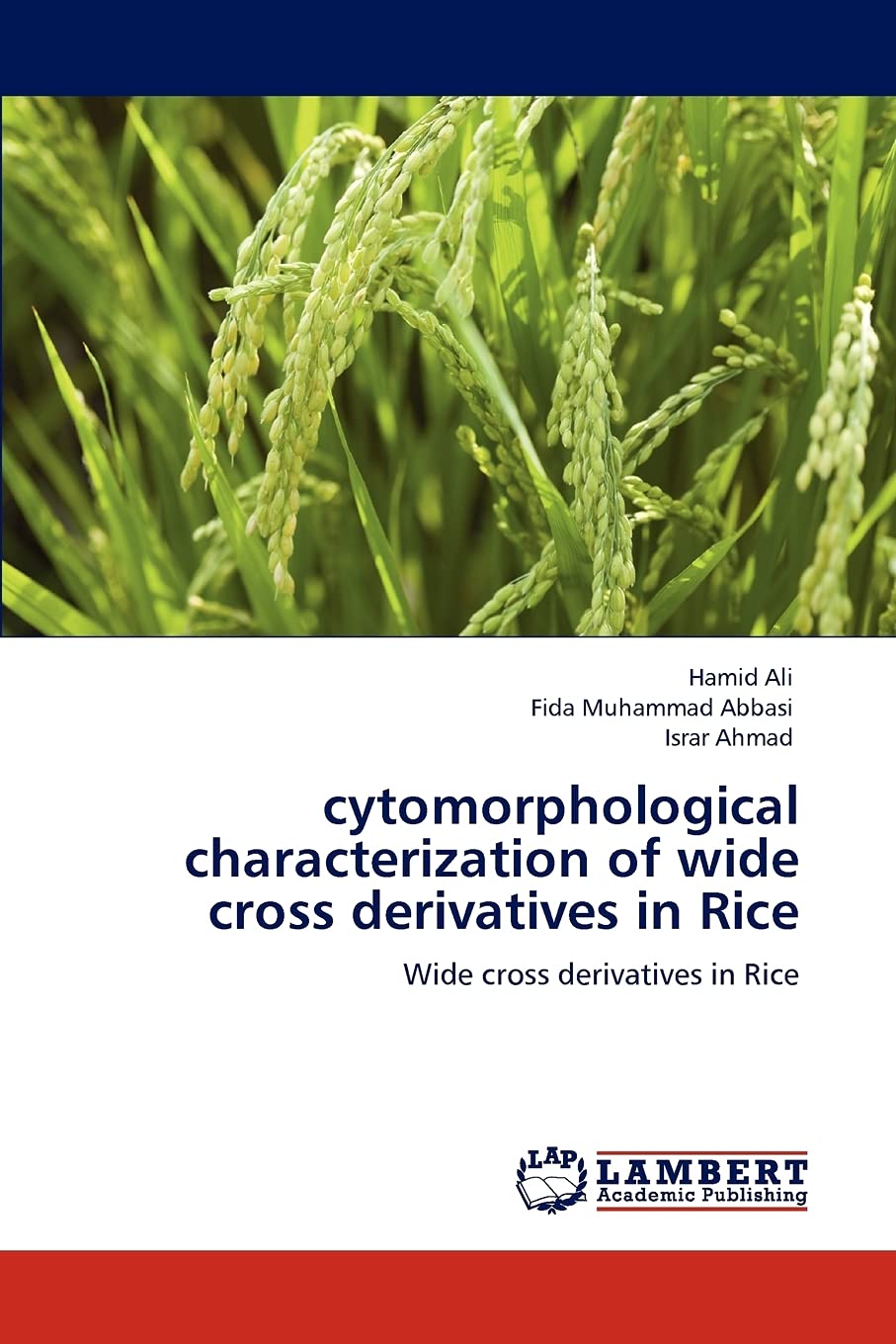
Wild species of Rice offer an important source of variability for improvement of cultivated Rice.Wide hybridization is the only way to transfer useful genes from wild species into cultivated Rice.In order to utilize the resistant potential of Oryza rufipogon to various biotic and abiotic stresses, this species was crossed with cultivated varieties of Oryza sativa. The crossability between O. sativa and O. rufipogon varied from 17.533 (%). The highest crossability was observed in IR6/O. rufipogon (33%) and least in KS282/O. rufipogon (17.5%). Based on crossability, IR6 showed a close affinity with O. rufipogon.All the F1 hybrids were intermadiate in plant morphology between the two parents.The F1 hybrids showed both mid parent and high parent hetrosis for various quantitative traits. All the F1 hybrids showed normal meiosis with remarkably high chromosome pairing. Therefore favorable alleles can be easily introgressed from the wild O.rufipogon into cultivatd Rice O.Sativa.
⚠️ WARNING (California Proposition 65):
This product may contain chemicals known to the State of California to cause cancer,
birth defects, or other reproductive harm.
For MAP (Minimum Advertised Price) violations and Intellectual Property (IP) or Trademark concerns, please contact:
support@ergodebooks.com
⚠️ California Proposition 65 Warning: Some products sold on this website may expose you to chemicals known to the State of California to cause cancer, birth defects, or other reproductive harm. For more information, visit www.P65Warnings.ca.gov.