
Title
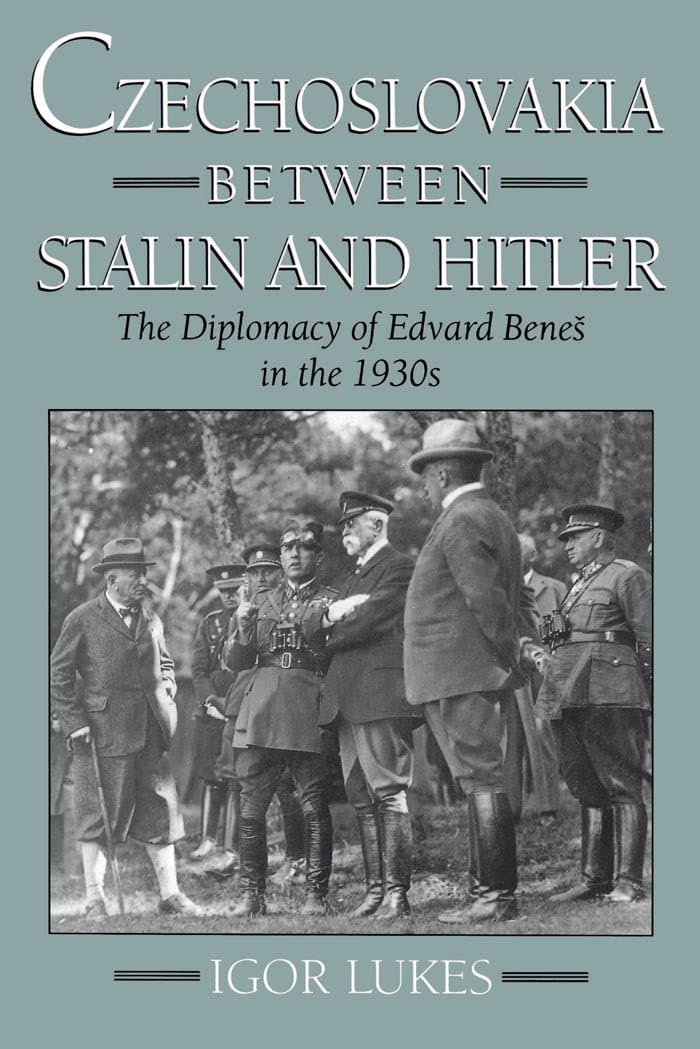
Czechoslovakia between Stalin and Hitler: The Diplomacy of Edvard Bene in the 1930s,Used
Sold by Ergodebooks, an authorized reseller.
Returns accepted within 30 days | support@ergodebooks.com
Shipping Information
- Free Standard Shipping — United States only
- Processing Time: 3–5 business days
- Estimated Delivery: 6–10 business days after dispatch
- Double-boxed, fully insured & discreetly packaged
- Tracking number sent via email once dispatched
Returns & Refund
Returns accepted within 30 days of delivery.
Damaged or Defective Item
Free return shipping + replacement or full refund
Wrong Item Received
Free return shipping + replacement or full refund
Change of Mind
Return shipping at customer's expense · 25% restocking fee applies
Payment Option

The Munich crisis of 1938, in which Great Britain and France decided to appease Hitler's demands to annex the Sudentenland, has provoked a vast amount of historical writing. The era has been thoroughly examined from the perspectives of Germans, French, and British political establishments. But historians have had, until now, only a vague understanding of the roles played by the Soviet Union and Czechoslovakia, the country whose very existence was at the very center of the crisis.In Czechoslovakia Between Stalin and Hitler, Igor Lukes explores this turbulent and tragic era from the new perspective of the Prague government itself. At the center of this study is Edvard Benes, a Czechoslovak foreign policy strategist and a major player in the political machinations of the era. The work looks at the first two decades of Benes's diplomacy and analyzes the Prague Government's attempts to secure the existence of the Republic of Czechoslovakia in the treacherous space between the millstones of the East and West. It studies Benes's relationship with Joseph Stalin, outlines the role assigned to Czechoslovak communists by the VIIth Congress of the Communist International in 1935, and dissects Prague's secret negotiations with Berlin and Benes's role in the famous Tukhachevsky affair. The work also brings evidence regarding the socalled partial mobilization of the Czechoslovak army in May 1938, and focuses on Stalin's strategic thinking on the eve of the World War II.Until the fall of the Berlin Wall, it was difficult for Western researchers to gain access to the rich archival collections of the East. Czechoslovakia Between Stalin and Hitler makes ample use of these secret archives, both in Prague and in Russia. As a result, it is an accurate and original rendition of the events which eventually sparked the Second World War.
⚠️ WARNING (California Proposition 65):
This product may contain chemicals known to the State of California to cause cancer, birth defects, or other reproductive harm.
For more information, please visit www.P65Warnings.ca.gov.
- Q: What is the main focus of 'Czechoslovakia between Stalin and Hitler'? A: The book primarily focuses on the diplomacy of Edvard Beneš and the role of Czechoslovakia during the tumultuous years leading up to World War II, particularly the Munich crisis of 1938.
- Q: Who is the author of this book? A: The author is Igor Lukes, who provides an in-depth analysis of Czechoslovak foreign policy in the 1930s.
- Q: What is the publication date of 'Czechoslovakia between Stalin and Hitler'? A: The book was published on May 23, 1996.
- Q: How many pages does the book have? A: The book contains a total of 352 pages.
- Q: What type of binding is used for this book? A: The book is available in paperback binding.
- Q: Is this book suitable for academic research? A: Yes, the book utilizes rich archival materials from both Prague and Russia, making it a valuable resource for academic research on this historical period.
- Q: Does the book discuss Edvard Beneš's relationship with Joseph Stalin? A: Yes, the book outlines Beneš's relationship with Joseph Stalin and discusses the diplomatic dynamics between Czechoslovakia and the Soviet Union.
- Q: What is the historical significance of the Munich crisis mentioned in the book? A: The Munich crisis of 1938 is significant as it marked a pivotal moment in European history, showcasing the policy of appeasement towards Hitler and its implications for Czechoslovakia's sovereignty.
- Q: Are there any discussions on Czechoslovak military strategies in the book? A: Yes, the book includes evidence regarding the partial mobilization of the Czechoslovak army in May 1938 and discusses military strategies during that time.
- Q: Is 'Czechoslovakia between Stalin and Hitler' based on primary sources? A: Yes, the book makes ample use of secret archives and primary sources, providing an accurate account of the events leading up to World War II.