If you have any questions, you are always welcome to contact us. We'll get back to you as soon as possible, withing 24 hours on weekdays.
Customer service
All questions about your order, return and delivery must be sent to our customer service team by e-mail at yourstore@yourdomain.com
Sale & Press
If you are interested in selling our products, need more information about our brand or wish to make a collaboration, please contact us at press@yourdomain.com
Help
If you have any questions, you are always welcome to contact us. We'll get back to you as soon as possible, withing 24 hours on weekdays.
Customer service
All questions about your order, return and delivery must be sent to our customer service team by e-mail at yourstore@yourdomain.com
Sale & Press
If you are interested in selling our products, need more information about our brand or wish to make a collaboration, please contact us at press@yourdomain.com
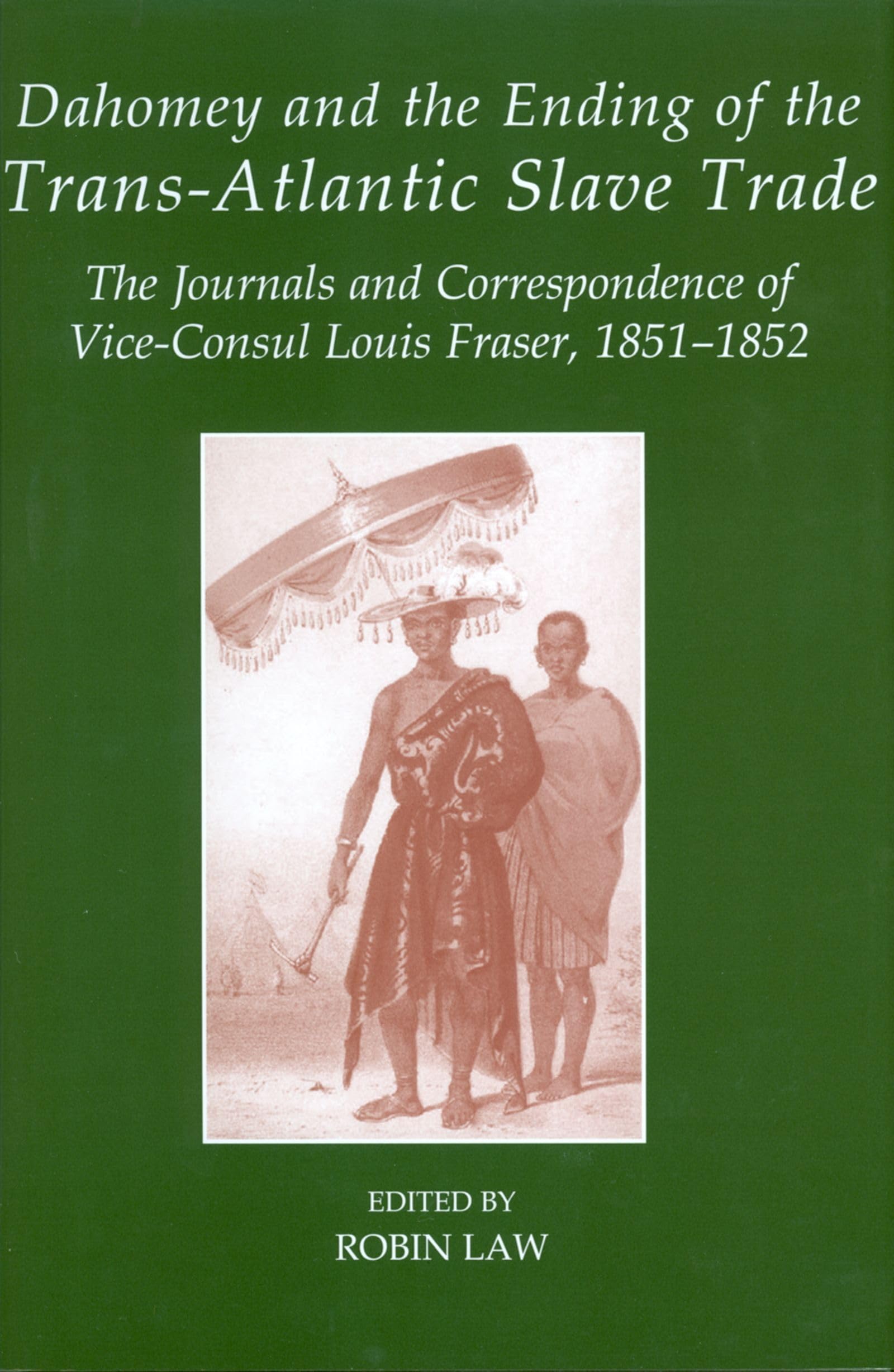
The ViceConsulate in the coastal port of Ouidah, in the kingdom of Dahomey, West African (now in the modern Republic of Benin) was established in18512 as part of the British government's efforts to suppress the transAtlantic slave trade. In particular it was hoped to persuade King Gezo to accept a treaty banning exports of slaves from his dominions.Louis Fraser proved a poor choice as ViceConsul: he was no linguist, abrasive with naval colleagues and arrogant towards the king and people of Ouidah. However, his shortcomings as a diplomat do not detract from the value of his account as a historical resource.The documents collected here comprise principally the journals of the ViceConsul, Louis Fraser, together with letters and other reports by him, a selection of the documents referred to in his journals, and letters and reports by other British officials (especially officers of the navy's West African squadron) which refer to his activities. These documents are valuable sources, not only for the history of British policy on the slave trade, but also for the history of Dahomey, which was one of the most important indigenous states in coastal West Africa in the nineteenth century.Fraser was one of a number of British visitors to Dahomey in the midnineteenth century, many of whom left published accounts. Fraser's account, in contrast, was never published, and so has remained less known. Its publication now brings it more effectively within the public domain.
⚠️ WARNING (California Proposition 65):
This product may contain chemicals known to the State of California to cause cancer,
birth defects, or other reproductive harm.
For MAP (Minimum Advertised Price) violations and Intellectual Property (IP) or Trademark concerns, please contact:
support@ergodebooks.com
⚠️ California Proposition 65 Warning: Some products sold on this website may expose you to chemicals known to the State of California to cause cancer, birth defects, or other reproductive harm. For more information, visit www.P65Warnings.ca.gov.