

Title
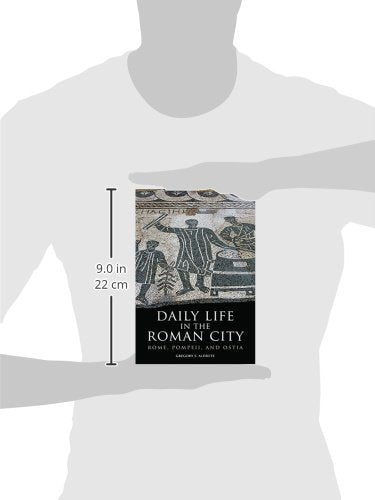
Daily Life In The Roman City: Rome, Pompeii, And Ostia,New
Sold by Ergodebooks, an authorized reseller.
Returns accepted within 30 days | support@ergodebooks.com
Shipping Information
- Free Standard Shipping — United States only
- Processing Time: 3–5 business days
- Estimated Delivery: 6–10 business days after dispatch
- Double-boxed, fully insured & discreetly packaged
- Tracking number sent via email once dispatched
Returns & Refund
Returns accepted within 30 days of delivery.
Damaged or Defective Item
Free return shipping + replacement or full refund
Wrong Item Received
Free return shipping + replacement or full refund
Change of Mind
Return shipping at customer's expense · 25% restocking fee applies
Payment Option

Although Most Romans Lived Outside Urban Centers, The Core Of Roman Civilization Lay In Its Cities. Throughout The Empire These Citiesmodeled As They Were After Romewere Strikingly Alike. In Gregory Aldretes Exhaustive Account, Readers Can Peer Into The Inner Workings Of Daily Life In Ancient Rome And Examine The History, Infrastructure, Government, And Economy Of Rome; Its Emperors; And Its Inhabitantstheir Life And Death, Dangers And Pleasures, Entertainment, And Religion.Aldrete Also Shows How Roman Cities Differed. To Accomplish This Comparison, In Addition To Rome, He Explores Ostia, An Industrial Port Town, And Pompeii, The Doomed Playground Of The Rich. Daily Life In The Roman City Includes A Chronology, Maps, Numerous Illustrations, Useful Appendices (On Names, The Roman Calendar, Clothing And Appearance, And Construction Techniques), A Bibliography, And An Index.This Volume Is Ideal For High School And College Students And For Others Wishing To Examine The Realities Of Life In Ancient Rome.
⚠️ WARNING (California Proposition 65):
This product may contain chemicals known to the State of California to cause cancer, birth defects, or other reproductive harm.
For more information, please visit www.P65Warnings.ca.gov.
- Q: How many pages does the book have? A: The book has two hundred ninety-six pages. This length makes it a comprehensive resource on daily life in ancient Rome.
- Q: What is the binding type of this book? A: The book is paperback bound. This makes it lightweight and easy to handle for both reading and storage.
- Q: What are the dimensions of the book? A: The book measures six inches in length, zero point sixty-three inches in width, and nine point zero two inches in height. These dimensions are standard for paperback books.
- Q: Who is the author of this book? A: The author is Gregory S. Aldrete. He provides a thorough examination of the Roman cities of Rome, Pompeii, and Ostia.
- Q: What is the target audience for this book? A: The target audience includes high school and college students. It is also suitable for anyone interested in ancient Roman history.
- Q: How do I use this book for my studies? A: You can use this book as a supplemental resource for courses in ancient history or archaeology. It offers detailed insights into daily life in Roman cities.
- Q: Is this book suitable for beginners in Roman history? A: Yes, the book is suitable for beginners. It provides clear explanations and context, making it accessible for readers new to the subject.
- Q: What themes are covered in this book? A: The book covers themes such as daily life, government, economy, and religion in ancient Rome. It also compares different Roman cities.
- Q: How do I keep this book in good condition? A: To keep the book in good condition, store it in a dry place and avoid exposing it to direct sunlight. Handle it gently to prevent wear.
- Q: Are there any illustrations in the book? A: Yes, the book includes seventy-five black and white illustrations. These visuals enhance the understanding of Roman life and architecture.
- Q: Can I return the book if I am not satisfied? A: Yes, there is typically a return policy for books. Check with the retailer for specific return conditions and time frames.
- Q: What if the book arrives damaged? A: If the book arrives damaged, contact the retailer for assistance. They usually provide options for exchanges or refunds.
- Q: Is there a bibliography included in this book? A: Yes, the book includes a bibliography. This resource provides additional reading materials for further exploration of the topics discussed.
- Q: Does the book include a chronology of events? A: Yes, the book features a chronology. This timeline helps readers understand the historical context of the events discussed.
- Q: What is the main focus of the book? A: The main focus of the book is on daily life in Roman cities. It explores the similarities and differences between Rome, Ostia, and Pompeii.