If you have any questions, you are always welcome to contact us. We'll get back to you as soon as possible, withing 24 hours on weekdays.
Customer service
All questions about your order, return and delivery must be sent to our customer service team by e-mail at yourstore@yourdomain.com
Sale & Press
If you are interested in selling our products, need more information about our brand or wish to make a collaboration, please contact us at press@yourdomain.com
Help
If you have any questions, you are always welcome to contact us. We'll get back to you as soon as possible, withing 24 hours on weekdays.
Customer service
All questions about your order, return and delivery must be sent to our customer service team by e-mail at yourstore@yourdomain.com
Sale & Press
If you are interested in selling our products, need more information about our brand or wish to make a collaboration, please contact us at press@yourdomain.com
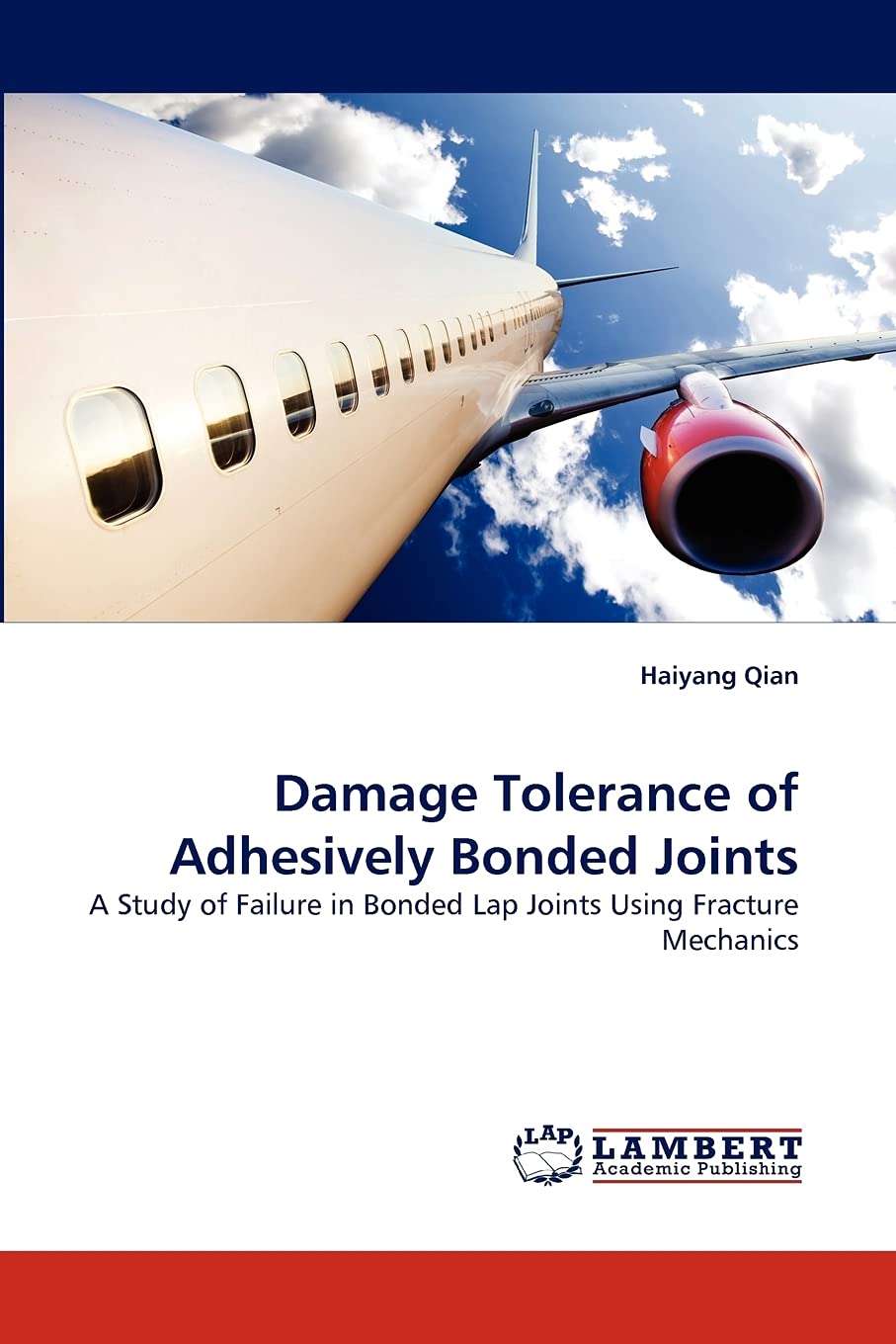
Although adhesively bonded lap joint has already been widely applied in structures, the strength prediction of the joint is still a challenge. Among many parameters which affect the failure load of the lap joint, the adhesive layer thickness is a very important one. In this book, fracture mechanics is used to analyze the failure mechanism of the lap joint and evaluate the thickness effect on strength of the lap joint. For brittle material, constant effective fracture toughness is proposed for better strength prediction by considering of the non singular stress term ahead of the crack tip. For ductile material, CTOA is proven to be insensitive to the constraining of the rigid boundaries and can be used as the failure criterion for fracture analysis. Both experimental and FEA simulation show that constant CTOA criterion well predicts the adhesive thickness effect on strength of the DCB specimens for Mode I fracture failure. The failure initiation mode of single lap joint is analyzed and the constant CTOA criterion is also proven to be capable to prediction the strength of single lap joint.
⚠️ WARNING (California Proposition 65):
This product may contain chemicals known to the State of California to cause cancer,
birth defects, or other reproductive harm.
For MAP (Minimum Advertised Price) violations and Intellectual Property (IP) or Trademark concerns, please contact:
support@ergodebooks.com
⚠️ California Proposition 65 Warning: Some products sold on this website may expose you to chemicals known to the State of California to cause cancer, birth defects, or other reproductive harm. For more information, visit www.P65Warnings.ca.gov.