
Title
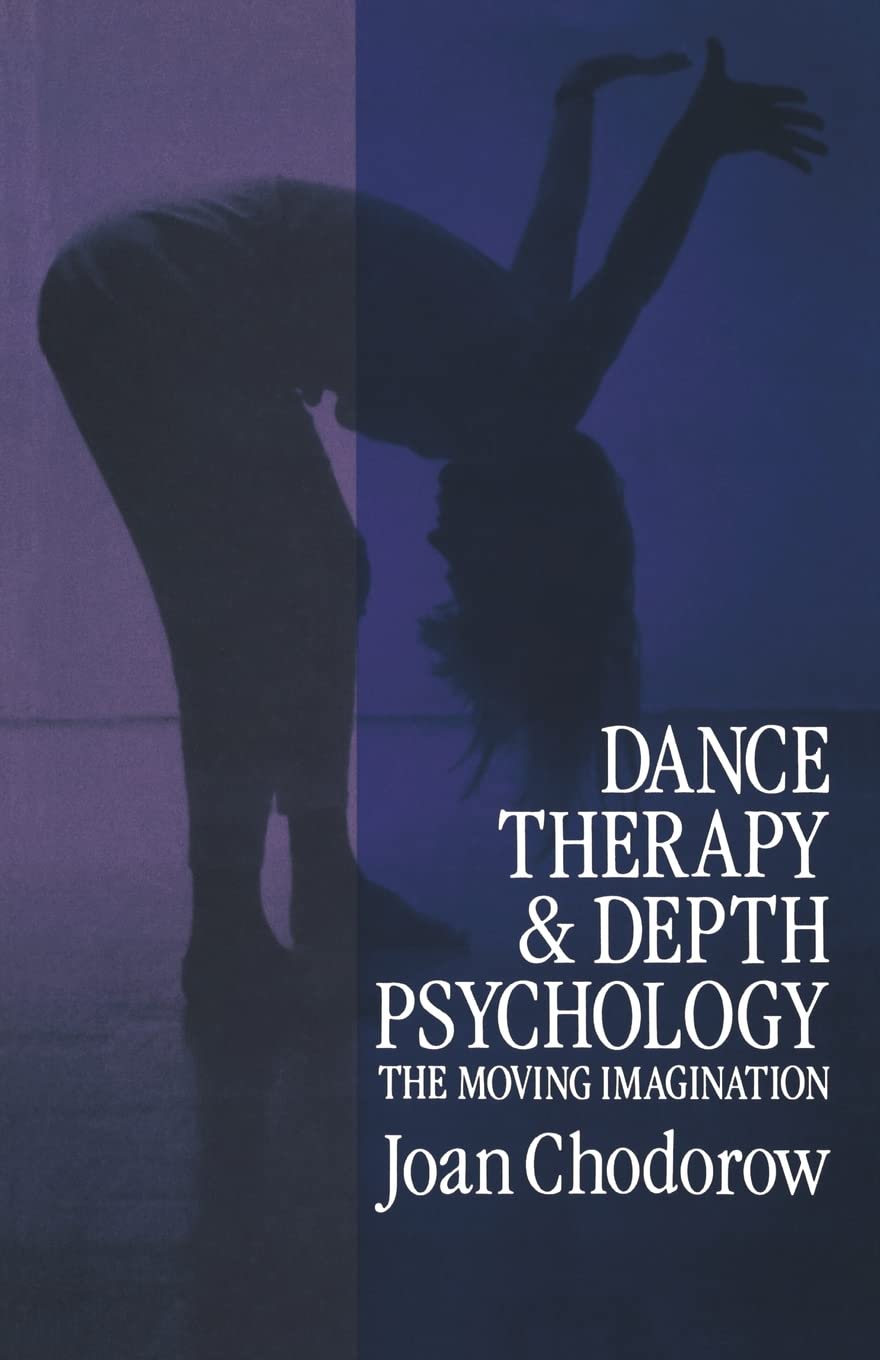
Dance Therapy And Depth Psychology: The Moving Imagination,New
Sold by Ergodebooks, an authorized reseller.
Returns accepted within 30 days | support@ergodebooks.com
Shipping Information
- Free Standard Shipping — United States only
- Processing Time: 3–5 business days
- Estimated Delivery: 6–10 business days after dispatch
- Double-boxed, fully insured & discreetly packaged
- Tracking number sent via email once dispatched
Returns & Refund
Returns accepted within 30 days of delivery.
Damaged or Defective Item
Free return shipping + replacement or full refund
Wrong Item Received
Free return shipping + replacement or full refund
Change of Mind
Return shipping at customer's expense · 25% restocking fee applies
Payment Option

Dance/Movement As Active Imagination Was Originated By Jung In 1916. Developed In The 1960S By Dance Therapy Pioneer Mary Whitehouse, It Is Today Both An Approach To Dance Therapy As Well As A Form Of Active Imagination In Analysis. In Her Delightful Book Joan Chodorow Provides An Introduction To The Origins, Theory And Practice Of Dance/Movement As Active Imagination.Beginning With Her Own Story The Author Shows How Dance/ Movement Is Of Value To Psychotherapy. An Historical Overview Of Jung'S Basic Concepts Is Given As Well As The Most Recent Depth Psychological Synthesis Of Affect Theory Based On The Work Of Sylvan Tomkins, Louis Stewart, And Others. Finally In Discussing The Use Of Dance/Movement As Active Imagination In Practice, The Movement Themes That Emerge And The Nonverbal Expressive Aspects Of The Therapaeutic Relationship Are Described.
⚠️ WARNING (California Proposition 65):
This product may contain chemicals known to the State of California to cause cancer, birth defects, or other reproductive harm.
For more information, please visit www.P65Warnings.ca.gov.
- Q: How many pages does the book have? A: The book has two hundred pages. It provides a comprehensive overview of dance therapy and depth psychology.
- Q: What is the binding type of this book? A: The book is paperback bound. This makes it lightweight and easy to handle.
- Q: What are the dimensions of the book? A: The dimensions of the book are five point five one inches in length, zero point four seven inches in width, and eight point five inches in height.
- Q: Who is the author of the book? A: The author is Joan Chodorow. She offers insights into dance therapy and active imagination.
- Q: What is the main theme of the book? A: The main theme is the intersection of dance, movement, and psychotherapy. It explores how movement can enhance therapeutic practices.
- Q: What type of psychology does this book focus on? A: The book focuses on depth psychology. It integrates concepts from Jungian psychology with dance therapy.
- Q: Is this book suitable for beginners in dance therapy? A: Yes, this book is suitable for beginners. It provides foundational knowledge and insights into dance therapy practices.
- Q: How can dance movement be used in therapy? A: Dance movement can be used as a form of active imagination in therapy. It helps individuals express emotions non-verbally.
- Q: Is this book appropriate for mental health professionals? A: Yes, it is appropriate for mental health professionals. It offers valuable insights and techniques for integrating dance into therapy.
- Q: What is the historical significance of dance therapy mentioned in the book? A: The book discusses the origins of dance therapy, tracing its development from Jung's theories in 1916 to contemporary practices.
- Q: Are there any specific movement themes discussed in the book? A: Yes, the book describes various movement themes that emerge during therapy sessions. These themes enhance the therapeutic relationship.
- Q: How does the book address non-verbal expression in therapy? A: The book highlights the importance of non-verbal expression in the therapeutic relationship. It emphasizes how movement can convey emotions.
- Q: What is the target audience for this book? A: The target audience includes students, educators, and professionals in psychology and dance therapy. It appeals to anyone interested in these fields.
- Q: Does the book include practical exercises for therapy? A: Yes, it includes practical exercises and examples. These help readers apply the concepts in real therapeutic settings.
- Q: Is there a discussion of affect theory in the book? A: Yes, the book discusses the depth psychological synthesis of affect theory. It references the work of Sylvan Tomkins and Louis Stewart.