
Title
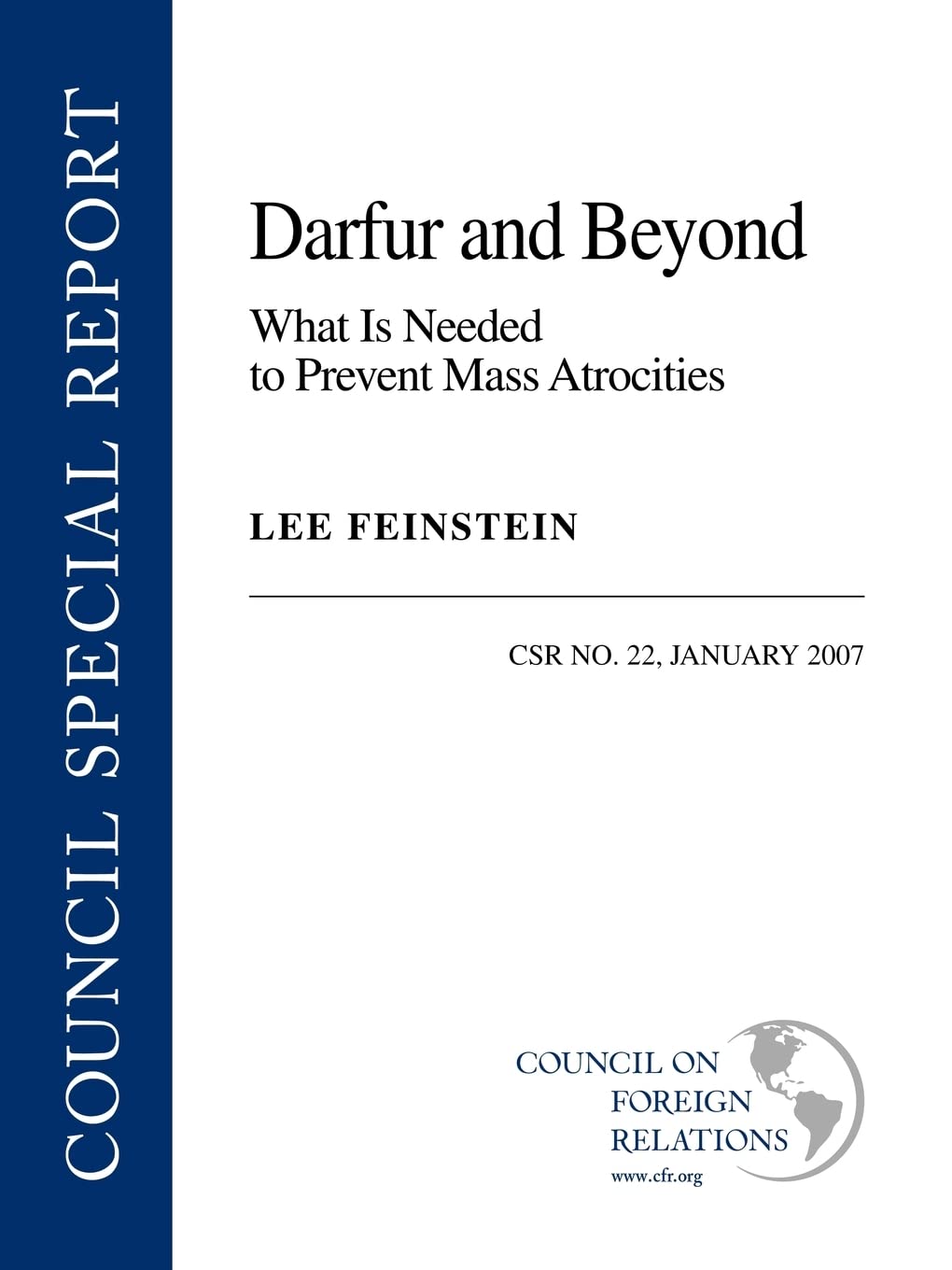
Darfur And Beyond: What Is Needed To Prevent Mass Atrocities (Council Special Report),New
Sold by Ergodebooks, an authorized reseller.
Returns accepted within 30 days | support@ergodebooks.com
Shipping Information
- Free Standard Shipping — United States only
- Processing Time: 3–5 business days
- Estimated Delivery: 6–10 business days after dispatch
- Double-boxed, fully insured & discreetly packaged
- Tracking number sent via email once dispatched
Returns & Refund
Returns accepted within 30 days of delivery.
Damaged or Defective Item
Free return shipping + replacement or full refund
Wrong Item Received
Free return shipping + replacement or full refund
Change of Mind
Return shipping at customer's expense · 25% restocking fee applies
Payment Option

A lot has been said about the need to take action to stop and prevent mass atrocities. But less has been done. States continue to engage in mass atrocities, in part because they believe it will be tolerated by the rest of the world. Other states tend to acquiesce because they do not perceive their national interests are at stake. Finding a workable way out of this cycle is not simply a matter of scruples; it is also a matter of security. State failure and genocide can lead to destabilizing refugee flows and create openings for terrorism to take root. Recent history is, in fact, somewhat mixed. NATO's intervention in Kosovo was an example where a number of governments chose to stop ethnic cleansing and genocide. By contrast, the mass killing in Rwanda a decade ago and now in Darfur, Sudan, demonstrate the high price of judging sovereignty to be supreme and thus doing little to prevent the slaughter of innocents. Senior Fellow Lee Feinstein points to the UN's acceptance of the notion that sovereignty may need to be compromised when a government is unable or unwilling to provide for the basic needs of those within its state borders. The challenge for the United States and the international community is to translate this principle into practice. To that end, this report recommends that the new UN secretarygeneral take genocide prevention as a mission statement and mandate, and place it at the center of his and his organization's agenda. The report also makes a number of recommendations for the United States and others to build a sustainable capacity for genocide prevention that is substantial enough to deal with inevitable crises, but sustainable given other national security demands. Feinstein makes a strong case that this is doablethat is, if the international community is prepared to do it.
⚠️ WARNING (California Proposition 65):
This product may contain chemicals known to the State of California to cause cancer, birth defects, or other reproductive harm.
For more information, please visit www.P65Warnings.ca.gov.