
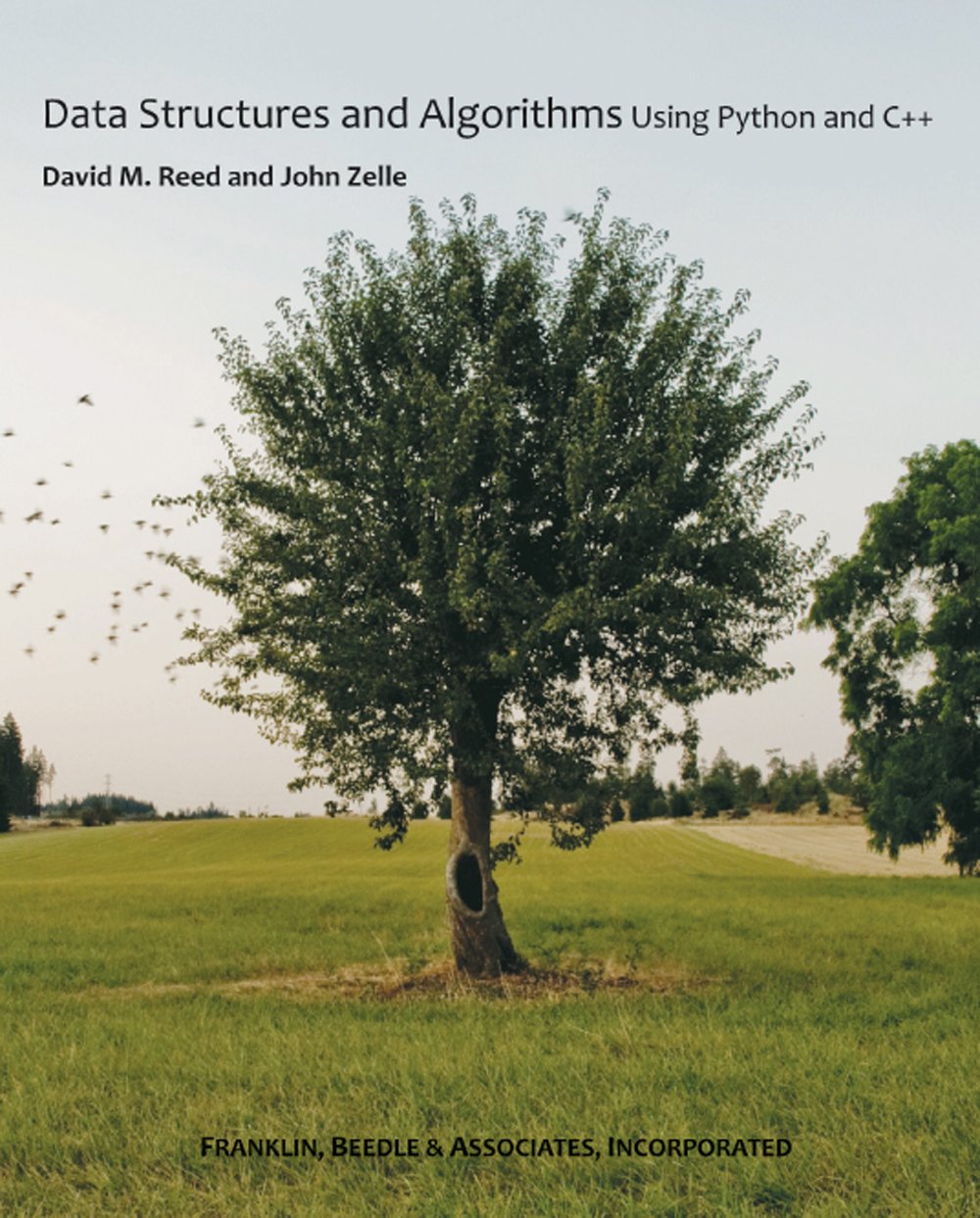
Title
Data Structures and Algorithms Using Python and C++,Used
Sold by Ergodebooks, an authorized reseller.
Returns accepted within 30 days | support@ergodebooks.com
Shipping Information
- Free Standard Shipping — United States only
- Processing Time: 3–5 business days
- Estimated Delivery: 6–10 business days after dispatch
- Double-boxed, fully insured & discreetly packaged
- Tracking number sent via email once dispatched
Returns & Refund
Returns accepted within 30 days of delivery.
Damaged or Defective Item
Free return shipping + replacement or full refund
Wrong Item Received
Free return shipping + replacement or full refund
Change of Mind
Return shipping at customer's expense · 25% restocking fee applies
Payment Option

THIS BOOK is intended for use in a traditional collegelevel data structures course (commonly known as CS2). This book assumes that students have learned the basic syntax of Python and been exposed to the use of existing classes. Most traditional CS1 courses that use Python will have covered all the necessary topics, and some may have covered a few of the topics covered in this book. We have found that most students successfully completing a CS1 course know how to use classes, but many of them need more experience to learn how to design and write their own classes. We address this issue by including a number of examples of class design in the first few chapters of this book. Python's objectoriented features make it an elegant language for starting a data structures course, but one potential drawback of Python for a data structures course is that it hides the complexity of memory management. This is a benefit in a first course, but we think that in a second course it is important that students begin to understand some of these lowlevel details that the Python interpreter hides from them. Since we can cover the basic data structures in less time using Python, there is time to learn a second language, even in a singlesemester CS2 course. After the students have continued to improve their Python programming skills while covering the first few chapters of the book, it is relatively easy for them to learn a second objectoriented language. By using C++ as the second language, the students are exposed to a lowerlevel, compiled language. The syntax of C++ is more complicated than Python, but that is a relatively small hurdle once students have mastered fundamental programming concepts using Python. For example, now that they understand the basic concepts of programming and the semantics of statements such as conditional statements and looping statements, they can focus on learning the C++ syntax for these statements.
⚠️ WARNING (California Proposition 65):
This product may contain chemicals known to the State of California to cause cancer, birth defects, or other reproductive harm.
For more information, please visit www.P65Warnings.ca.gov.