
Title
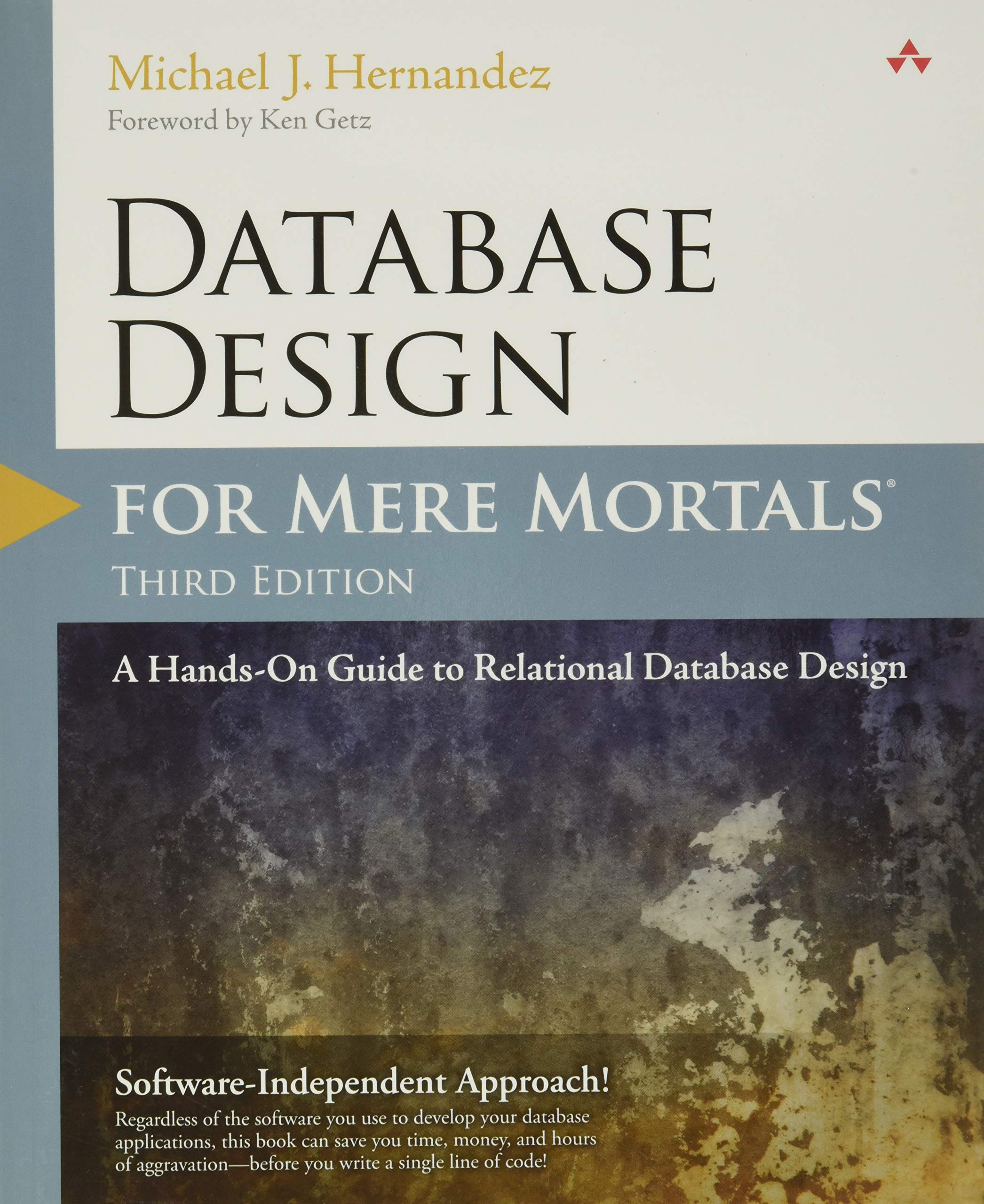
Database Design for Mere Mortals: A HandsOn Guide to Relational Database Design,Used
Sold by Ergodebooks, an authorized reseller.
Returns accepted within 30 days | support@ergodebooks.com
Shipping Information
- Free Standard Shipping — United States only
- Processing Time: 3–5 business days
- Estimated Delivery: 6–10 business days after dispatch
- Double-boxed, fully insured & discreetly packaged
- Tracking number sent via email once dispatched
Returns & Refund
Returns accepted within 30 days of delivery.
Damaged or Defective Item
Free return shipping + replacement or full refund
Wrong Item Received
Free return shipping + replacement or full refund
Change of Mind
Return shipping at customer's expense · 25% restocking fee applies
Payment Option

The #1 Easy, Commonsense Guide to Database Design! Michael J. Hernandezs bestselling Database Design for Mere Mortals has earned worldwide respect as the clearest, simplest way to learn relational database design. Now, hes made this handson, softwareindependent tutorial even easier, while ensuring that his design methodology is still relevant to the latest databases, applications, and best practices. Step by step,Database Design for Mere Mortals, Third Edition, shows you how to design databases that are soundly structured, reliable, and flexible, even in modern web applications. Hernandez guides you through everything from database planning to defining tables, fields, keys, table relationships, business rules, and views. Youll learn practical ways to improve data integrity, how to avoid common mistakes, and when to break the rules.Coverage includesUnderstanding database types, models, and design terminologyDiscovering what good database design can do for youand why bad design can make your life miserableSetting objectives for your database, and transforming those objectives into real designsAnalyzing a current database so you can identify ways to improve itEstablishing table structures and relationships, assigning primary keys, setting field specifications, and setting up viewsEnsuring the appropriate level of data integrity for each applicationIdentifying and establishing business rulesWhatever relational database systems you use, Hernandez will help you design databases that are robust and trustworthy. Never designed a database before? Settling for inadequate generic designs? Running existing databases that need improvement? Start here.
⚠️ WARNING (California Proposition 65):
This product may contain chemicals known to the State of California to cause cancer, birth defects, or other reproductive harm.
For more information, please visit www.P65Warnings.ca.gov.
- Q: What is the main focus of 'Database Design for Mere Mortals'? A: The book primarily focuses on teaching readers how to design relational databases effectively, emphasizing clear methodologies and practical approaches.
- Q: Who is the author of this book? A: The author is Michael J. Hernandez, a respected figure in database design with extensive experience and expertise.
- Q: Is this book suitable for beginners? A: Yes, it is designed for beginners and those who have never designed a database before, providing step-by-step guidance.
- Q: What topics are covered in the book? A: Topics include database types, planning, defining tables and fields, establishing relationships, data integrity, and business rules.
- Q: How many pages does the book have? A: The book contains 672 pages, providing comprehensive coverage of database design principles.
- Q: What edition is this book? A: This is the third edition of 'Database Design for Mere Mortals', updated to reflect modern practices.
- Q: What type of binding does this book have? A: The book is available in paperback binding, making it easy to handle and read.
- Q: When was the book published? A: The book was published on February 14, 2013.
- Q: Can this book help improve an existing database? A: Yes, it includes guidance on analyzing and improving current database designs.
- Q: What audience is this book intended for? A: It is intended for anyone interested in learning database design, including students, professionals, and novice designers.