
Title
Database System Concepts,Used
Sold by Ergodebooks, an authorized reseller.
Returns accepted within 30 days | support@ergodebooks.com
Shipping Information
- Free Standard Shipping — United States only
- Processing Time: 3–5 business days
- Estimated Delivery: 6–10 business days after dispatch
- Double-boxed, fully insured & discreetly packaged
- Tracking number sent via email once dispatched
Returns & Refund
Returns accepted within 30 days of delivery.
Damaged or Defective Item
Free return shipping + replacement or full refund
Wrong Item Received
Free return shipping + replacement or full refund
Change of Mind
Return shipping at customer's expense · 25% restocking fee applies
Payment Option

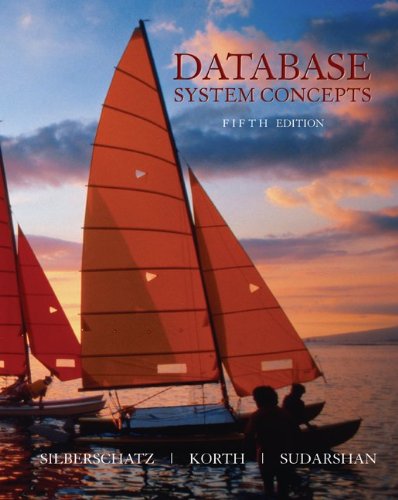
Database System Concepts, 5/e, is intended for a first course in databases at the junior or senior undergraduate, or firstyear graduate, level. In addition to basic material for a first course, the text contains advanced material that can be used for course supplements, or as introductory material for an advanced course.The authors assume only a familiarity with basic data structures, computer organization, and a highlevel programming language such as Java, C, or Pascal. Concepts are presented as intuitive descriptions, and many are based on the running example of a bank enterprise. Important theoretical results are covered, but formal proofs are omitted. In place of proofs, figures and examples are used to suggest why a result is true.The fundamental concepts and algorithms covered in the book are often based on those used in existing commercial or experimental database systems. The aim is to present these concepts and algorithms in a general setting that is not tied to one particular database system. Details of particular commercial database systems are discussed in the case studies which constitute Part 8 of the book.The fifth edition of Database System Concepts retains the overall style of prior editions while evolving the content and organization to reflect the changes that are occurring in the way databases are designed, managed, and used. Key Handles: Early coverage of SQL in two chapters Think of SQL as doing or creating Queries Silberschatz uses a bank analogy throughout his text with Running Examples Case studies are incorporated that represent a different database, this is in the last Part of the text Focuses on cutting edge material, such as xml, web based database systems
⚠️ WARNING (California Proposition 65):
This product may contain chemicals known to the State of California to cause cancer, birth defects, or other reproductive harm.
For more information, please visit www.P65Warnings.ca.gov.