
Title
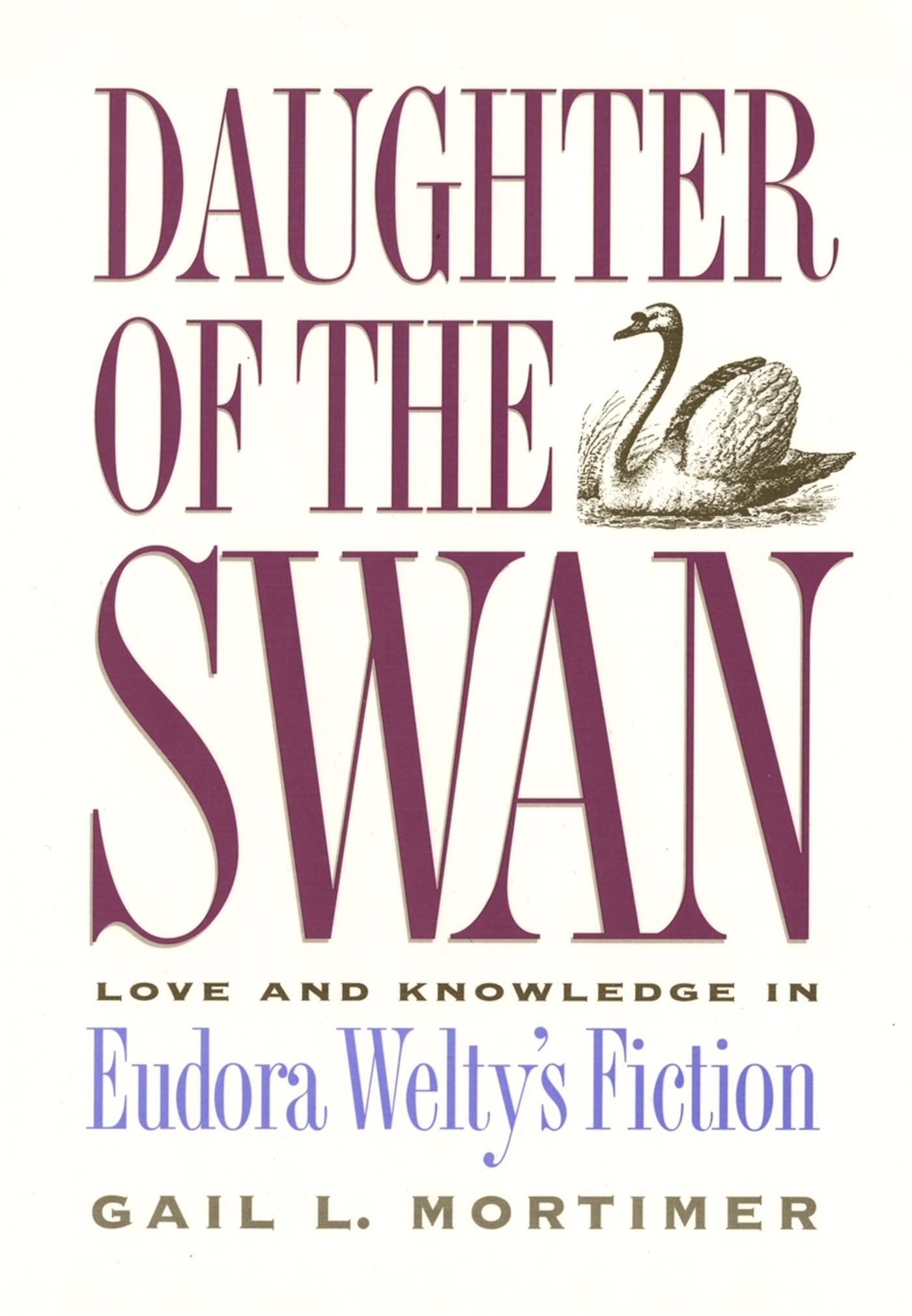
Daughter Of The Swan: Love And Knowledge In Eudora Welty'S Fiction,Used
Sold by Ergodebooks, an authorized reseller.
Returns accepted within 30 days | support@ergodebooks.com
Shipping Information
- Free Standard Shipping — United States only
- Processing Time: 3–5 business days
- Estimated Delivery: 6–10 business days after dispatch
- Double-boxed, fully insured & discreetly packaged
- Tracking number sent via email once dispatched
Returns & Refund
Returns accepted within 30 days of delivery.
Damaged or Defective Item
Free return shipping + replacement or full refund
Wrong Item Received
Free return shipping + replacement or full refund
Change of Mind
Return shipping at customer's expense · 25% restocking fee applies
Payment Option

Readers of Eudora Welty's stories often encounter a protective and domelike nighttime sky, the moon and constellations beckoning a character to venture beyond the familiar, visible world. This striking metaphor for the human need to seek out the unknown serves as an anchoring image in Daughter of the Swan, Gail L. Mortimer's study of Welty's lifelong inquiry into the nature and contexts of knowledge.Mortimer argues that Welty's views on epistemology and the elusiveness of certainty lie at the heart of this writer's subtle and revelatory work. Employing the psychoanalytic objectrelations theories of Nancy Chodorow and Carol Gilligan, she reveals how Welty uses assumptions about relationships to shape her characters' consciousnesses. Mortimer also contrasts Welty's world with William Faulkner's; each elucidates the other's remarkably different ways of perceiving humanity, relationships, and approaches to the unknown.The author then turns to Welty's childhood to consider her evolving sense of whatand howthings can be known. Her childhood with adults created impressions of a benign, wondrous, orderly world. As Mortimer observes, Welty eventually replaced these impressions with the realization that adults frequently distort and withhold the truth. Welty's own family's conception of love as a kind of shield, and her resistance to this protection, finds its way into much of her fiction.For many Welty characters, this protective love becomes an obstacle to fuller understanding. Mortimer invokes two of the writer's most beguiling images, the circle and the labyrinth, to demonstrate that 'the perceiver' who is 'both an insider and an outsider' is best able to recognize and assimilate new knowledge. In The Golden Apples Welty contemplates the difficulty and fascination implicit in this quest for knowledge, given the ambiguous nature of what we knowand given our language's surfaces, and of masks, myths, and falsities to create benevolent illusions. Ultimately, Mortimer concludes, Welty comes to see the concept of protective love as a limited one and, in The Optimist's Daughter, for instance, she advocates instead the courage to face even the harshest realities.Recognizing the richness of Welty's artistry, Mortimer views her through the lens of various literary traditions, including that of Shelley and Yeats. The latter's poem 'Among School Children,' from which the title of Mortimer's study is borrowed, summons the image of the swan to reflect the solitary human soul in search of knowledge. In that same spirit of wonder and curiosity, Eudora Welty's fiction illuminates the conditions of that search.
⚠️ WARNING (California Proposition 65):
This product may contain chemicals known to the State of California to cause cancer, birth defects, or other reproductive harm.
For more information, please visit www.P65Warnings.ca.gov.