If you have any questions, you are always welcome to contact us. We'll get back to you as soon as possible, withing 24 hours on weekdays.
Customer service
All questions about your order, return and delivery must be sent to our customer service team by e-mail at yourstore@yourdomain.com
Sale & Press
If you are interested in selling our products, need more information about our brand or wish to make a collaboration, please contact us at press@yourdomain.com
Help
If you have any questions, you are always welcome to contact us. We'll get back to you as soon as possible, withing 24 hours on weekdays.
Customer service
All questions about your order, return and delivery must be sent to our customer service team by e-mail at yourstore@yourdomain.com
Sale & Press
If you are interested in selling our products, need more information about our brand or wish to make a collaboration, please contact us at press@yourdomain.com
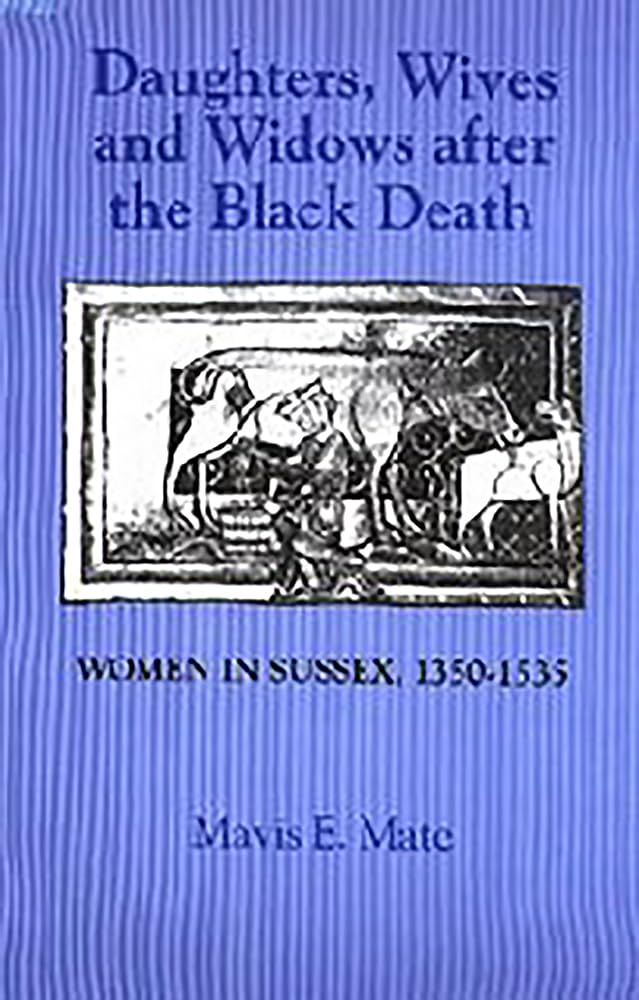
Did the expanding economic life of England after the Black Death improve the lot of women, as is commonly thought? This study argues not.It has long been thought that the post Black Death period offered unparallelled opportunities for women. However, through a careful consideration of economic and legal changes affecting women of all social classes and conditions,the author shows that this was not the case, taking issue with orthodox opinion. She argues that marriage at a late age was not customary for women, and that the ability of wives to supplement their income with intermittent paid labour (at harvest time, for example) was not so great as has been supposed: rather, most married women spent more time on unpaid agricultural labour on their own land than their peers had done in the preplague economy. ProfessorMate also demonstrates that there is little evidence to support the current belief that widowhood was the period in a woman's life when she enjoyed most power, freedom, and independence; moreover, legal changes were a mixed blessing for women, leaving some widows with a larger portion and a more secure title to land, but totally depriving others. Throughout, the book pays much attention to class as well as gender, showing how many things were determined byit, from what a woman wore or ate to the age at which she married, her power within the household, and even her vulnerability to rape.The late MAVIS E. MATE was Professor of History Emerita, University of Oregon.
⚠️ WARNING (California Proposition 65):
This product may contain chemicals known to the State of California to cause cancer,
birth defects, or other reproductive harm.
For MAP (Minimum Advertised Price) violations and Intellectual Property (IP) or Trademark concerns, please contact:
support@ergodebooks.com
⚠️ California Proposition 65 Warning: Some products sold on this website may expose you to chemicals known to the State of California to cause cancer, birth defects, or other reproductive harm. For more information, visit www.P65Warnings.ca.gov.