
Title
Day Of Lightning, Years Of Scorn: Walter C. Short And The Attack On Pearl Harbor,Used
Sold by Ergodebooks, an authorized reseller.
Returns accepted within 30 days | support@ergodebooks.com
Shipping Information
- Free Standard Shipping — United States only
- Processing Time: 3–5 business days
- Estimated Delivery: 6–10 business days after dispatch
- Double-boxed, fully insured & discreetly packaged
- Tracking number sent via email once dispatched
Returns & Refund
Returns accepted within 30 days of delivery.
Damaged or Defective Item
Free return shipping + replacement or full refund
Wrong Item Received
Free return shipping + replacement or full refund
Change of Mind
Return shipping at customer's expense · 25% restocking fee applies
Payment Option

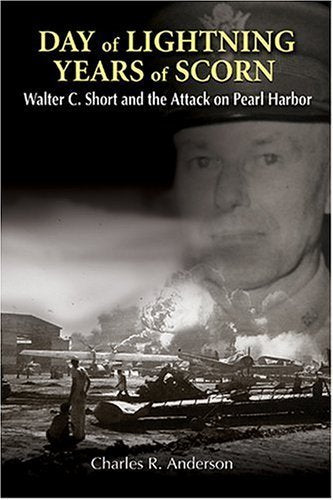
Walter C. Short is remembered as the U.S. Army general who parked his airplanes wingtiptowingtip making them easy targets for Japanese pilots attacking Hawaii on December 7, 1941. History's harsh indictment of his actions as commander of the Army's Hawaiian department is the result of a series of investigations that placed blame for the disaster on General Short and his Navy counterpart, Admiral Husband E. Kimmel. Over the years various books on Pearl Harbor have presented Short and Kimmel as either fools or scapegoats for Washington officials attempting to hide their own errors. In this long overdue first biography of Short, the general emerges as an honorable man who made some errors. Charles Anderson's balanced portrayal acknowledges that Short bore responsibility for certain charges made against him, but it also provides ample evidence that Short's superiors worked hard to blame him and Kimmel as a way of avoiding their own culpability. Anderson's thorough research offers readers a new understanding of the larger issues involved, including the glaring lack of interdepartmental cooperation and coordination, particularly in regards to intelligence sharing. The study examines the general's entire career, placing Short in the context of the early twentiethcentury Army, and describes his conduct in the face of blistering, often unfair, criticism in the years after the Japanese attack. As the title suggests, a single day undid an exceptional career, but as readers discover it did not undo Short's personal sense of dignity, honesty, and loyalty to the institutions and leaders who shared responsibility for the debacle. This biography is published in cooperation with the Association of the United States Army.
⚠️ WARNING (California Proposition 65):
This product may contain chemicals known to the State of California to cause cancer, birth defects, or other reproductive harm.
For more information, please visit www.P65Warnings.ca.gov.