
Title

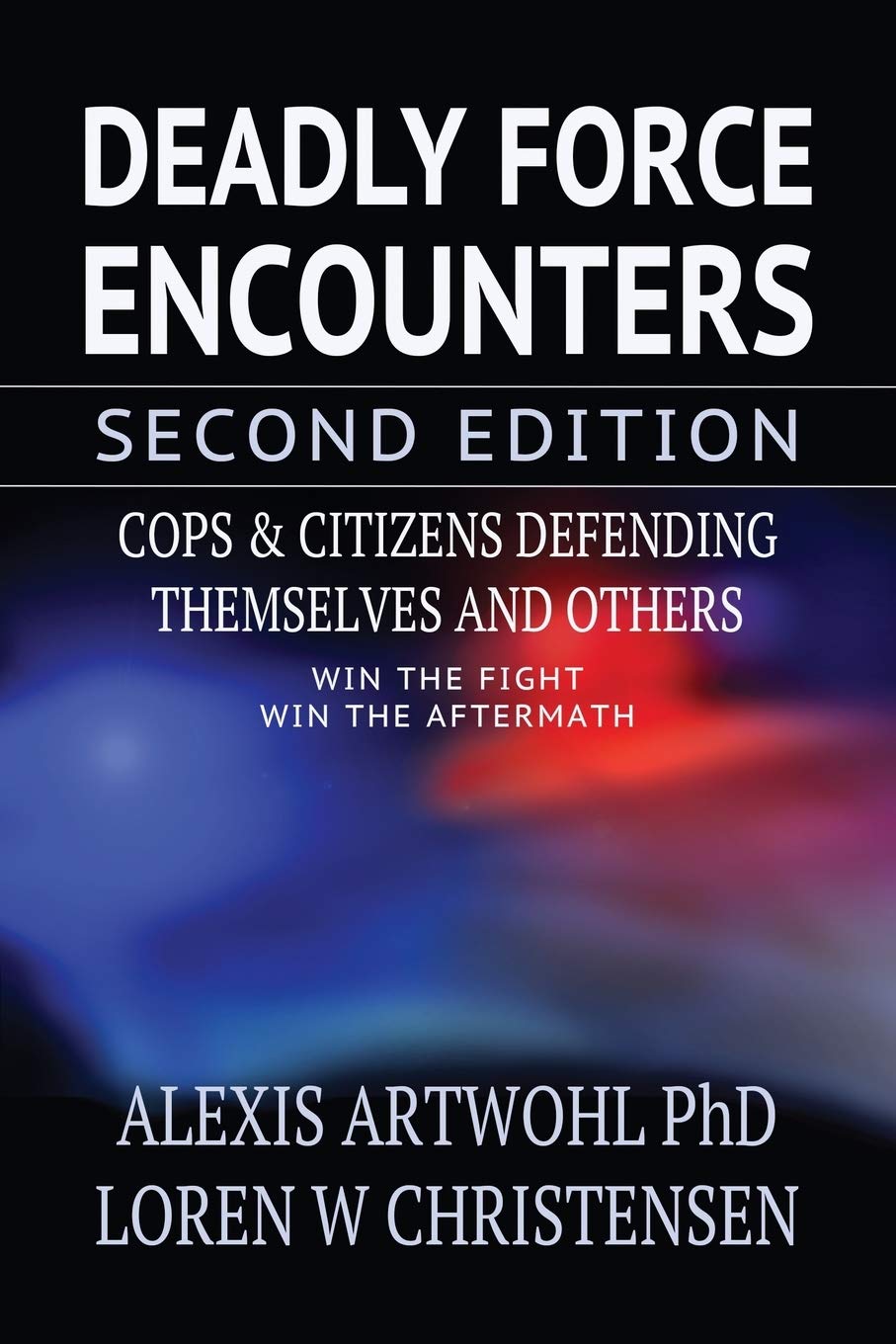
Deadly Force Encounters, Second Edition: Cops and Citizens Defending Themselves and Others,New
Sold by Ergodebooks, an authorized reseller.
Returns accepted within 30 days | support@ergodebooks.com
Shipping Information
- Free Standard Shipping — United States only
- Processing Time: 3–5 business days
- Estimated Delivery: 6–10 business days after dispatch
- Double-boxed, fully insured & discreetly packaged
- Tracking number sent via email once dispatched
Returns & Refund
Returns accepted within 30 days of delivery.
Damaged or Defective Item
Free return shipping + replacement or full refund
Wrong Item Received
Free return shipping + replacement or full refund
Change of Mind
Return shipping at customer's expense · 25% restocking fee applies
Payment Option

In 1997, renown police psychologist Dr. Alexis Artwohl and police officer Loren W. Christensen (coauthor of On Combat) wrote Deadly Force Encounters: What Cops Need to Know to Mentally and Physically Prepare for and Survive a Gunfight. It quickly became an authoritative book for police officers, citizens legally carrying a concealed firearm, and police academies.The greatly expanded scientific research, stories, and analysis in this second edition, Deadly Force Encounters: Cops and Citizens Defending Themselves and Others, focus on the most infrequent but most challenging part of the police profession: the use of deadly force. This book is not about specific laws, tactics, or equipment, but how the science of human performance influences the people behind the badge. This knowledge is crucial for physical, legal, and emotional survival.Citizens, armed or not, will benefit from the information to help them survive violent threats. 'When seconds count, the police are only minutes away.' If citizens use deadly force to survive, this book will help them prepare for the legal and emotional challenges of the aftermath.Although the focus is about savings lives when threatened with violence, much of the information is relevant to people facing a wide variety of extreme events and everyday dangers.All readers who want facts about violent encounters rather than myth and illinformed hyperbole will find this book a useful reference.Foreward by Laurence Miller, Ph.D., clinical, forensic, and police psychologist, and author of the upcoming book: The Psychology of Police Deadly Force Encounters: Science, Practice, and Policy (Charles C. Thomas, 2020): 'Already a classic, the second edition of Deadly Force Encounters expands and deepens the empirical, theoretical, and practical knowledge base of police deadly force encounters for the challenges of the 21st century. Written by coauthors who skillfully combine indepth scholarship with onthestreet experience, this is an authoritative guide that every law enforcement supervisor, policymaker, and rank and file cop should be familiar with and have on hand for daytoday guidance. You won't just read this book; you'll deploy it as a vital work tool to make you safer, smarter, and more resilient in the complex and sometimes contentious climate of modern policing. In a field often plagued with subjective impressions, anecdotal mythology, and political agendas, this volume stands out as a sciencebased, practical guide to understanding, preparing for, enduring, and recovering from a law enforcement deadly force encounter with your safety and sanity intact.'IntroductionChapter 1: Shootout with the DevilChapter 2: The Survival TriangleChapter 3: Community PolicingChapter 4: Human Performance FactorsChapter 5: MindsetChapter 6: FearChapter 7: Responses to Handgun Wounds are UnpredictableChapter 8: Citizens: Force MultipliersChapter 9: Attention, Perception, and MemoryChapter 10: Decision makingChapter 11: The Survival Bias in Decision makingChapter 12: TrainingChapter 13: Legal SurvivalChapter 14: Investigations and the CourtroomChapter 15: Shortterm Reactions to a Deadly Force EncounterChapter 16: Traumatic Stress ReactionsChapter 17: Police Officer Job StressChapter 18: Organizational StressChapter 19: ResiliencyChapter 20: Impact on FamiliesBibliographyAbout the Authors
⚠️ WARNING (California Proposition 65):
This product may contain chemicals known to the State of California to cause cancer, birth defects, or other reproductive harm.
For more information, please visit www.P65Warnings.ca.gov.
- Q: What is the main focus of 'Deadly Force Encounters, Second Edition'? A: The book primarily focuses on the psychological and practical aspects of using deadly force in law enforcement and self-defense situations, emphasizing human performance factors rather than specific laws or tactics.
- Q: Who are the authors of this book? A: The book is co-authored by Dr. Alexis Artwohl, a renowned police psychologist, and Loren W. Christensen, a police officer and author.
- Q: How many pages does the book have? A: The book contains a total of 546 pages.
- Q: What type of binding does this book have? A: The book is available in paperback binding.
- Q: When was this edition of the book published? A: The second edition of 'Deadly Force Encounters' was published on December 26, 2019.
- Q: What can readers expect to learn from this book? A: Readers can expect to gain insights into the mental and emotional challenges of deadly force encounters, training techniques, decision-making processes, and the legal implications of using deadly force.
- Q: Is this book suitable for civilians as well as law enforcement professionals? A: Yes, the book provides valuable information for both law enforcement officers and civilians, especially those who may carry concealed firearms.
- Q: Does the book include real-life case studies or examples? A: Yes, the book includes scientific research, stories, and analysis, offering real-life examples to illustrate its concepts.
- Q: Is there a bibliography included in the book? A: Yes, the book includes a bibliography that lists the sources and references used in the research.
- Q: What is the significance of the foreword in this book? A: The foreword, written by Laurence Miller, Ph.D., highlights the book's authoritative nature and its importance as a resource for law enforcement and policy makers.