
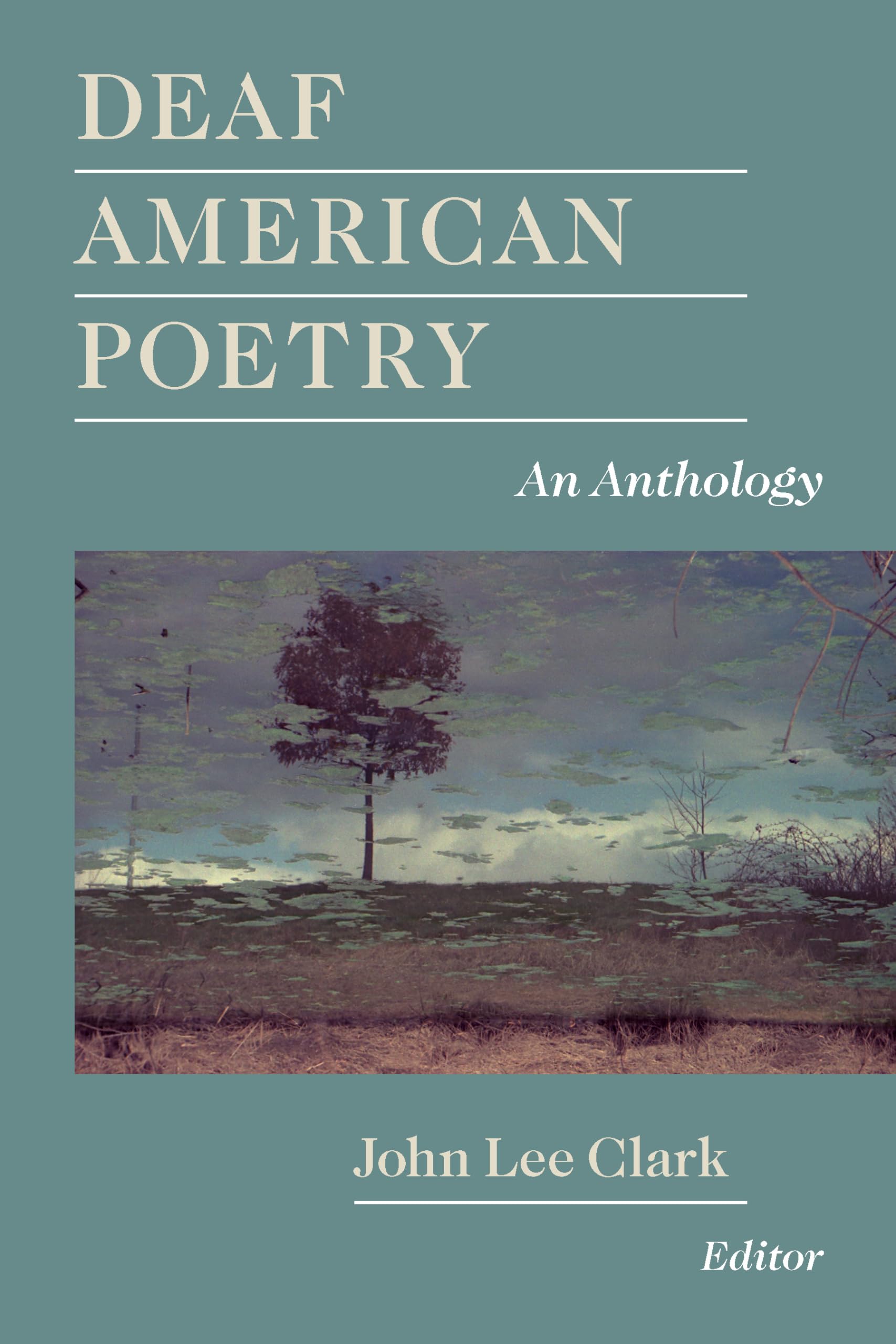
Title
Deaf American Poetry: An Anthology,New
Sold by Ergodebooks, an authorized reseller.
Returns accepted within 30 days | support@ergodebooks.com
Shipping Information
- Free Standard Shipping — United States only
- Processing Time: 3–5 business days
- Estimated Delivery: 6–10 business days after dispatch
- Double-boxed, fully insured & discreetly packaged
- Tracking number sent via email once dispatched
Returns & Refund
Returns accepted within 30 days of delivery.
Damaged or Defective Item
Free return shipping + replacement or full refund
Wrong Item Received
Free return shipping + replacement or full refund
Change of Mind
Return shipping at customer's expense · 25% restocking fee applies
Payment Option

The Deaf poet is no oxymoron, declares editor John Lee Clark in his introduction to Deaf American Poetry: An Anthology. The 95 poems by 35 Deaf American poets in this volume more than confirm his point. From James Nacks early metered narrative poem The Minstrel Boy to the free association of Kristi Merriweathers contemporary It Was His Movin Hands Be Tellin Me, these Deaf poets display mastery of all forms prevalent during the past two centuries. Beyond that, E. Lynn Jacobowitzs In Memoriam: Stephen Michael Ryan exemplifies a form unique to Deaf American poets, the transliteration of verse originally created in American Sign Language.This anthology showcases for the first time the best works of Deaf poets throughout the nations history John R. Burnet, Laura C. Redden, George M. Teegarden, Agatha Tiegel Hanson, Loy E. Golladay, Robert F. Panara, Mervin D. Garretson, Clayton Valli, Willy Conley, Raymond Luczak, Christopher Jon Heuer, Pamela WrightMeinhardt, and many others. Each of their poems reflects the sensibilities of their times, and the progression of their work marks the changes that deaf Americans have witnessed through the years. In The Mutes Lament, John Carlin mourns the wonderful things that he cannot hear, and looks forward to heaven where replete with purest joys/My ears shall be unsealed, and I shall hear. In sharp contrast, Mary Toles Peet, who benefitted from being taught by Deaf teachers, wrote Thoughts on Music with an entirely different attitude. She concludes her account of the purported beauty of music with the realization that the music of my inward ear/Brings joy far more intense.Clark tracks these subtle shifts in awareness through telling, brief biographies of each poet. By doing so, he reveals in Deaf American Poetry how the work of Deaf poets serves as a prism through which Deaf people can know themselves better and through which the rest of the world can see life in a new light.
⚠️ WARNING (California Proposition 65):
This product may contain chemicals known to the State of California to cause cancer, birth defects, or other reproductive harm.
For more information, please visit www.P65Warnings.ca.gov.
- Q: What is the main theme of 'Deaf American Poetry: An Anthology'? A: The anthology explores the unique perspectives and experiences of Deaf American poets, showcasing their mastery of various poetic forms and highlighting the cultural significance of their work.
- Q: Who is the editor of this anthology? A: The anthology is edited by John Lee Clark, who provides insights into the poets' lives and the evolution of Deaf poetry.
- Q: How many poems are included in this anthology? A: The anthology features 95 poems by 35 different Deaf American poets.
- Q: What types of poetry are represented in the anthology? A: The collection includes a variety of poetic forms, from metered narrative poems to free verse, reflecting the diverse styles of Deaf poets over the past two centuries.
- Q: Is this anthology suitable for readers unfamiliar with Deaf culture? A: Yes, the anthology is accessible to all readers, as it provides context and insights that help bridge the gap between Deaf culture and the hearing community.
- Q: What is the significance of the poem 'In Memoriam: Stephen Michael Ryan'? A: This poem exemplifies a unique form of poetry created by Deaf poets, showcasing the transliteration of verse originally in American Sign Language.
- Q: How does the anthology address the challenges faced by Deaf poets? A: Through the poems and biographical sketches, the anthology highlights the personal and societal challenges faced by Deaf poets and how their work reflects their experiences.
- Q: What is the publication date of 'Deaf American Poetry: An Anthology'? A: The anthology was published on March 15, 2009.
- Q: What is the physical format of the book? A: The book is available in paperback format and contains 280 pages.
- Q: Can this anthology be used in educational settings? A: Yes, this anthology can be a valuable resource for educational settings, offering insights into Deaf culture and the literary contributions of Deaf poets.