
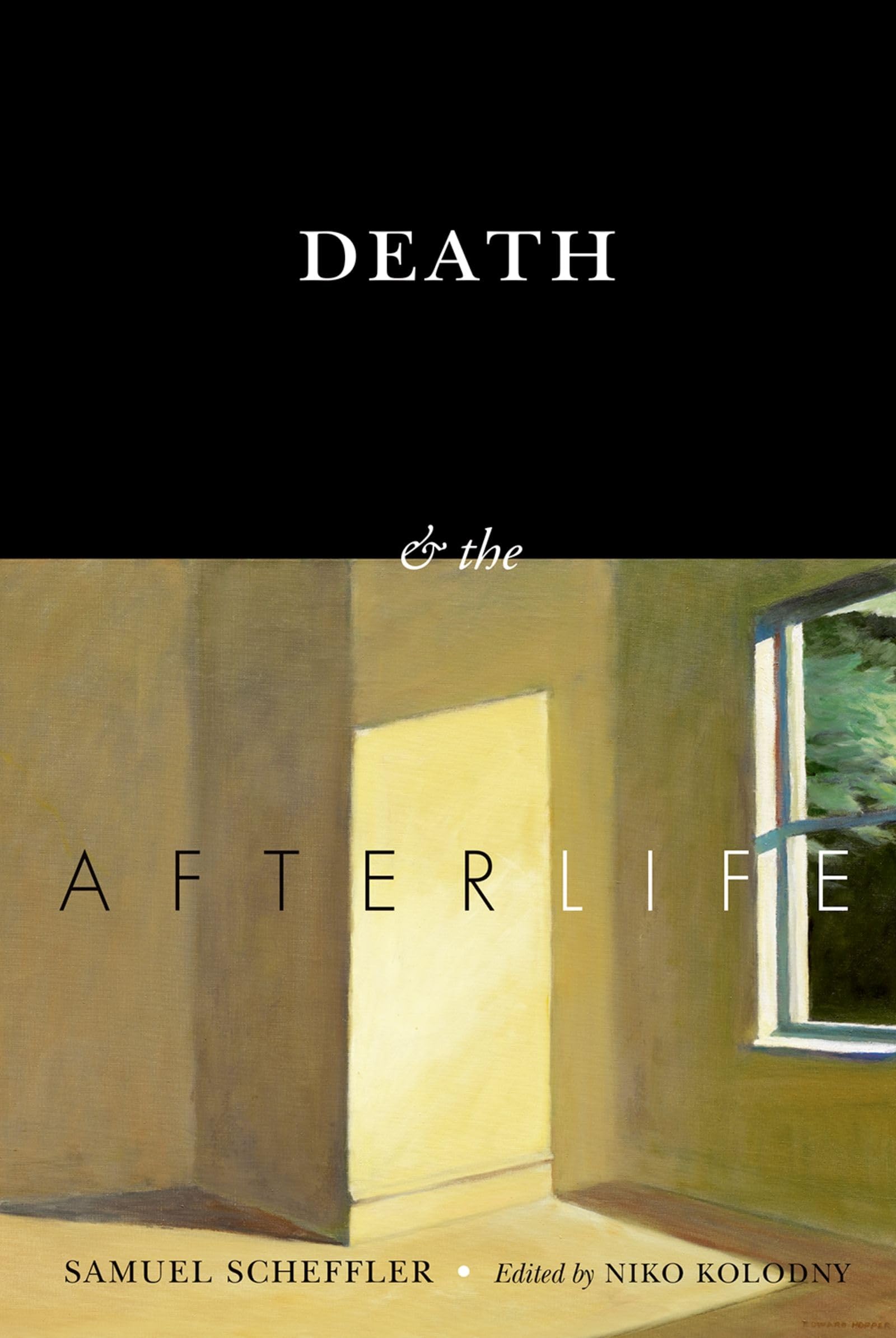
Title
Death and the Afterlife (The Berkeley Tanner Lectures),Used
Sold by Ergodebooks, an authorized reseller.
Returns accepted within 30 days | support@ergodebooks.com
Shipping Information
- Free Standard Shipping — United States only
- Processing Time: 3–5 business days
- Estimated Delivery: 6–10 business days after dispatch
- Double-boxed, fully insured & discreetly packaged
- Tracking number sent via email once dispatched
Returns & Refund
Returns accepted within 30 days of delivery.
Damaged or Defective Item
Free return shipping + replacement or full refund
Wrong Item Received
Free return shipping + replacement or full refund
Change of Mind
Return shipping at customer's expense · 25% restocking fee applies
Payment Option

Suppose you knew that, though you yourself would live your life to its natural end, the earth and all its inhabitants would be destroyed thirty days after your death. To what extent would you remain committed to your current projects and plans? Would scientists still search for a cure for cancer? Would couples still want children?In Death and the Afterlife, philosopher Samuel Scheffler poses this thought experiment in order to show that the continued life of the human race after our deathsthe 'afterlife' of the titlematters to us to an astonishing and previously neglected degree. Indeed, Scheffler shows that, in certain important respects, the future existence of people who are as yet unborn matters more to us than our own continued existence and the continued existence of those we love. Without the expectation that humanity has a future, many of the things that now matter to us would cease to do so. By contrast, the prospect of our own deaths does little to undermine our confidence in the value of our activities. Despite the terror we may feel when contemplating our deaths, the prospect of humanity's imminent extinction would pose a far greater threat to our ability to lead lives of wholehearted engagement. Scheffler further demonstrates that, although we are not unreasonable to fear death, personal immortality, like the imminent extinction of humanity, would also undermine our confidence in the values we hold dear. His arresting conclusion is that, in order for us to lead valueladen lives, what is necessary is that we ourselves should die and that others should live.Death and the Afterlife concludes with commentary by four distinguished philosophersHarry Frankfurt, Niko Kolodny, Seana Shiffrin, and Susan Wolfwho discuss Scheffler's ideas with insight and imagination. Scheffler adds a final reply.
⚠️ WARNING (California Proposition 65):
This product may contain chemicals known to the State of California to cause cancer, birth defects, or other reproductive harm.
For more information, please visit www.P65Warnings.ca.gov.
- Q: What is the main theme of 'Death and the Afterlife'? A: The main theme of 'Death and the Afterlife' revolves around the philosophical implications of human mortality and the significance of the future existence of humanity after our own deaths.
- Q: Who is the author of this book? A: The author of 'Death and the Afterlife' is philosopher Samuel Scheffler.
- Q: What type of binding does this book have? A: This book is available in paperback binding.
- Q: How many pages are in 'Death and the Afterlife'? A: 'Death and the Afterlife' contains a total of 224 pages.
- Q: When was 'Death and the Afterlife' published? A: 'Death and the Afterlife' was published on September 1, 2016.
- Q: What philosophical questions does the book explore? A: The book explores questions about the value of human life, the implications of personal mortality, and how the future existence of humanity affects our current values and commitments.
- Q: Does the book include commentary from other philosophers? A: Yes, 'Death and the Afterlife' concludes with commentary from four distinguished philosophers: Harry Frankfurt, Niko Kolodny, Seana Shiffrin, and Susan Wolf.
- Q: Is the book suitable for readers new to philosophy? A: 'Death and the Afterlife' is written in an engaging manner that can be accessible to readers who are new to philosophy, as well as those with more advanced knowledge.
- Q: What are some key ideas discussed in the book? A: Key ideas include the relationship between personal immortality and the value of life, the importance of future generations, and how the fear of death influences our engagement with life.
- Q: Can this book be used for academic purposes? A: Yes, 'Death and the Afterlife' can be used for academic purposes, as it presents thought-provoking philosophical arguments and is suitable for discussions in philosophy courses.