If you have any questions, you are always welcome to contact us. We'll get back to you as soon as possible, withing 24 hours on weekdays.
Customer service
All questions about your order, return and delivery must be sent to our customer service team by e-mail at yourstore@yourdomain.com
Sale & Press
If you are interested in selling our products, need more information about our brand or wish to make a collaboration, please contact us at press@yourdomain.com
Help
If you have any questions, you are always welcome to contact us. We'll get back to you as soon as possible, withing 24 hours on weekdays.
Customer service
All questions about your order, return and delivery must be sent to our customer service team by e-mail at yourstore@yourdomain.com
Sale & Press
If you are interested in selling our products, need more information about our brand or wish to make a collaboration, please contact us at press@yourdomain.com
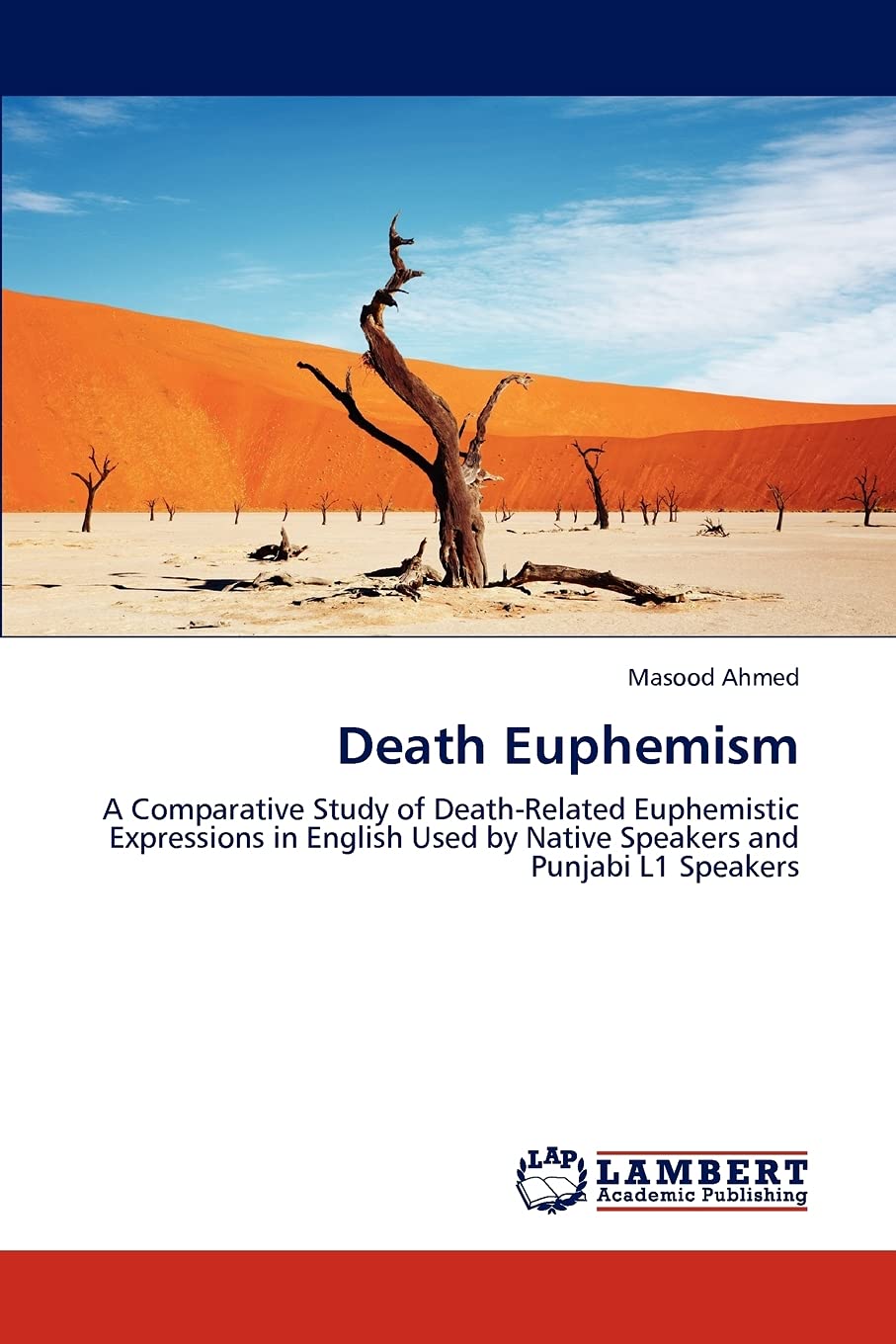
Euphemism is a linguistic lubricant aiming at reducing communicative friction. Some happenings are too sensitive to be expressed without linguistic safeguards i.e. euphemisms. Death is, undoubtedly, one of such happenings which have been taboos since time immemorial. This thesis attempts to make a comparative analysis of the use of death euphemism in English by native English speakers and the Punjabi L1 speakers,well versed in English language. The study also encompasses whether education plays a significant role in the use of euphemistic expressions for death and dying. The hypothesis under investigation is that native English speakers use less euphemistic expressions for death in comparison with Punjabi L1 speakers. The population consists of native English speakers across the globe and Punjabi L1 speakers well versed in English language. The sample comprises 34 respondents in each case. The researcher has used random sampling technique. A questionnaire, containing 15 items, has been used to gather data. The study explores that Punjabi L1 speakers, while communicating in English language, are more prone to using euphemistic expressions for death than the native English speaker.
⚠️ WARNING (California Proposition 65):
This product may contain chemicals known to the State of California to cause cancer,
birth defects, or other reproductive harm.
For MAP (Minimum Advertised Price) violations and Intellectual Property (IP) or Trademark concerns, please contact:
support@ergodebooks.com
⚠️ California Proposition 65 Warning: Some products sold on this website may expose you to chemicals known to the State of California to cause cancer, birth defects, or other reproductive harm. For more information, visit www.P65Warnings.ca.gov.