
Title
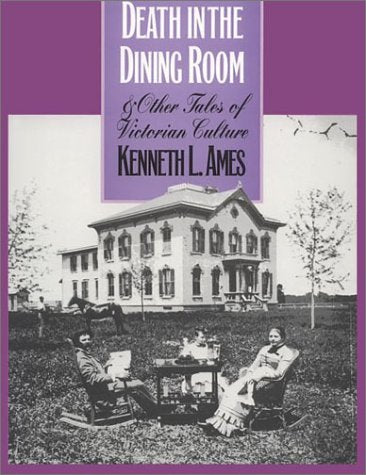
Death in the Dining Room and Other Tales of Victorian Culture,Used
Sold by Ergodebooks, an authorized reseller.
Returns accepted within 30 days | support@ergodebooks.com
Shipping Information
- Free Standard Shipping — United States only
- Processing Time: 3–5 business days
- Estimated Delivery: 6–10 business days after dispatch
- Double-boxed, fully insured & discreetly packaged
- Tracking number sent via email once dispatched
Returns & Refund
Returns accepted within 30 days of delivery.
Damaged or Defective Item
Free return shipping + replacement or full refund
Wrong Item Received
Free return shipping + replacement or full refund
Change of Mind
Return shipping at customer's expense · 25% restocking fee applies
Payment Option

In this provocative look at Victorian America, Kenneth Ames explores the minds of Victorians by examining some of their most distinctive and fascinating creations. Featuring five onceprominent home furnishings, he reconstructs a vanished culture and demonstrates the centrality of the artifact to historical understanding. Richly illustrated with photographs of surviving objects as well as images from a wide variety of period sources, the five essays discuss specific pieceshallstands, sideboards, embroidered mottoes, parlor organs, and seating furniturewithin the context of broader cultural issues and concerns. Ames reveals not only the major outlines of Victorian culture but also the conflicts and tensions deep within that culture.An extraordinary proliferation of goods characterizes the Victorian world. Throughout the study, Ames considers the relationship of some of these household objects to issues of class, gender, and place. For example, the importance of public image was dramatized by the rituals of the front hall in Victorian homes: its placement within the house, the massive hallstand with its receptacles for calling cards and umbrellas, accommodations for temporary and usually uncomfortable seating. The dining room was a shrine to the notion of "man's" dominion over natureeach elaborately carved sideboard displayed a frieze of slaughtered game and harvested vegetation. Parlor organs, a blending of the sacred and the profane, provided an occasion to display feminine accomplishment and to symbolize the role of the bourgeois Christian lady. Ames also discusses how the prevailing class and gender hierarchy was echoed in the posture of seating furniture and its arrangement.The author is one of the premier interpreters of Victorian culture in America. His witty, provocative, and irreverent commentary on the "quaint" fixtures of the Victorian household will fascinate scholars, antique buffs, and collectors on nostalgia.
⚠️ WARNING (California Proposition 65):
This product may contain chemicals known to the State of California to cause cancer, birth defects, or other reproductive harm.
For more information, please visit www.P65Warnings.ca.gov.