If you have any questions, you are always welcome to contact us. We'll get back to you as soon as possible, withing 24 hours on weekdays.
Customer service
All questions about your order, return and delivery must be sent to our customer service team by e-mail at yourstore@yourdomain.com
Sale & Press
If you are interested in selling our products, need more information about our brand or wish to make a collaboration, please contact us at press@yourdomain.com
Help
If you have any questions, you are always welcome to contact us. We'll get back to you as soon as possible, withing 24 hours on weekdays.
Customer service
All questions about your order, return and delivery must be sent to our customer service team by e-mail at yourstore@yourdomain.com
Sale & Press
If you are interested in selling our products, need more information about our brand or wish to make a collaboration, please contact us at press@yourdomain.com
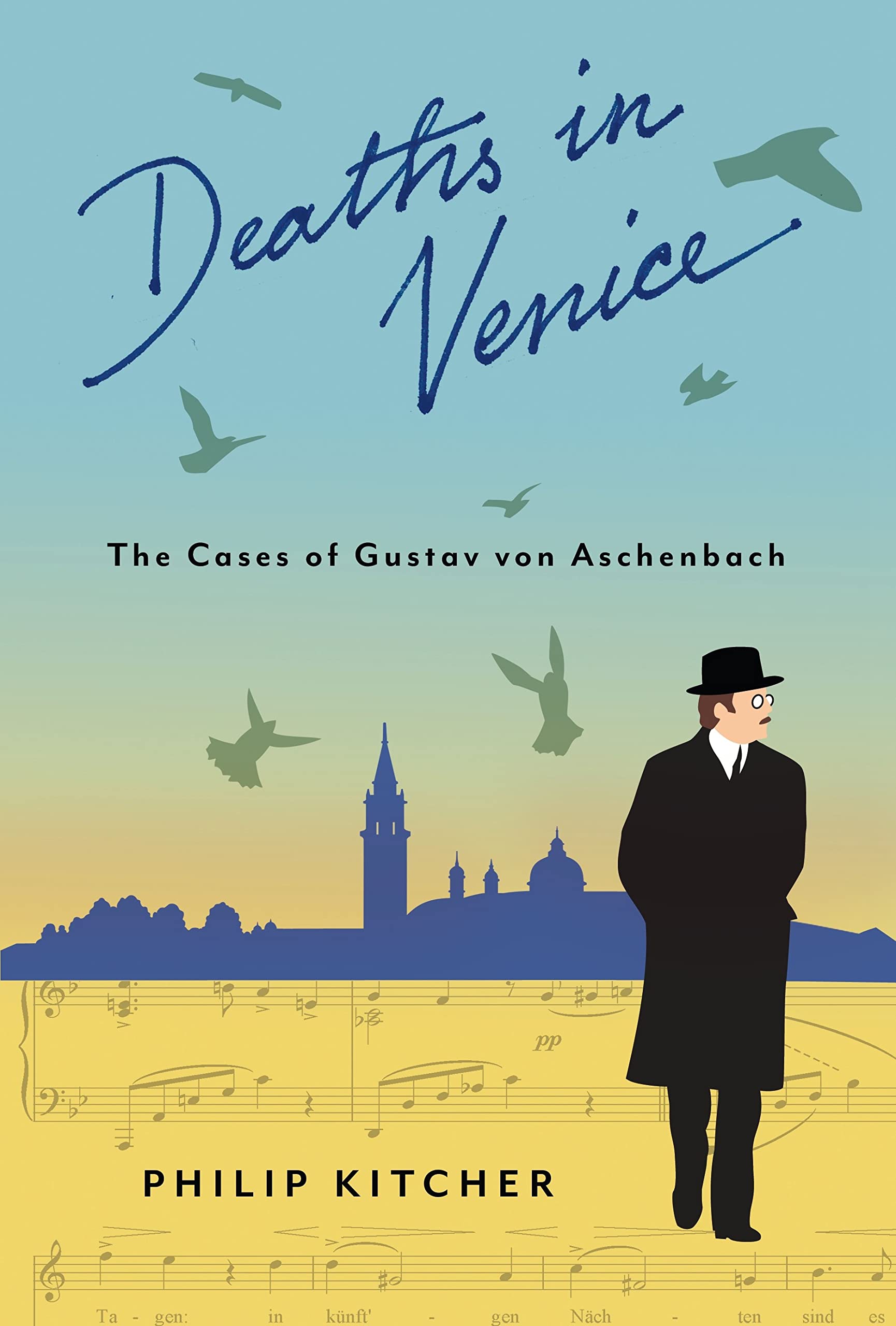
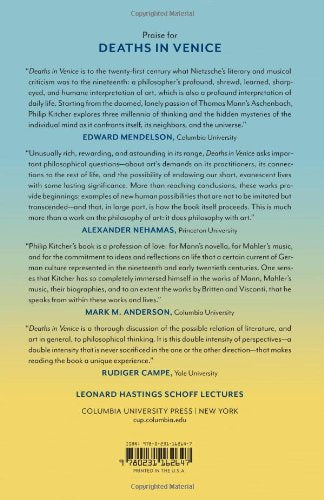
Published in 1913, Thomas Mann's Death in Venice is one of the most widely read novellas in any language. In the 1970s, Benjamin Britten adapted it into an opera, and Luchino Visconti turned it into a successful film. Reading these works from a philosophical perspective, Philip Kitcher connects the predicament of the novella's central character to Western thought's most compelling questions.In Mann's story, the author Gustav von Aschenbach becomes captivated by an adolescent boy, first seen on the lido in Venice, the eventual site of Aschenbach's own death. Mann works through central concerns about how to live, explored with equal intensity by his German predecessors, Schopenhauer and Nietzsche. Kitcher considers how Mann's, Britten's, and Visconti's treatments illuminate the tension between social and ethical values and an artist's sensitivity to beauty. Each work asks whether a life devoted to selfsacrifice in the pursuit of lasting achievements can be sustained and whether the breakdown of discipline undercuts its worth. Haunted by the prospect of his death, Aschenbach also helps us reflect on whether it is possible to achieve anything in full awareness of our finitude and in knowing our successes are always incomplete.
⚠️ WARNING (California Proposition 65):
This product may contain chemicals known to the State of California to cause cancer,
birth defects, or other reproductive harm.
For MAP (Minimum Advertised Price) violations and Intellectual Property (IP) or Trademark concerns, please contact:
support@ergodebooks.com
⚠️ California Proposition 65 Warning: Some products sold on this website may expose you to chemicals known to the State of California to cause cancer, birth defects, or other reproductive harm. For more information, visit www.P65Warnings.ca.gov.