
Title
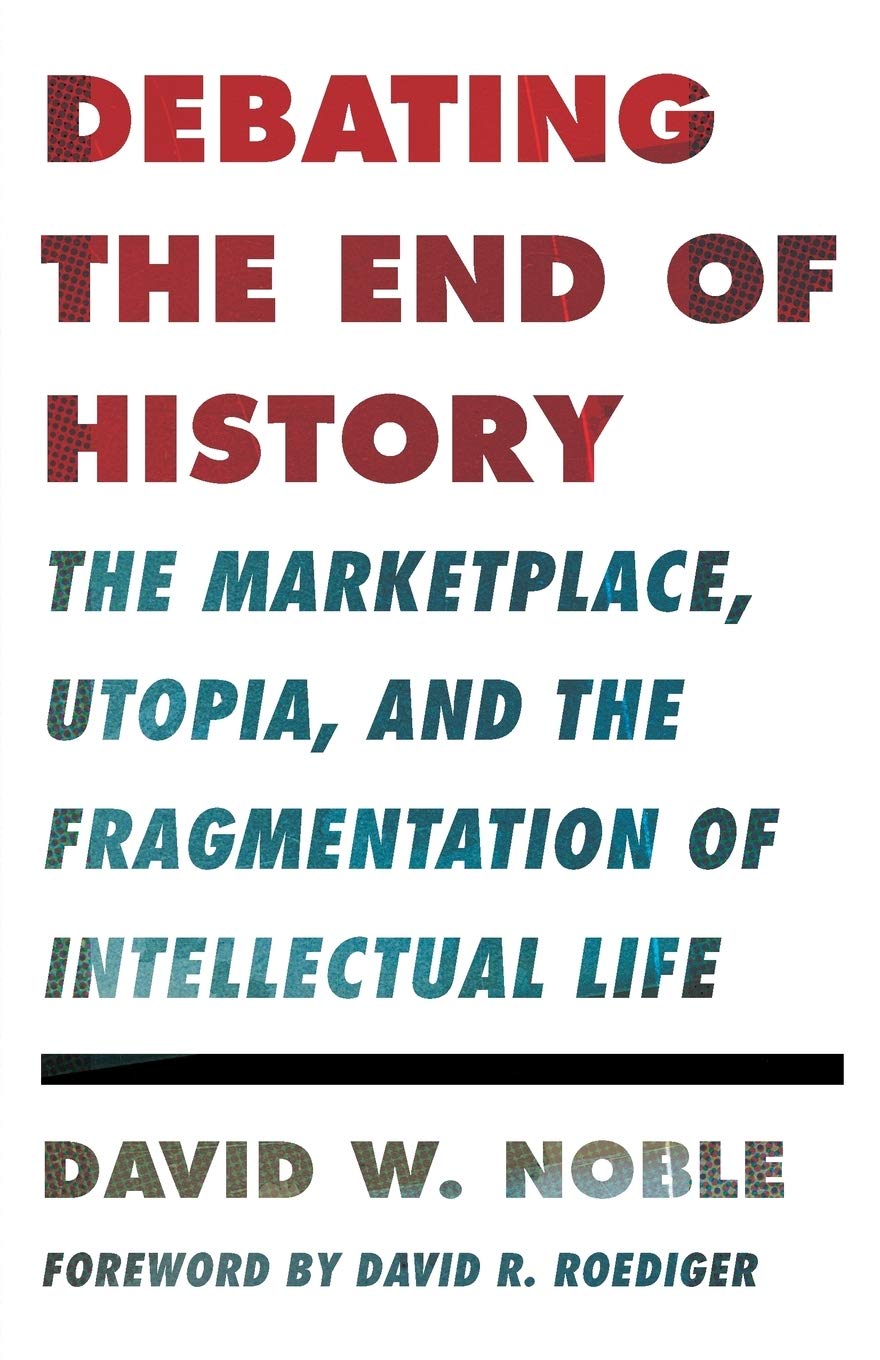
Debating the End of History: The Marketplace, Utopia, and the Fragmentation of Intellectual Life (Critical American Studies),Used
Sold by Ergodebooks, an authorized reseller.
Returns accepted within 30 days | support@ergodebooks.com
Shipping Information
- Free Standard Shipping — United States only
- Processing Time: 3–5 business days
- Estimated Delivery: 6–10 business days after dispatch
- Double-boxed, fully insured & discreetly packaged
- Tracking number sent via email once dispatched
Returns & Refund
Returns accepted within 30 days of delivery.
Damaged or Defective Item
Free return shipping + replacement or full refund
Wrong Item Received
Free return shipping + replacement or full refund
Change of Mind
Return shipping at customer's expense · 25% restocking fee applies
Payment Option

Why do modern people assume that there will be perpetual economic growth? Because, David W. Noble tells us in this provocative study of cultural criticism, such a utopian conviction is the necessary foundation for bourgeois culture. One can imagine the existence of modern middle classes only as long as the capitalist marketplace is expanding. For Noble, the relatedand relevantquestion is, how can the middle classes believe that a finite earth is an environment in which infinite growth is possible? The answer, which Noble so painstakingly charts, is nothing less than a genealogy of the uses and abuses of knowledge that lie at the heart of so many of our political problems today.As far back as Plato and as recently as Alan Greenspan, Noble finds proponents of the idea of a world of independent, rational individuals living in timeless simplicity, escaping from an old world of interdependence and generations. Such notions, although in sync with Newtonian science, have come up against the subsequent conclusions of geology, biology, and the physics of Einstein. In a survey of the responses to this quandary of historians, economists, literary critics, and ecologists, Noble reveals how this confrontation, and its implications for a single global marketplace, has forced certain academic disciplines into unnaturaland untenablepositions.David Nobles work exposes the costnot academic at allof the segregation of the physical sciences from the humanities and social sciences, even as it demonstrates the required movement of the humanities toward the ecological vision of a single, interconnected world.
⚠️ WARNING (California Proposition 65):
This product may contain chemicals known to the State of California to cause cancer, birth defects, or other reproductive harm.
For more information, please visit www.P65Warnings.ca.gov.