If you have any questions, you are always welcome to contact us. We'll get back to you as soon as possible, withing 24 hours on weekdays.
Customer service
All questions about your order, return and delivery must be sent to our customer service team by e-mail at yourstore@yourdomain.com
Sale & Press
If you are interested in selling our products, need more information about our brand or wish to make a collaboration, please contact us at press@yourdomain.com
Help
If you have any questions, you are always welcome to contact us. We'll get back to you as soon as possible, withing 24 hours on weekdays.
Customer service
All questions about your order, return and delivery must be sent to our customer service team by e-mail at yourstore@yourdomain.com
Sale & Press
If you are interested in selling our products, need more information about our brand or wish to make a collaboration, please contact us at press@yourdomain.com
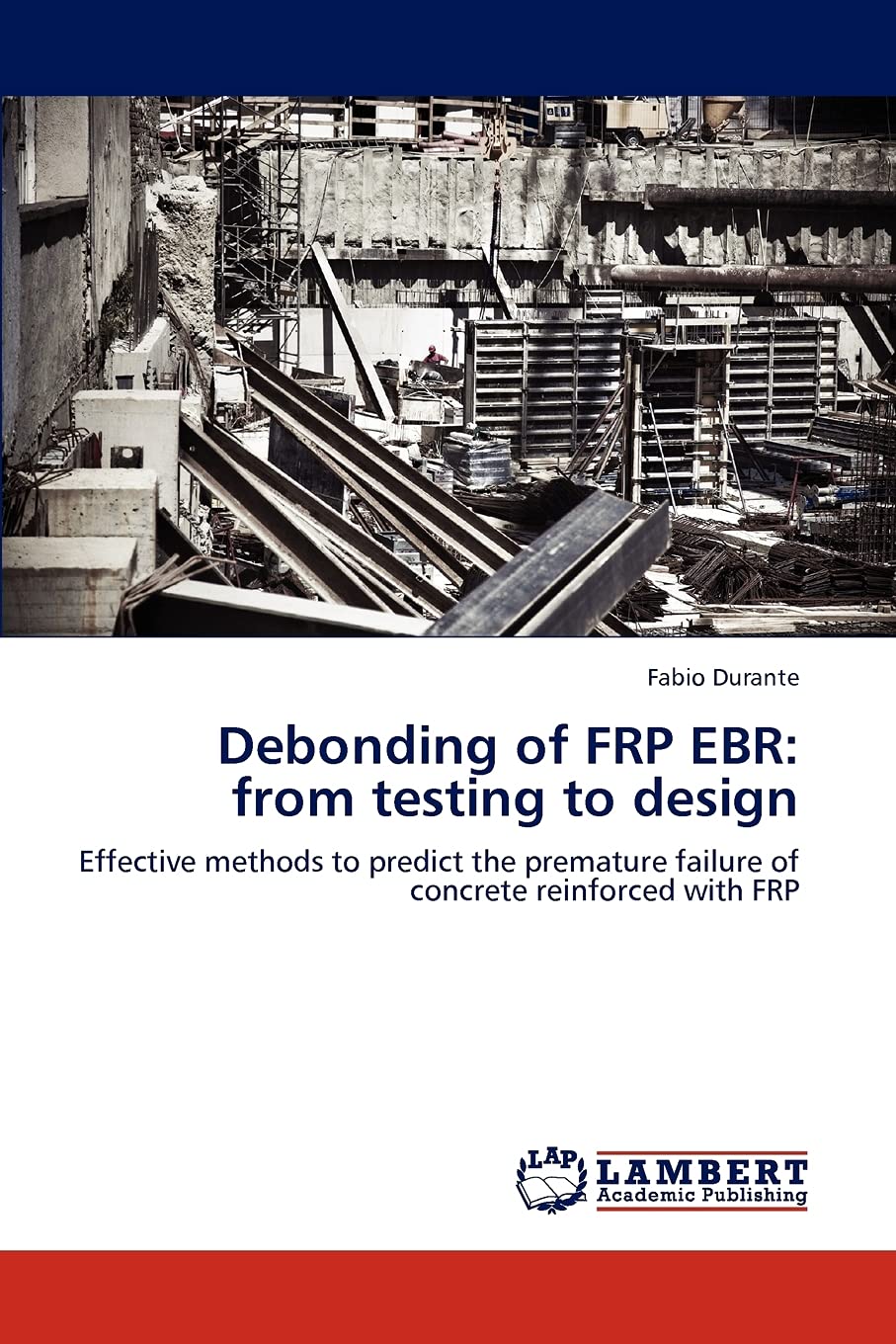
External bonding of fibre reinforced plastic (FRP) strips to reinforced concrete (RC) beams has been widely accepted as an effective method for strengthening. The ultimate flexural strength of strengthened RC beams can be improved significantly, but it is often impaired by premature failure modes, such as concrete cover separation. Several models have been proposed dealing with this issue. The aim of this study is to assess the performance of the existing models with experimental data gathered from the published literature. Moreover, this work presents a study on the bond strength using several types of test methods. Experimental data from literature used to assess the performance of the several test methods. Furthermore, ABAQUS software used to model the test methods in order to understand the behavior of failure and investigate the stresses in concrete and in FRP plate. The main aim of this dissertation is to identify which of the available test methods better represents a real situation and can thus yield more representative data than can be used to effectively calibrate the fracture energy parameters.
⚠️ WARNING (California Proposition 65):
This product may contain chemicals known to the State of California to cause cancer,
birth defects, or other reproductive harm.
For MAP (Minimum Advertised Price) violations and Intellectual Property (IP) or Trademark concerns, please contact:
support@ergodebooks.com
⚠️ California Proposition 65 Warning: Some products sold on this website may expose you to chemicals known to the State of California to cause cancer, birth defects, or other reproductive harm. For more information, visit www.P65Warnings.ca.gov.