
Title
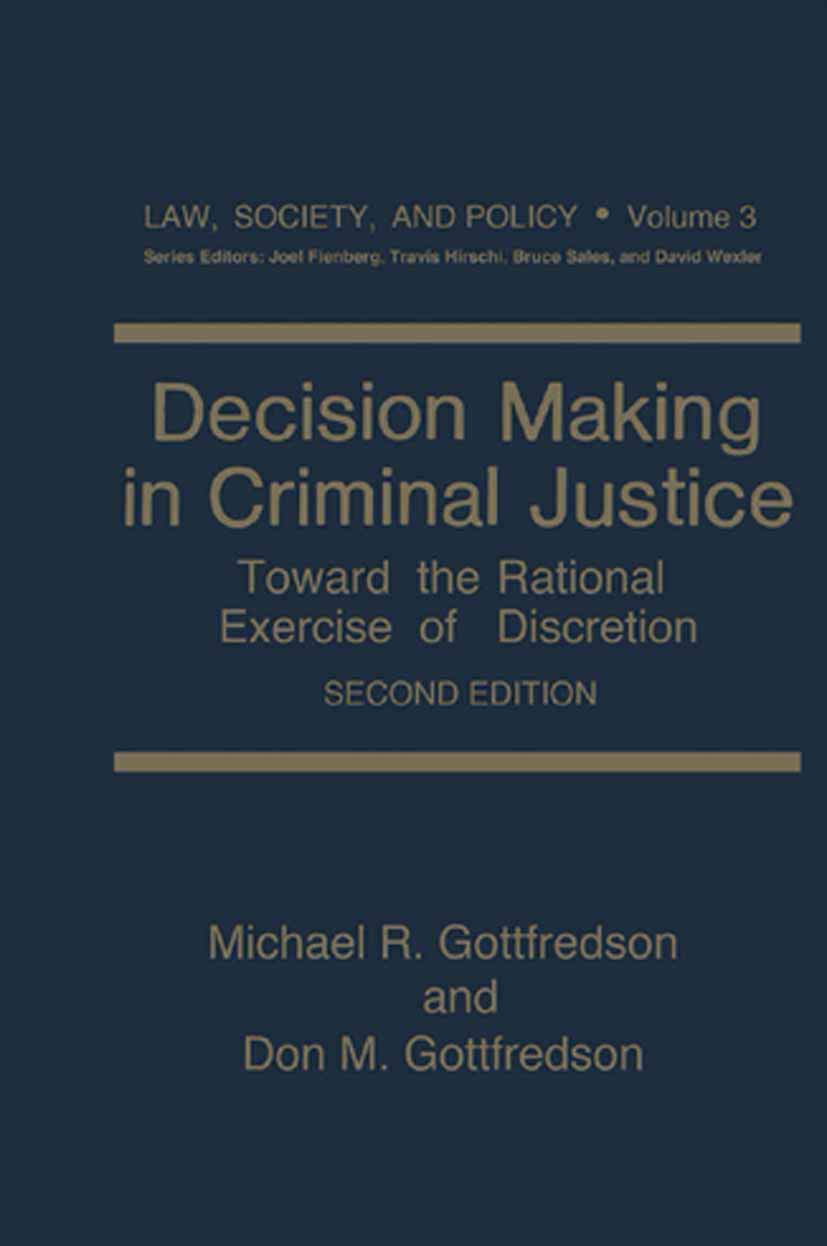
Decision Making In Criminal Justice: Toward The Rational Exercise Of Discretion (Law, Society And Policy, 3),New
Sold by Ergodebooks, an authorized reseller.
Returns accepted within 30 days | support@ergodebooks.com
Shipping Information
- Free Standard Shipping — United States only
- Processing Time: 3–5 business days
- Estimated Delivery: 6–10 business days after dispatch
- Double-boxed, fully insured & discreetly packaged
- Tracking number sent via email once dispatched
Returns & Refund
Returns accepted within 30 days of delivery.
Damaged or Defective Item
Free return shipping + replacement or full refund
Wrong Item Received
Free return shipping + replacement or full refund
Change of Mind
Return shipping at customer's expense · 25% restocking fee applies
Payment Option

The Study Of Decisions In The Criminal Justice Process Provides A Useful Focus For The Examination Of Many Fundamental Aspects Of Criminal Jus Tice. These Decisions Are Not Always Highly Visible. They Are Made, Or Dinarily, Within Wide Areas Of Discretion. The Aims Of The Decisions Are Not Always Clear, And, Indeed, The Principal Objectives Of These Decisions Are Often The Subject Of Much Debate. Usually They Are Not Guided By Explicit Decision Policies. Often The Participants Are Unable To Verbalize The Basis For The Selection Of Decision Alternatives. Adequate Information For The Decisions Is Usually Unavailable. Rarely Can The Decisions Be Demonstrated To Be Rational. By A Rationaldecision We Mean 'That Decision Among Those Possible For The Decisionmaker Which, In The Light Of The Information Available, Maximizes The Probability Of The Achievement Of The Purpose Of The Decisionmaker In That Specific And Particular Case' (Wilkins, 1974A: 70; Also 1969). This Definition, Which Stems From Statistical Decision Theory, Points To Three Fundamental Characteristics Of Decisions. First, It Is As Sumed That A Choice Of Possible Decisions (Or, More Precisely, Of Possible Alternatives) Is Available. If Only One Choice Is Possible, There Is No De Cision Problem, And The Question Of Rationality Does Not Arise. Usually, Of Course, There Will Be A Choice, Even If The Alternative Is To Decide Not To Decidea Choice That, Of Course, Often Has Profound Consequences.
⚠️ WARNING (California Proposition 65):
This product may contain chemicals known to the State of California to cause cancer, birth defects, or other reproductive harm.
For more information, please visit www.P65Warnings.ca.gov.
- Q: What is the length, width, and height of the book? A: The book measures nine point four one inches in length, six point four two inches in width, and one point two inches in height. This size makes it a standard hardcover book, easy to handle.
- Q: How many pages does this book contain? A: This book has three hundred twenty-four pages. It provides an in-depth exploration of decision-making in the criminal justice system.
- Q: What type of binding does the book have? A: The book is bound in hardcover. This binding is durable and ideal for frequent use.
- Q: Who is the author of the book? A: The author of the book is Michael R. Gottfredson. He is known for his contributions to the field of criminal justice.
- Q: What is the main focus of this book? A: The main focus of this book is on decision-making in the criminal justice process. It explores how decisions are made and the discretion involved.
- Q: What is the primary subject category of the book? A: The book falls under the category of Decision-Making and Problem Solving. It provides insights relevant to these topics within criminal justice.
- Q: How can I apply the concepts from this book? A: You can apply the concepts from this book by analyzing decision-making processes in your own work or studies. The insights can be useful for students or professionals in criminal justice.
- Q: Is this book suitable for beginners in criminal justice? A: Yes, this book is suitable for beginners. It presents complex ideas in an accessible manner, making it a valuable resource for newcomers.
- Q: What skills can I develop by reading this book? A: By reading this book, you can develop critical thinking and analytical skills related to decision-making. It encourages you to evaluate the rationale behind choices in the justice system.
- Q: How should I store this book to keep it in good condition? A: Store this book upright on a shelf in a cool, dry place. This will help preserve its binding and pages over time.
- Q: Can I clean the book if it gets dirty? A: No, it’s not recommended to clean the book with liquids. Instead, gently dust it off with a dry cloth to avoid damage.
- Q: What if I want to return the book? A: You can return the book if it is in new condition and within the return policy timeframe. Check the retailer’s policy for specific details.
- Q: What if the book arrives damaged? A: If the book arrives damaged, you should contact the seller for a replacement or refund. Most retailers have a customer service process for this issue.
- Q: Is there a warranty for this book? A: No, books typically do not come with a warranty. However, you can return it if it is defective upon arrival.
- Q: How does this book compare to others in its category? A: This book stands out due to its focus on rational decision-making in criminal justice. It provides a unique perspective compared to other works in the same field.
- Q: What specific topics are covered in the book? A: The book covers topics such as discretion in decision-making, the challenges of rational choices, and the implications of those decisions in criminal justice.