
Title
Decolonial Ecology: Thinking From The Caribbean World (Critical South)
Sold by Ergodebooks, an authorized reseller.
Returns accepted within 30 days | support@ergodebooks.com
Shipping Information
- Free Standard Shipping — United States only
- Processing Time: 3–5 business days
- Estimated Delivery: 6–10 business days after dispatch
- Double-boxed, fully insured & discreetly packaged
- Tracking number sent via email once dispatched
Returns & Refund
Returns accepted within 30 days of delivery.
Damaged or Defective Item
Free return shipping + replacement or full refund
Wrong Item Received
Free return shipping + replacement or full refund
Change of Mind
Return shipping at customer's expense · 25% restocking fee applies
Payment Option

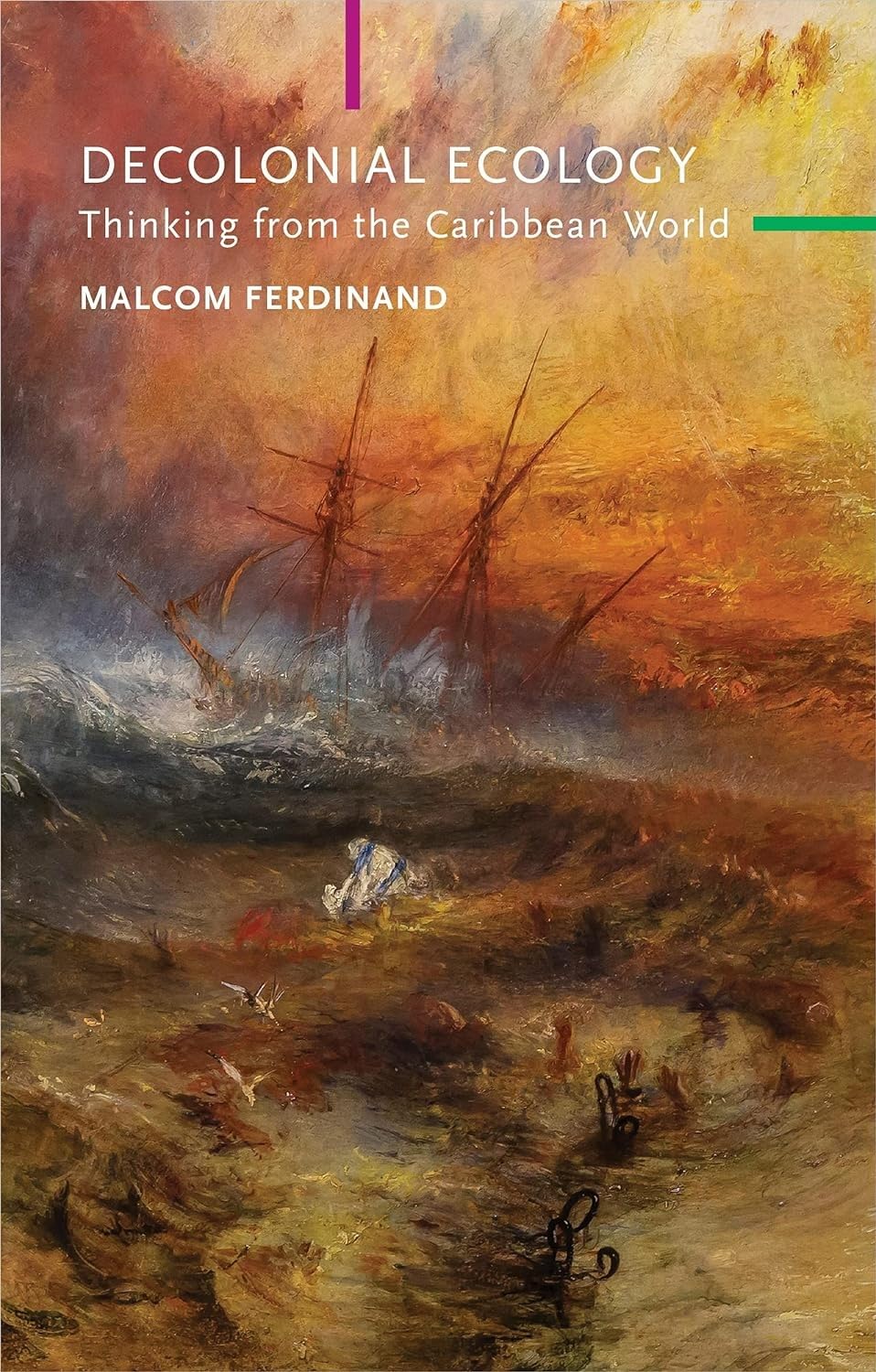
The World Is In The Midst Of A Storm That Has Shaped The History Of Modernity Along A Double Fracture: On The One Hand, An Environmental Fracture Driven By A Technocratic And Capitalist Civilization That Led To The Ongoing Devastation Of The Earths Ecosystems And Its Human And Nonhuman Communities And, On The Other, A Colonial Fracture Instilled By Western Colonization And Imperialism That Resulted In Racial Slavery And The Domination Of Indigenous Peoples And Women In Particular.In This Important New Book, Malcom Ferdinand Challenges This Double Fracture, Thinking From The Caribbean World. Here, The Slave Ship Reveals The Inequalities That Continue During The Storm: Some Are Shackled Inside The Hold And Even Thrown Overboard At The First Gusts Of Wind. Drawing On Empirical And Theoretical Work In The Caribbean, Ferdinand Conceptualizes A Decolonial Ecology That Holds Protecting The Environment Together With The Political Struggles Against (Post)Colonial Domination, Structural Racism, And Misogynistic Practices.Facing The Storm, This Book Is An Invitation To Build A Worldship Where Humans And Nonhumans Can Live Together On A Bridge Of Justice And Shape A Common World. It Will Be Of Great Interest To Students And Scholars In Environmental Humanities And Latin American And Caribbean Studies, As Well As Anyone Interested In Ecology, Slavery, And (De)Colonization.
⚠️ WARNING (California Proposition 65):
This product may contain chemicals known to the State of California to cause cancer, birth defects, or other reproductive harm.
For more information, please visit www.P65Warnings.ca.gov.
- Q: What is the page count of 'Decolonial Ecology: Thinking from the Caribbean World'? A: This book has three hundred pages. It provides an in-depth exploration of environmental and colonial issues from a Caribbean perspective.
- Q: What binding type does this book have? A: This book is available in paperback binding. This makes it lightweight and easy to handle while reading.
- Q: What are the dimensions of this book? A: The dimensions of the book are five point four inches in length, eight point four inches in height, and zero point eight inches in width. These dimensions make it a convenient size for reading and storage.
- Q: Who is the author of 'Decolonial Ecology'? A: The author is Malcom Ferdinand. He brings a unique perspective on ecology and colonial history from the Caribbean.
- Q: What category does this book fall under? A: This book falls under the category of Human Geography. It focuses on the intersections of ecology and colonialism.
- Q: Is 'Decolonial Ecology' suitable for academic study? A: Yes, this book is suitable for academic study. It is of great interest to students and scholars in environmental humanities and Caribbean studies.
- Q: How does Malcom Ferdinand approach ecology in this book? A: Ferdinand approaches ecology by conceptualizing a decolonial framework. He integrates environmental protection with struggles against colonial domination and racism.
- Q: Is this book appropriate for high school students? A: Yes, high school students interested in ecology and history may find it appropriate. It provides a critical examination of colonial impacts on the environment.
- Q: What themes are explored in 'Decolonial Ecology'? A: The themes explored include environmental justice, colonialism, and the struggles of indigenous peoples. These themes are interwoven to present a comprehensive view of ecological issues.
- Q: How should I care for this paperback book? A: Store it in a cool, dry place to maintain its condition. Avoid exposure to direct sunlight to prevent fading of the cover.
- Q: What is the best way to store this book? A: The best way to store this book is upright on a shelf. This prevents bending of the spine and keeps the pages in good condition.
- Q: Can I return this book if I'm not satisfied? A: Yes, you can return the book if you are not satisfied. Check the retailer's return policy for specific terms and conditions.
- Q: What if my copy of 'Decolonial Ecology' arrives damaged? A: If your copy arrives damaged, contact the seller for a replacement or refund. Most retailers have policies in place for damaged items.
- Q: Is there a warranty for this book? A: No, books typically do not come with a warranty. However, return policies can provide a way to address issues.
- Q: How can I find more books like 'Decolonial Ecology'? A: You can explore similar titles in the Human Geography or environmental studies categories. Libraries and bookstores often have recommendations based on themes.
- Q: What makes 'Decolonial Ecology' unique compared to other environmental books? A: Its unique perspective is the focus on Caribbean viewpoints regarding ecology and colonial legacies. This approach offers fresh insights into environmental discussions.