
Title
Decolonizing Psychology: Globalization, Social Justice, and Indian Youth Identities (Explorations in Narrative Psychology),Used
Sold by Ergodebooks, an authorized reseller.
Returns accepted within 30 days | support@ergodebooks.com
Shipping Information
- Free Standard Shipping — United States only
- Processing Time: 3–5 business days
- Estimated Delivery: 6–10 business days after dispatch
- Double-boxed, fully insured & discreetly packaged
- Tracking number sent via email once dispatched
Returns & Refund
Returns accepted within 30 days of delivery.
Damaged or Defective Item
Free return shipping + replacement or full refund
Wrong Item Received
Free return shipping + replacement or full refund
Change of Mind
Return shipping at customer's expense · 25% restocking fee applies
Payment Option

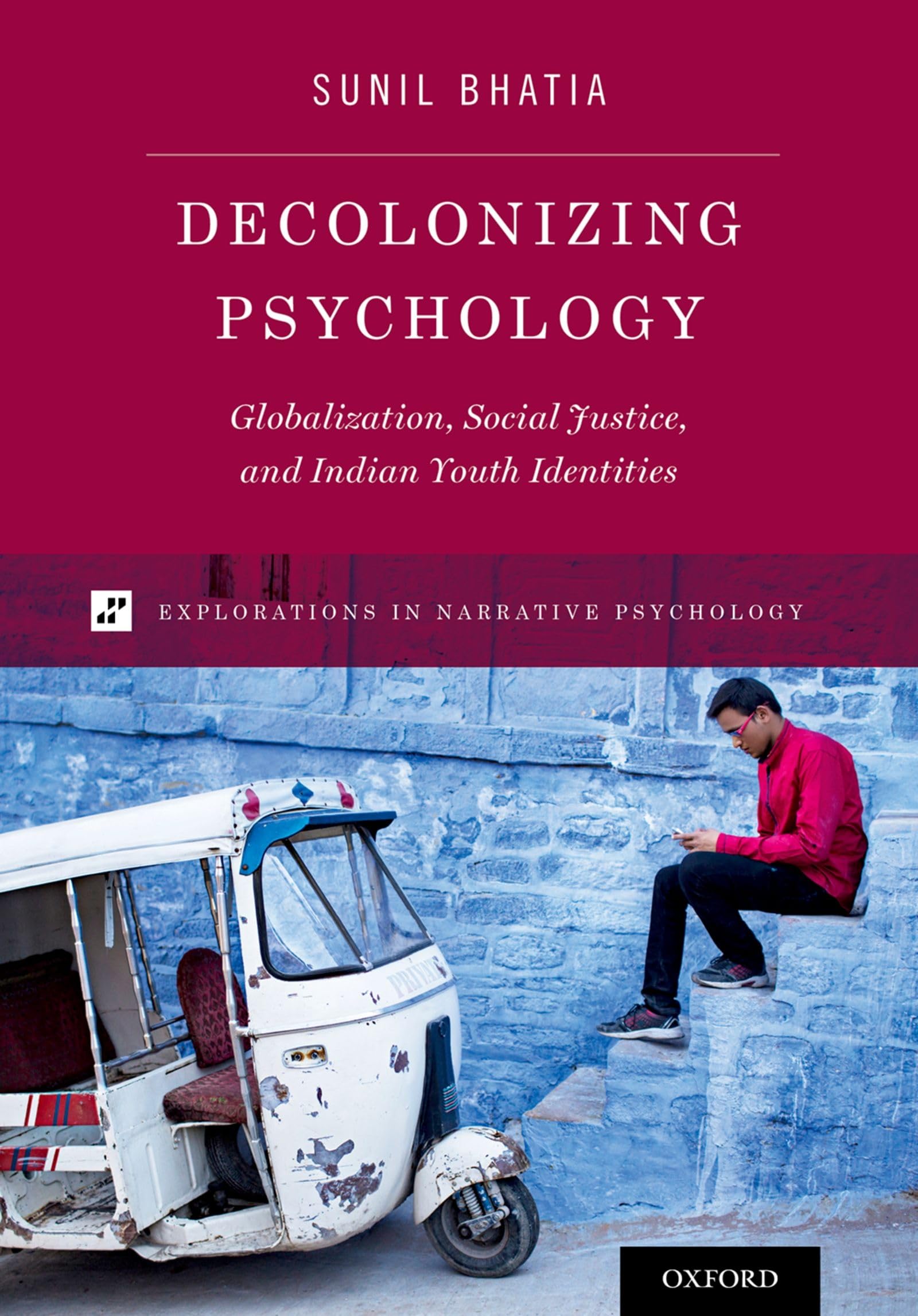
In recent years, the news media has directed a significant amount of attention to the effect of globalization on the second most populous nation in the world: India. With the emergence of new economic opportunities and the influx of foreign popular culture and commodities, India has experienced an enormous sea of change in the last few decades. In Decolonizing Psychology: Globalization, Social Justice, and Indian Youth Identities, author Sunil Bhatia focuses on the psychological tensions that these changes have brought upon Indian youth today.Drawing on dozens of interviews, Bhatia offers readers a compelling glimpse and analysis of how these youth populations are engaging with the emerging presence of globalization in their daytoday lives. As Bhatia explains, young Indians use the term 'world class selves' as a way to identify and describe the ways in which globalization has strengthened their standing in the world. By frequenting urban cafes and bars, watching American television and cinema, traveling abroad, and regularly consuming foreign commodities, Indian youth absorb the westernized culture and view themselves as peers to their western counterparts. At the same time, however, these young Indians proudly hold onto their homeland's traditions governing family and religious values.With remarkable clarity and nuance, Bhatia sheds an important light on the universalizing power and the colonizing dimensions of EuroAmerican psychology. By integrating insights from postcolonial, narrative, and cultural psychologies to explore how EuroAmerican scientific psychology became the standard approach, Bhatia reminds readers of whose stories are not being told, what knowledge is not being considered, and whose lives are not included in the central understanding of psychology today.
⚠️ WARNING (California Proposition 65):
This product may contain chemicals known to the State of California to cause cancer, birth defects, or other reproductive harm.
For more information, please visit www.P65Warnings.ca.gov.