
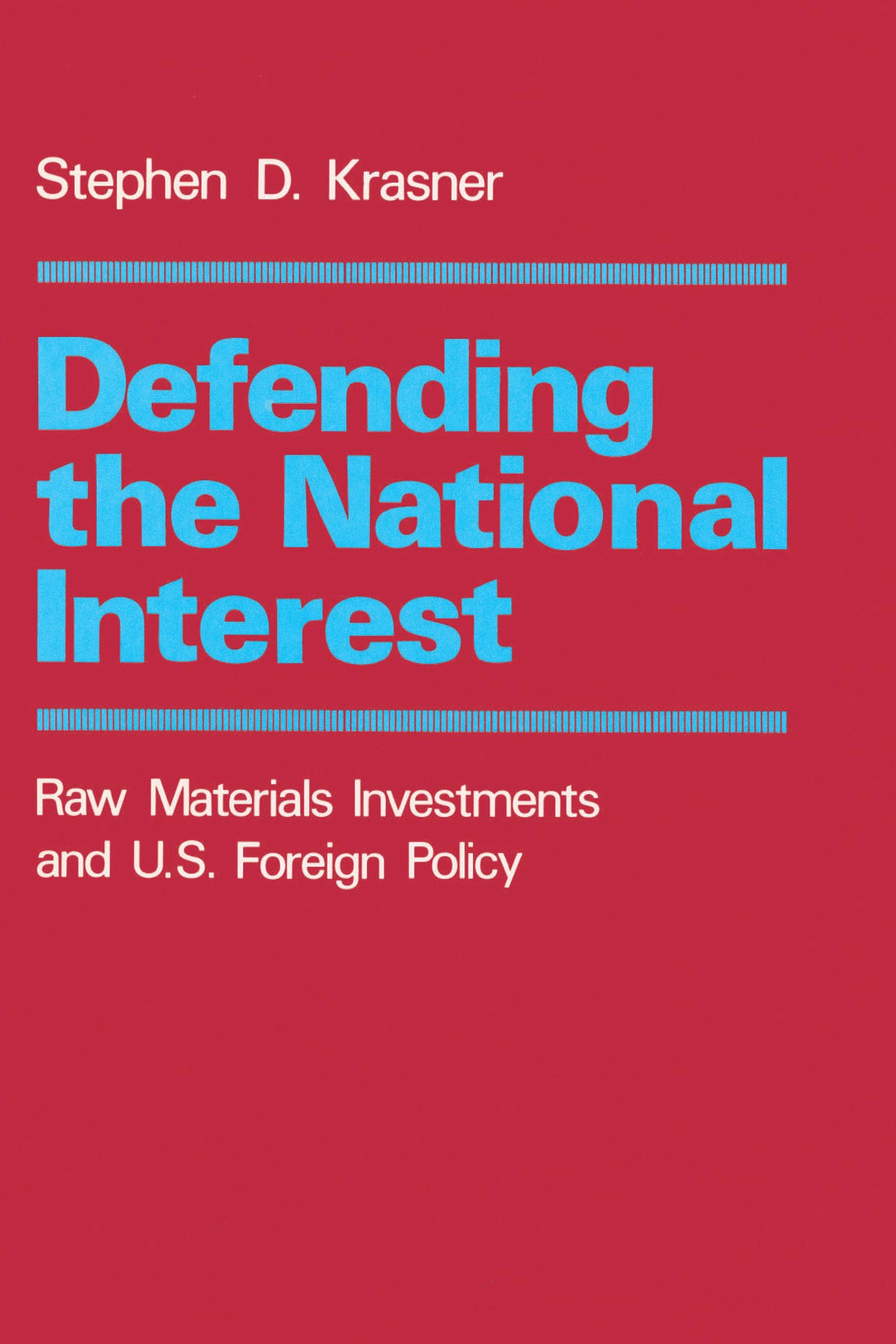
Title
Defending The National Interest: Raw Materials Investments And U.S. Foreign Policy,New
Sold by Ergodebooks, an authorized reseller.
Returns accepted within 30 days | support@ergodebooks.com
Shipping Information
- Free Standard Shipping — United States only
- Processing Time: 3–5 business days
- Estimated Delivery: 6–10 business days after dispatch
- Double-boxed, fully insured & discreetly packaged
- Tracking number sent via email once dispatched
Returns & Refund
Returns accepted within 30 days of delivery.
Damaged or Defective Item
Free return shipping + replacement or full refund
Wrong Item Received
Free return shipping + replacement or full refund
Change of Mind
Return shipping at customer's expense · 25% restocking fee applies
Payment Option

Stephen Krasner'S Assumption Of A Distinction Between State And Society Is The Root Of His Argument For The Superiority Of A Statist Interpretation Of American Foreign Policy. Here He Challenges The Two Dominant And Rival Interpretations Of The Relationship Between State And Society: Interest Group Liberalism And Marxism. He Contends That The State Is An Autonomous Entity Acting On Behalf Of The National Interest, And That State Behavior Cannot Be Explained By Group Or Class Interest.On The Basis Of Fifteen Case Studies Drawn From Extensive Public Records And Published Literature On American Raw Materials Policy In The Twentiethcentury, Professor Krasner Provides Empirical Substance To The Debate About The Meaning Of The 'National Interest,' The Importance Of Bureaucratic Politics, And The Influence Of Business On American Foreign Policy.
⚠️ WARNING (California Proposition 65):
This product may contain chemicals known to the State of California to cause cancer, birth defects, or other reproductive harm.
For more information, please visit www.P65Warnings.ca.gov.
- Q: How many pages does the book have? A: This book has four hundred twenty-four pages. It's a comprehensive text exploring U.S. foreign policy through the lens of raw materials investments.
- Q: What are the dimensions of the book? A: The book measures six inches in length, one point oh six inches in width, and nine point oh two inches in height. These dimensions make it a standard paperback size.
- Q: What type of binding does this book have? A: This book is bound in paperback. This makes it lightweight and easy to handle for reading and transport.
- Q: Who is the author of this book? A: The author is Stephen D. Krasner. He is known for his academic contributions to international relations and foreign policy analysis.
- Q: What is the main subject of this book? A: The main subject is the relationship between raw materials investments and U.S. foreign policy. It critiques various political interpretations of state behavior.
- Q: Is this book suitable for students? A: Yes, this book is suitable for students studying political science or international relations. It provides in-depth analysis and case studies relevant to these fields.
- Q: How does the author support his arguments? A: The author supports his arguments with fifteen case studies. These are drawn from extensive public records and published literature on American raw materials policy.
- Q: Is this book appropriate for casual readers? A: Yes, it can be appropriate for casual readers interested in U.S. foreign policy. However, some familiarity with political theory may enhance understanding.
- Q: What is the core argument of the book? A: The core argument is that the state acts autonomously in the national interest, independent of group or class influences. This challenges dominant political theories.
- Q: How should I care for this book? A: To care for this book, store it in a dry place away from direct sunlight. This will help preserve its condition and readability.
- Q: Can I return this book if I don't like it? A: Yes, you can return the book within the retailer's return policy period. Be sure to keep the receipt for a smooth return process.
- Q: What if the book arrives damaged? A: If the book arrives damaged, contact the seller for a replacement or refund. Most sellers have policies for handling damaged items.
- Q: Is this book safe for all ages? A: Yes, the content is academic and suitable for mature readers. It discusses complex political themes, so parental discretion is advised for younger audiences.
- Q: Does this book include any illustrations or charts? A: No, this book does not include illustrations or charts. It focuses on text-based analysis and case studies.
- Q: How does this book compare to other works on U.S. foreign policy? A: This book offers a unique statist perspective, differing from interest group liberalism and Marxist views. It's essential for understanding alternative interpretations.