
Title
Deformed Discourse: The Function Of The Monster In Mediaeval Thought And Literature,Used
Sold by Ergodebooks, an authorized reseller.
Returns accepted within 30 days | support@ergodebooks.com
Shipping Information
- Free Standard Shipping — United States only
- Processing Time: 3–5 business days
- Estimated Delivery: 6–10 business days after dispatch
- Double-boxed, fully insured & discreetly packaged
- Tracking number sent via email once dispatched
Returns & Refund
Returns accepted within 30 days of delivery.
Damaged or Defective Item
Free return shipping + replacement or full refund
Wrong Item Received
Free return shipping + replacement or full refund
Change of Mind
Return shipping at customer's expense · 25% restocking fee applies
Payment Option

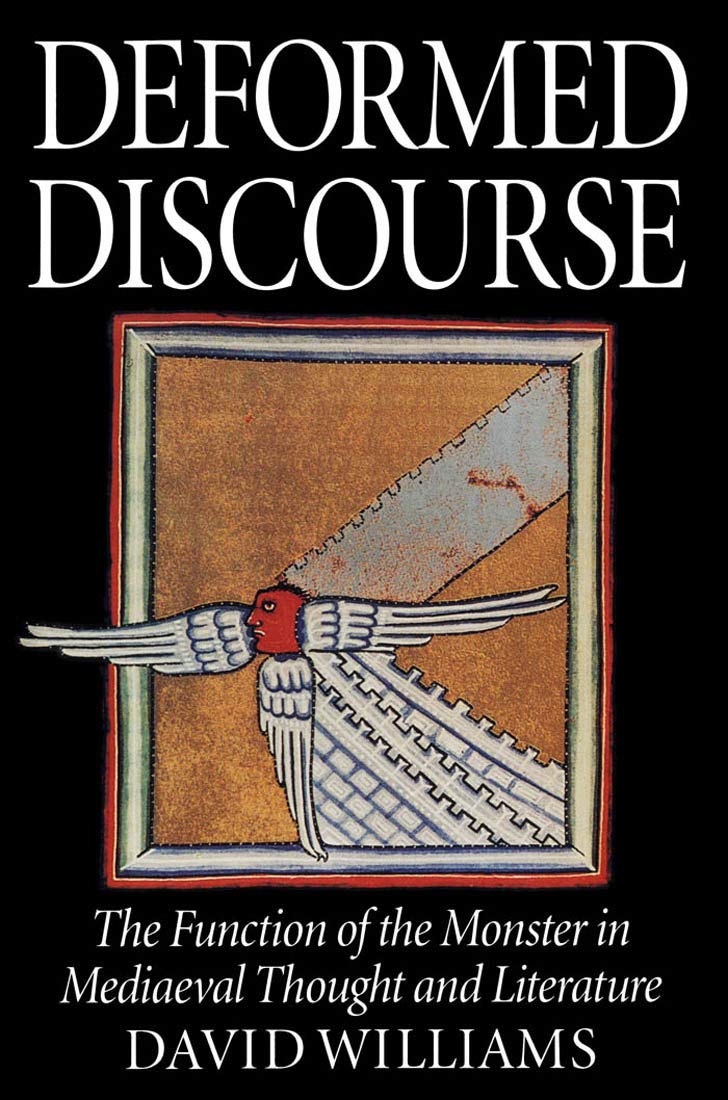
Part I Traces The Poetics Of Teratology, The Study Of Monsters, To Christian Neoplatonic Theology And Philosophy, Particularly Pseudodionysius'S Negative Theology And His Central Idea That God Cannot Be Known Except By Knowing What He Is Not. Williams Argues That The Principles Of Negative Theology As Applied To Epistemology And Language Made Possible A Symbolism Of Negation And Paradox Whose Chief Sign Was The Monster. Part Ii Provides A Taxonomy Of Monstrous Forms With A Gloss On Each, And Part Iii Examines The Monstrous And The Deformed In Three Heroic Sagas The Medieval Oedipus, The Romance Of Alexander, And Sir Gawain And The Green Knight And Three Saints' Lives Saint Denis, Saint Christopher, And Saint Wilgeforte. The Book Is Beautifully Illustrated With Medieval Representations Of Monsters. The Most Comprehensive Study Of The Grotesque In Medieval Aesthetic Expression, Deformed Discourse Successfully Brings Together Medieval Research And Modern Criticism.
⚠️ WARNING (California Proposition 65):
This product may contain chemicals known to the State of California to cause cancer, birth defects, or other reproductive harm.
For more information, please visit www.P65Warnings.ca.gov.
- Q: How many pages does this book have? A: This book has four hundred eight pages. It provides a comprehensive exploration of the monstrous in medieval thought.
- Q: What are the dimensions of this book? A: The dimensions of this book are six inches in length, one point one inches in width, and nine point zero two inches in height. These measurements make it a suitable size for reading and storage.
- Q: What type of binding does this book have? A: This book is paperback bound. This binding style allows for a lightweight and flexible reading experience.
- Q: Who is the author of this book? A: The author of this book is David A. Williams. He provides deep insights into teratology and medieval literature.
- Q: What is the genre of this book? A: The genre of this book is Criticism and Theory. It focuses on literary analysis within a historical context.
- Q: Is this book suitable for academic use? A: Yes, this book is suitable for academic use. It offers a thorough analysis of monsters in medieval literature, making it valuable for scholars.
- Q: How can I apply the insights from this book? A: You can apply the insights by integrating them into literary analysis or research on medieval literature. It's perfect for students and scholars.
- Q: Is this book appropriate for beginners in literature? A: Yes, this book is appropriate for beginners. While it provides deep insights, it's written in an accessible manner.
- Q: How should I store this book to keep it in good condition? A: Store this book upright on a shelf or in a bookcase. Avoid exposing it to direct sunlight to prevent fading.
- Q: Can I read this book while eating? A: Yes, you can read this book while eating, but be careful not to spill food or drinks on it. Keeping it clean will ensure its longevity.
- Q: What should I do if the book arrives damaged? A: If the book arrives damaged, you should contact the seller for a return or exchange. Most sellers have policies in place for such situations.
- Q: How do I clean this book if it gets dirty? A: To clean this book, gently wipe the cover with a dry cloth. Avoid using liquids as they can damage the pages.
- Q: Is there a warranty for this book? A: No, there is typically no warranty for books. However, return policies may vary by seller.
- Q: Does this book contain illustrations? A: Yes, this book contains beautiful illustrations of medieval representations of monsters. These visuals enhance the reading experience.
- Q: What is the main theme of this book? A: The main theme of this book is the exploration of monstrosity in medieval thought and literature. It connects historical and literary analysis.