If you have any questions, you are always welcome to contact us. We'll get back to you as soon as possible, withing 24 hours on weekdays.
Customer service
All questions about your order, return and delivery must be sent to our customer service team by e-mail at yourstore@yourdomain.com
Sale & Press
If you are interested in selling our products, need more information about our brand or wish to make a collaboration, please contact us at press@yourdomain.com
Help
If you have any questions, you are always welcome to contact us. We'll get back to you as soon as possible, withing 24 hours on weekdays.
Customer service
All questions about your order, return and delivery must be sent to our customer service team by e-mail at yourstore@yourdomain.com
Sale & Press
If you are interested in selling our products, need more information about our brand or wish to make a collaboration, please contact us at press@yourdomain.com
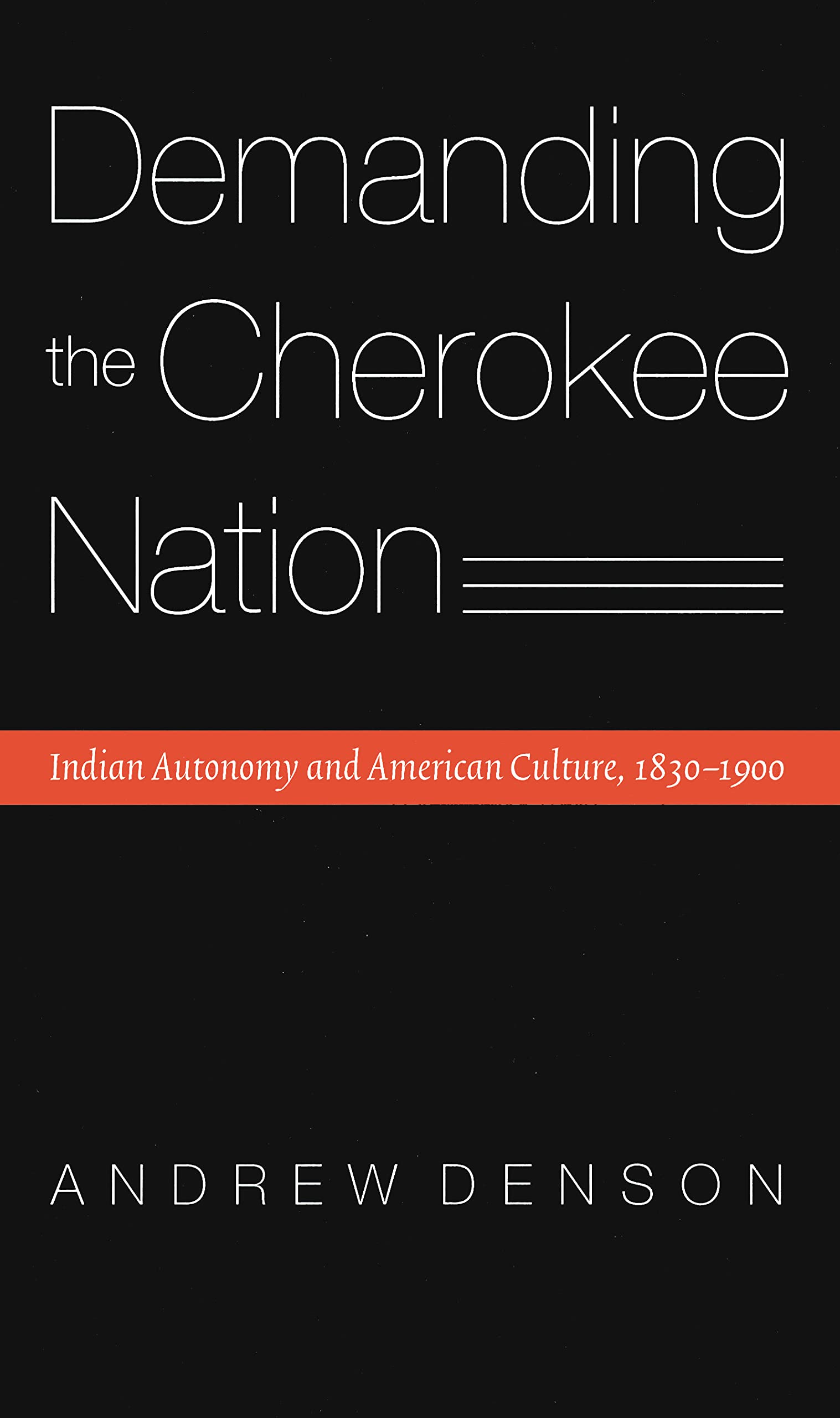
Demanding the Cherokee Nation examines nineteenthcentury Cherokee political rhetoric to address an enigma in American Indian history: the contradiction between the sovereignty of Indian nations and the political weakness of Indian communities. Making use of a rich collection of petitions, appeals, newspaper editorials, and other public records, Andrew Denson describes the ways in which Cherokees represented their people and their nation to nonIndians after their forced removal to Indian Territory in the 1830s. He argues that Cherokee writings on nationhood document a decadeslong effort by tribal leaders to find a new model for American Indian relations in which Indian nations could coexist with a modernizing United States.Most nonNatives in the nineteenth century assumed that American development and progress necessitated the end of tribal autonomy, that at best the Indian nation was a transitional state for Native people on the way to assimilation. As Denson shows, however, Cherokee leaders found a variety of ways in which the Indian nation, as they defined it, belonged in the modern world. Tribal leaders responded to developments in the United States and adapted their defense of Indian autonomy to the great changes transforming American life in the middle and late nineteenth century. In particular, Cherokees in several ways found new justification for Indian nationhood in American industrialization.
⚠️ WARNING (California Proposition 65):
This product may contain chemicals known to the State of California to cause cancer,
birth defects, or other reproductive harm.
For MAP (Minimum Advertised Price) violations and Intellectual Property (IP) or Trademark concerns, please contact:
support@ergodebooks.com
⚠️ California Proposition 65 Warning: Some products sold on this website may expose you to chemicals known to the State of California to cause cancer, birth defects, or other reproductive harm. For more information, visit www.P65Warnings.ca.gov.