If you have any questions, you are always welcome to contact us. We'll get back to you as soon as possible, withing 24 hours on weekdays.
Customer service
All questions about your order, return and delivery must be sent to our customer service team by e-mail at yourstore@yourdomain.com
Sale & Press
If you are interested in selling our products, need more information about our brand or wish to make a collaboration, please contact us at press@yourdomain.com
Help
If you have any questions, you are always welcome to contact us. We'll get back to you as soon as possible, withing 24 hours on weekdays.
Customer service
All questions about your order, return and delivery must be sent to our customer service team by e-mail at yourstore@yourdomain.com
Sale & Press
If you are interested in selling our products, need more information about our brand or wish to make a collaboration, please contact us at press@yourdomain.com
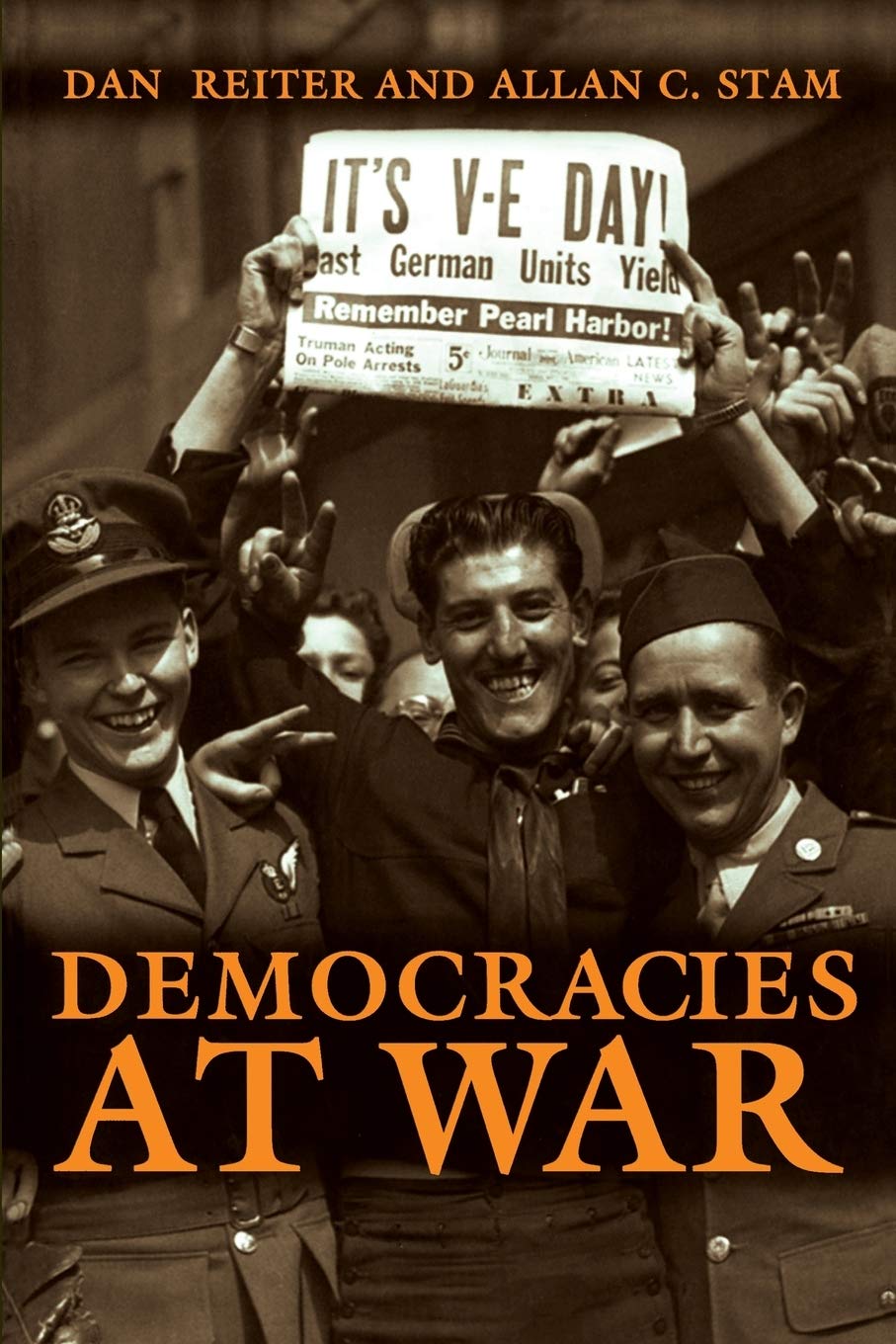
Why Do Democracies Win Wars? This Is A Critical Question In The Study Of International Relations, As A Traditional Viewexpressed Most Famously By Alexis De Tocquevillehas Been That Democracies Are Inferior In Crafting Foreign Policy And Fighting Wars. In Democracies At War, The First Major Study Of Its Kind, Dan Reiter And Allan Stam Come To A Very Different Conclusion. Democracies Tend To Win The Wars They Fightspecifically, About Eighty Percent Of The Time.Complementing Their Wideranging Casestudy Analysis, The Authors Apply Innovative Statistical Tests And New Hypotheses. In Unusually Clear Prose, They Pinpoint Two Reasons For Democracies' Success At War. First, As Elected Leaders Understand That Losing A War Can Spell Domestic Political Backlash, Democracies Start Only Those Wars They Are Likely To Win. Secondly, The Emphasis On Individuality Within Democratic Societies Means That Their Soldiers Fight With Greater Initiative And Superior Leadership.Surprisingly, Reiter And Stam Find That It Is Neither Economic Muscle Nor Bandwagoning Between Democratic Powers That Enables Democracies To Win Wars. They Also Show That, Given Societal Consent, Democracies Are Willing To Initiate Wars Of Empire Or Genocide. On The Whole, They Find, Democracies' Dependence On Public Consent Makes For More, Rather Than Less, Effective Foreign Policy. Taking A Fresh Approach To A Question That Has Long Merited Such A Study, This Book Yields Crucial Insights On Security Policy, The Causes Of War, And The Interplay Between Domestic Politics And International Relations.
⚠️ WARNING (California Proposition 65):
This product may contain chemicals known to the State of California to cause cancer,
birth defects, or other reproductive harm.
For MAP (Minimum Advertised Price) violations and Intellectual Property (IP) or Trademark concerns, please contact:
support@ergodebooks.com
⚠️ California Proposition 65 Warning: Some products sold on this website may expose you to chemicals known to the State of California to cause cancer, birth defects, or other reproductive harm. For more information, visit www.P65Warnings.ca.gov.