If you have any questions, you are always welcome to contact us. We'll get back to you as soon as possible, withing 24 hours on weekdays.
Customer service
All questions about your order, return and delivery must be sent to our customer service team by e-mail at yourstore@yourdomain.com
Sale & Press
If you are interested in selling our products, need more information about our brand or wish to make a collaboration, please contact us at press@yourdomain.com
Help
If you have any questions, you are always welcome to contact us. We'll get back to you as soon as possible, withing 24 hours on weekdays.
Customer service
All questions about your order, return and delivery must be sent to our customer service team by e-mail at yourstore@yourdomain.com
Sale & Press
If you are interested in selling our products, need more information about our brand or wish to make a collaboration, please contact us at press@yourdomain.com
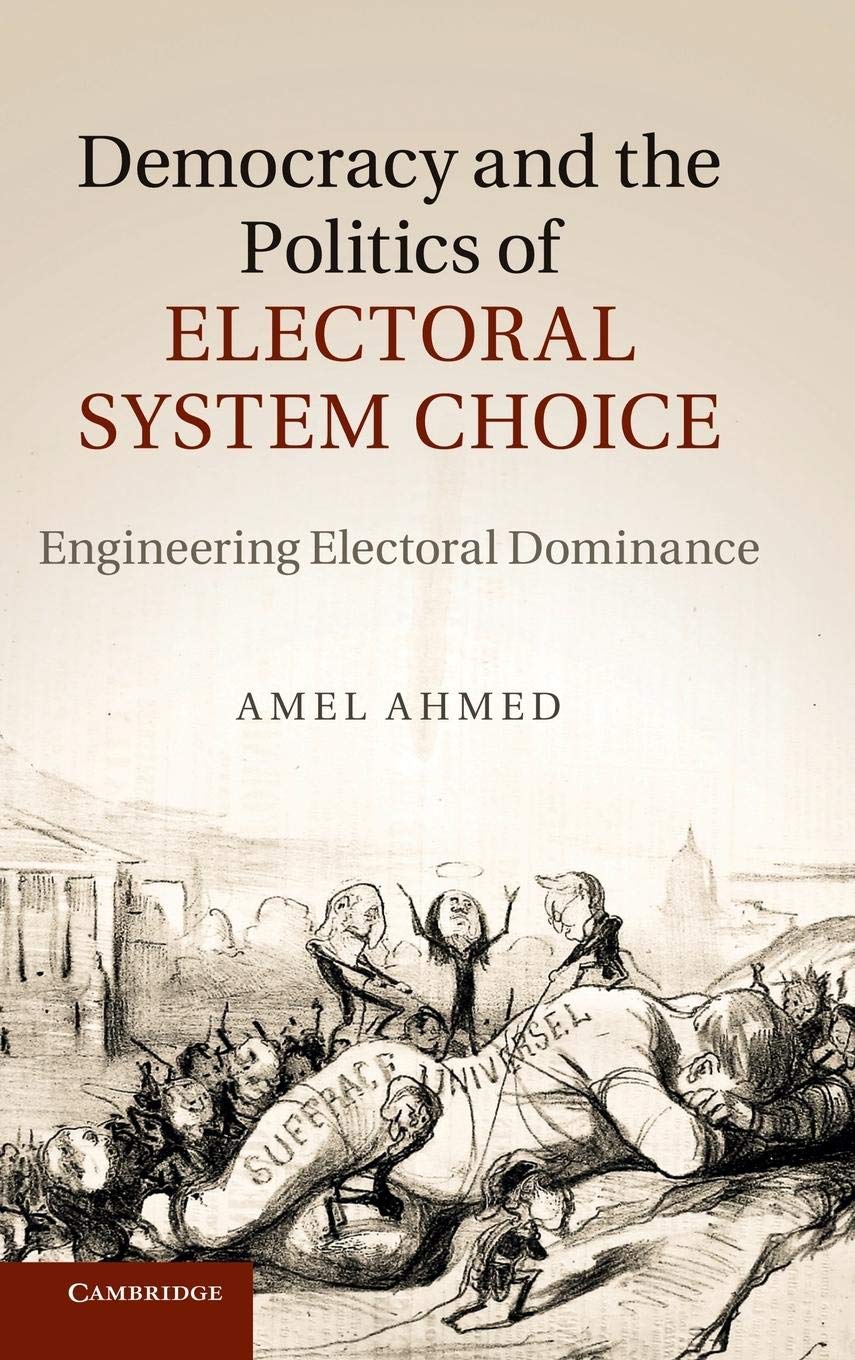
Amel Ahmed brings new historical evidence and a novel theoretical framework to bear on the study of democratization. Looking at the politics of electoral system choice at the time of suffrage expansion among early democratizers, she shows that the electoral systems used in advanced democracies today were initially devised as exclusionary safeguards to protect predemocratic elites from the impact of democratization and, particularly, the existential threat posed by working class mobilization. The ubiquitous use and enduring nature of these safeguards calls into question the familiar picture of democracy moving along a path of increasing inclusiveness. Instead, what emerges is a picture that is riddled with ambiguity, where inclusionary democratic reforms combine with exclusionary electoral safeguards to form a permanent part of the new democratic order. This book has important implications for our understanding of the dynamics of democratic development both in early democracies and in emerging democracies today.
⚠️ WARNING (California Proposition 65):
This product may contain chemicals known to the State of California to cause cancer,
birth defects, or other reproductive harm.
For MAP (Minimum Advertised Price) violations and Intellectual Property (IP) or Trademark concerns, please contact:
support@ergodebooks.com
⚠️ California Proposition 65 Warning: Some products sold on this website may expose you to chemicals known to the State of California to cause cancer, birth defects, or other reproductive harm. For more information, visit www.P65Warnings.ca.gov.