
Title
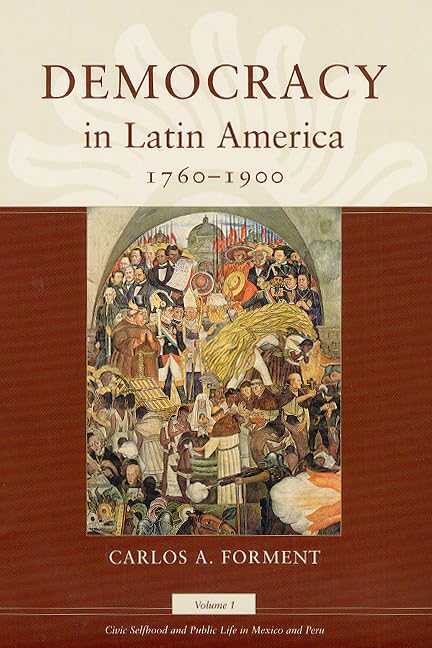
Democracy in Latin America, 17601900: Volume 1, Civic Selfhood and Public Life in Mexico and Peru,Used
Sold by Ergodebooks, an authorized reseller.
Returns accepted within 30 days | support@ergodebooks.com
Shipping Information
- Free Standard Shipping — United States only
- Processing Time: 1–3 business days
- Estimated Delivery: 3–5 business days after dispatch
- Double-boxed, fully insured & discreetly packaged
- Tracking number sent via email once dispatched
- Orders over $250 require signature upon delivery. Taxes calculated at checkout.
Returns & Refund
Returns accepted within 30 days of delivery.
Damaged or Defective Item
Free return shipping + replacement or full refund
Wrong Item Received
Free return shipping + replacement or full refund
Change of Mind
Return shipping at customer's expense · 25% restocking fee applies
Payment Option

Carlos Forment's aim in this highly ambitious work is to write the book that Tocqueville would have written had he traveled to Latin America instead of the United States. Drawing on an astonishing level of research, Forment pored over countless newspapers, partisan pamphlets, tabloids, journals, private letters, and travelogues to show in this study how citizens of Latin America established strong democratic traditions in their countries through the practice of democracy in their everyday lives.This first volume of Democracy in Latin America considers the development of democratic life in Mexico and Peru from independence to the late 1890s. Forment traces the emergence of hundreds of political, economic, and civic associations run by citizens in both nations and shows how these organizations became models of and for democracy in the face of dictatorship and immense economic hardship. His is the first book to show the presence in Latin America of civic democracy, something that gave men and women in that region an alternative to market and statecentered forms of life.In looking beneath institutions of government to uncover local and civil organizations in public life, Forment ultimately uncovers a tradition of edification and inculcation that shaped democratic practices in Latin America profoundly. This tradition, he reveals, was stronger in Mexico than in Peru, but its basic outlines were similar in both nations and included a unique form of what Forment calls Civic Catholicism in order to distinguish itself from civic republicanism, the dominant political model throughout the rest of the Western world.
⚠️ WARNING (California Proposition 65):
This product may contain chemicals known to the State of California to cause cancer, birth defects, or other reproductive harm.
For more information, please visit www.P65Warnings.ca.gov.