If you have any questions, you are always welcome to contact us. We'll get back to you as soon as possible, withing 24 hours on weekdays.
Customer service
All questions about your order, return and delivery must be sent to our customer service team by e-mail at yourstore@yourdomain.com
Sale & Press
If you are interested in selling our products, need more information about our brand or wish to make a collaboration, please contact us at press@yourdomain.com
Help
If you have any questions, you are always welcome to contact us. We'll get back to you as soon as possible, withing 24 hours on weekdays.
Customer service
All questions about your order, return and delivery must be sent to our customer service team by e-mail at yourstore@yourdomain.com
Sale & Press
If you are interested in selling our products, need more information about our brand or wish to make a collaboration, please contact us at press@yourdomain.com
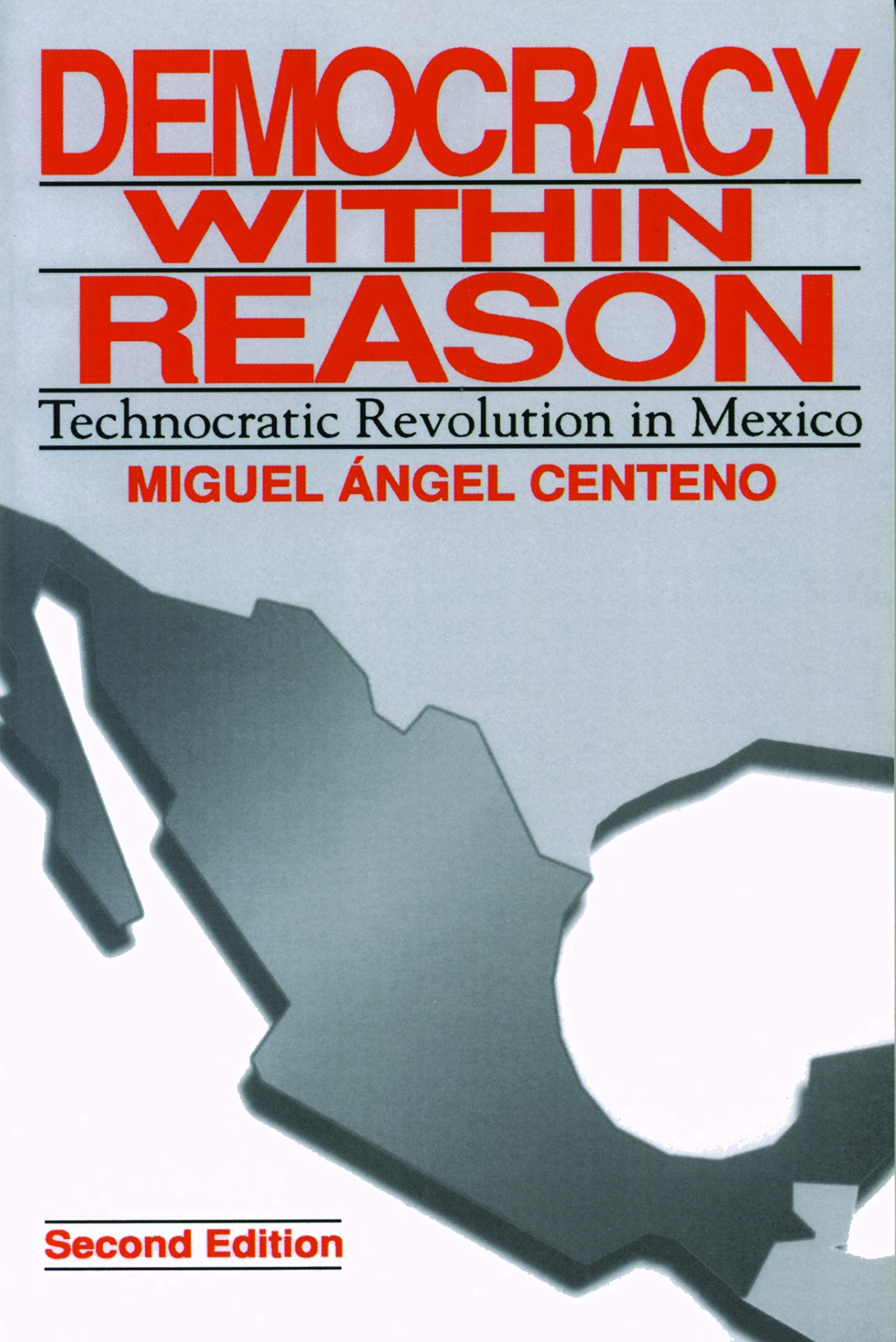
During the 1980s the Mexican regime faced a series of economic, social, and political disasters that led many to question its survival. Yet by 1992 the economy was again growing, with inflation under control and the confidence of international investors restored. Mexico was now touted as an example for regimes in Eastern Europe to emulate.How did Carlos Salinas and his team of technocrats manage to gain political power sufficient to impose their economic model? How did they sustain their revolution from above despite the hardships these changes brought for many Mexicans? How did they stage their remarkable political comeback and create their democracy within reason? Why did Salinas succeed in keeping control of his revolution while Mikhail Gorbachev failed to do so in his similar effort at radical reform?Miguel Centeno addresses these questions by analyzing three critical developments in the Mexican state: the centralization of power within the bureaucracy; the rise of a new generation of technocrats and their use of a complex system of political networks; and the dominance of a neoliberal ideology and technocratic vision that guided policy decisions and limited democratic participation. In his conclusion the author proposes some alternative scenarios for Mexicos future, including the role of NAFTA, and suggests lessons for the study of regimes undertaking similar transitions.Of obvious interest to students of contemporary Mexico and Latin America, the book will also be very useful for those analyzing the transition to the market in other countries, the role of knowledge in public policy, and the nature of the modern state in general.
⚠️ WARNING (California Proposition 65):
This product may contain chemicals known to the State of California to cause cancer,
birth defects, or other reproductive harm.
For MAP (Minimum Advertised Price) violations and Intellectual Property (IP) or Trademark concerns, please contact:
support@ergodebooks.com
⚠️ California Proposition 65 Warning: Some products sold on this website may expose you to chemicals known to the State of California to cause cancer, birth defects, or other reproductive harm. For more information, visit www.P65Warnings.ca.gov.