
Title
Democracy without Associations: Transformation of the Party System and Social Cleavages in India (Interests, Identities, And Ins,Used
Sold by Ergodebooks, an authorized reseller.
Returns accepted within 30 days | support@ergodebooks.com
Shipping Information
- Free Standard Shipping — United States only
- Processing Time: 3–5 business days
- Estimated Delivery: 6–10 business days after dispatch
- Double-boxed, fully insured & discreetly packaged
- Tracking number sent via email once dispatched
Returns & Refund
Returns accepted within 30 days of delivery.
Damaged or Defective Item
Free return shipping + replacement or full refund
Wrong Item Received
Free return shipping + replacement or full refund
Change of Mind
Return shipping at customer's expense · 25% restocking fee applies
Payment Option

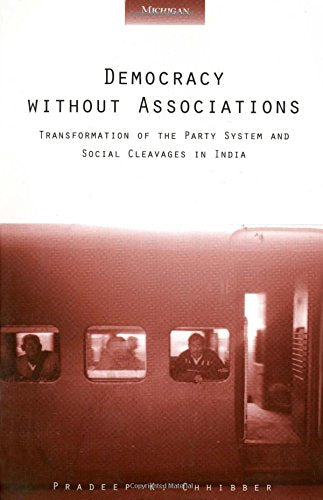
India's party system has undergone a profound transformation over the last decade. The Congress Party, a catchall party that brought independence in 1947 and governed India for much of the period since then, no longer dominates the electoral scene. Political parties which draw support from particular caste and religious groups are now more powerful than ever before. Democracy Without Associations explains why religious and castebased political parties come to dominate the electoral landscape in 1990s India and why catchall parties have declined. Arguing that political parties and state policy can make some social divisions more salient than others and also determine how these divisions affect the political system, the author offers an explanation for the relationship between electoral competition and the politicization of social differences in India. He notes that the relationship between social cleavages and the party system is not axiomatic and that political parties can influence the links they have to social cleavages. The argument developed for India is also used to account for emergence of classbased parties in Spain and the electoral success of a religious party in Algeria.Democracy Without Associations will interest scholars and students of Indian politics, and party politics, as well as those interested in the impact of social divisions on the political system.Pradeep K. Chhibber is Assistant Professor of Political Science and Associate Director, Center for South and Southeast Asian Studies, University of Michigan.
⚠️ WARNING (California Proposition 65):
This product may contain chemicals known to the State of California to cause cancer, birth defects, or other reproductive harm.
For more information, please visit www.P65Warnings.ca.gov.