
Title
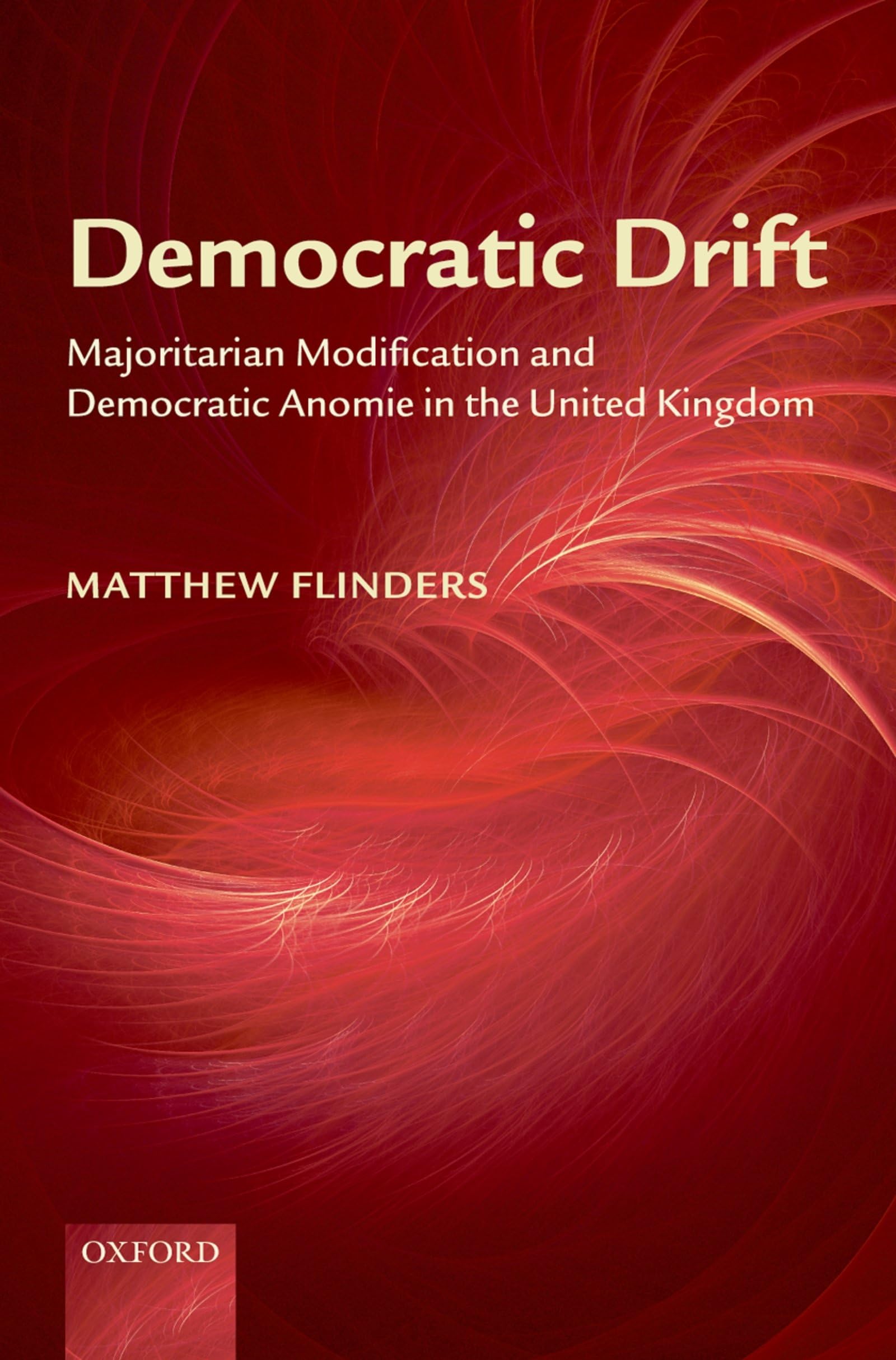
Democratic Drift: Majoritarian Modification and Democratic Anomie in the United Kingdom,Used
Sold by Ergodebooks, an authorized reseller.
Returns accepted within 30 days | support@ergodebooks.com
Shipping Information
- Free Standard Shipping — United States only
- Processing Time: 3–5 business days
- Estimated Delivery: 6–10 business days after dispatch
- Double-boxed, fully insured & discreetly packaged
- Tracking number sent via email once dispatched
Returns & Refund
Returns accepted within 30 days of delivery.
Damaged or Defective Item
Free return shipping + replacement or full refund
Wrong Item Received
Free return shipping + replacement or full refund
Change of Mind
Return shipping at customer's expense · 25% restocking fee applies
Payment Option

Although there is no doubt that the constitution has been significantly reformed since the election of New Labour in 1997 the degree to which these reforms have altered the nature of democracy in the United Kingdom remains highly contested. A major problem within this debate is that it has become polarized around a binary distinction between powersharing and powerhoarding models of democracy when the contemporary situation is actually far more complex. This book draws upon theories and methods from comparative political analysis in order to argue and then demonstrate three central and interrelated arguments.Firstly, that the distinctive element of New Labour's approach to constitutional engineering is not that it has shifted the nature of democracy in the United Kingdom from one model to another but has instead sought to apply different models at the periphery and core: biconstitutionality.Secondly, that contemporary evidence of both increasing levels of public disengagement from conventional politics and falling levels of public trust in politicians, political institutions and political processes originate from the 'expectations gap'. This 'gap' is created by the process of political competition artificially increases public expectations; only for these expectations to be dashed as the elected party either seeks to renege upon certain preelection commitments or fails to achieve them.Finally, democracy in the United Kingdom is currently drifting. The old rules do not appear to suit the new game, and yet the government continues to insist that the old rules still apply. The critical challenge for any future government, of any political complexion, will be to articulate a new form of constitutional morality with the capacity to clarify exactly what its reforms in the sphere of constitutional reform and democratic renewal are seeking to achieve.The analysis offered in this book focuses on the evolution of democracy in the United Kingdom since the election of New Labour in 1997. However in order to achieve both depth and breadth this analysis is then located within the contours of much broader longitudinal and comparative analyses. This involves examining the trajectory of democracy in the United Kingdom from 1945 onwards, and then comparing this longterm view within a much broader comparative perspective to examine the degree to which recent developments in the United Kingdom fit within global democratic trends.
⚠️ WARNING (California Proposition 65):
This product may contain chemicals known to the State of California to cause cancer, birth defects, or other reproductive harm.
For more information, please visit www.P65Warnings.ca.gov.