
Title
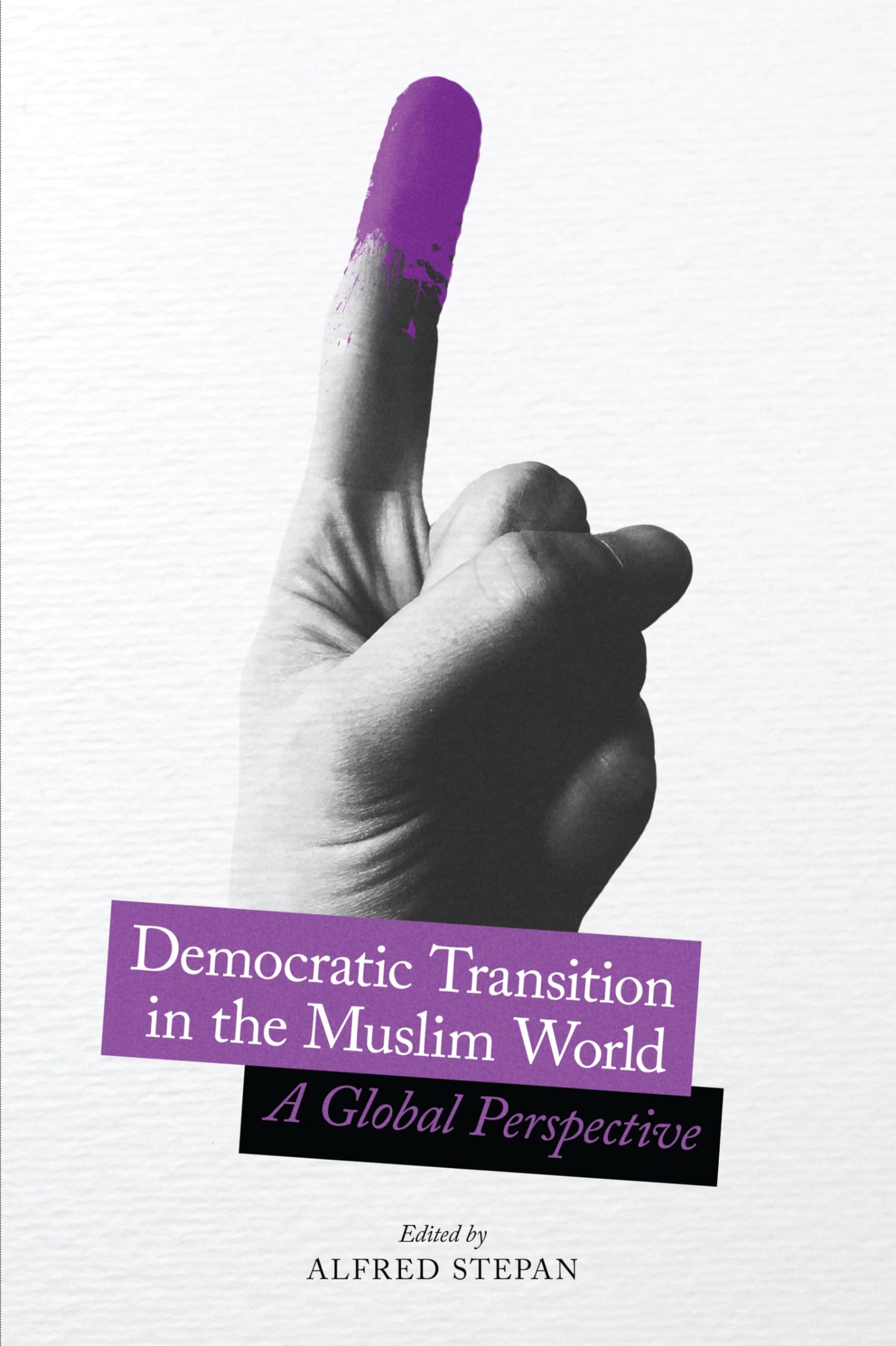
Democratic Transition in the Muslim World: A Global Perspective (Religion, Culture, and Public Life, 35),Used
Sold by Ergodebooks, an authorized reseller.
Returns accepted within 30 days | support@ergodebooks.com
Shipping Information
- Free Standard Shipping — United States only
- Processing Time: 3–5 business days
- Estimated Delivery: 6–10 business days after dispatch
- Double-boxed, fully insured & discreetly packaged
- Tracking number sent via email once dispatched
Returns & Refund
Returns accepted within 30 days of delivery.
Damaged or Defective Item
Free return shipping + replacement or full refund
Wrong Item Received
Free return shipping + replacement or full refund
Change of Mind
Return shipping at customer's expense · 25% restocking fee applies
Payment Option

Product DescriptionIn early 2011, widespread protests ousted dictatorial regimes in both Tunisia and Egypt. Within a few years, Tunisia successfully held parliamentary and presidential elections and witnessed a peaceful transition of power, while the Egyptian military went on to seize power and institute authoritarian control. What explains the success and failure of transitions to democracy in these two countries, and how might they speak to democratic transition attempts in other Muslimmajority countries?Democratic Transition in the Muslim World convenes leading scholars to consider the implications of democratic success in Tunisia and failure in Egypt in comparative perspective. Alongside case studies of Indonesia, Senegal, and India, contributors analyze similarities and differences among democratizing countries with large Muslim populations, considering universal challenges as well as each nations particular obstacles. A central theme is the need to understand the conditions under which it becomes possible to craft prodemocratic coalitions among secularists and Islamists. Essays discuss the dynamics of secularist fears of Islamist electoral success, the role of secular constituencies in authoritarian regimes resilience, and the prospects for moderation among both secularist and Islamist political actors. They delve into topics such as the role of the army and foreign military aid, Middle Eastern constitutions, and the role of the Muslim Brotherhood. The book also includes an essay by the founder and president of Tunisias Ennadha Party, Rachid Ghannouchi, who discusses the political strategies his party chose to pursue.ReviewIn the age of ISIS and growing antiMuslim bigotry embodied in the rise of Donald Trump, the claim that Islam and Muslim societies are essentially and enduringly antidemocratic has again become mainstream. This book forcefully and convincingly repudiates this proposition. Focusing on the fascinating case of Tunisia and drawing up his vast erudition on the study of democracy, Alfred Stepan makes an important and unique contribution in understanding the relationship between religion and democracy in Muslim societies. Nader Hashemi, the University of DenverAl Stepan was our leading theorist of how to get and keep democracy around the world. His work on the Middle East revealed great subtlety and depth of understanding, made all the more remarkable by the fact that his primary region of study was Latin America. This carefully curated volume demonstrates the influence that Stepans thinking has had (and will have) on generations of Middle East scholars. Tarek Masoud, John F. Kennedy School of Government, Harvard UniversityAl Stepan was a giant in the field of comparative politics. His contributions to our understanding of the complicated processes of liberalization and democratization are unrivaled. The invaluable essays contained in this volume reflect Stepans broad intellectual range and his rich legacy as a teacher to a generation of scholars. Steven A. Cook, Eni Enrico Mattei Senior Fellow for Middle East and Africa Studies, Council on Foreign RelationsStepan (Columbia) presents an edited volume that focuses on successful democratic transition in the Muslim word, a question so far neglected in comparative politics literature....Highly recommended. ChoiceAn important and often original work. Foreign AffairsAbout the AuthorAlfred Stepan (19362017) was the Wallace S. Sayre Professor Emeritus of Government and founding director of the Center for the Study of Democracy, Toleration, and Religion at Columbia University. His many books include Problems of Democratic Transition and Consolidation: Southern Europe, South America, and PostCommunist Europe (with Juan J. Linz, 1996); Arguing Comparative Politics (2001); and Boundaries of Toleration (Columbia, 2014, with Charles Taylor).
⚠️ WARNING (California Proposition 65):
This product may contain chemicals known to the State of California to cause cancer, birth defects, or other reproductive harm.
For more information, please visit www.P65Warnings.ca.gov.