
Title
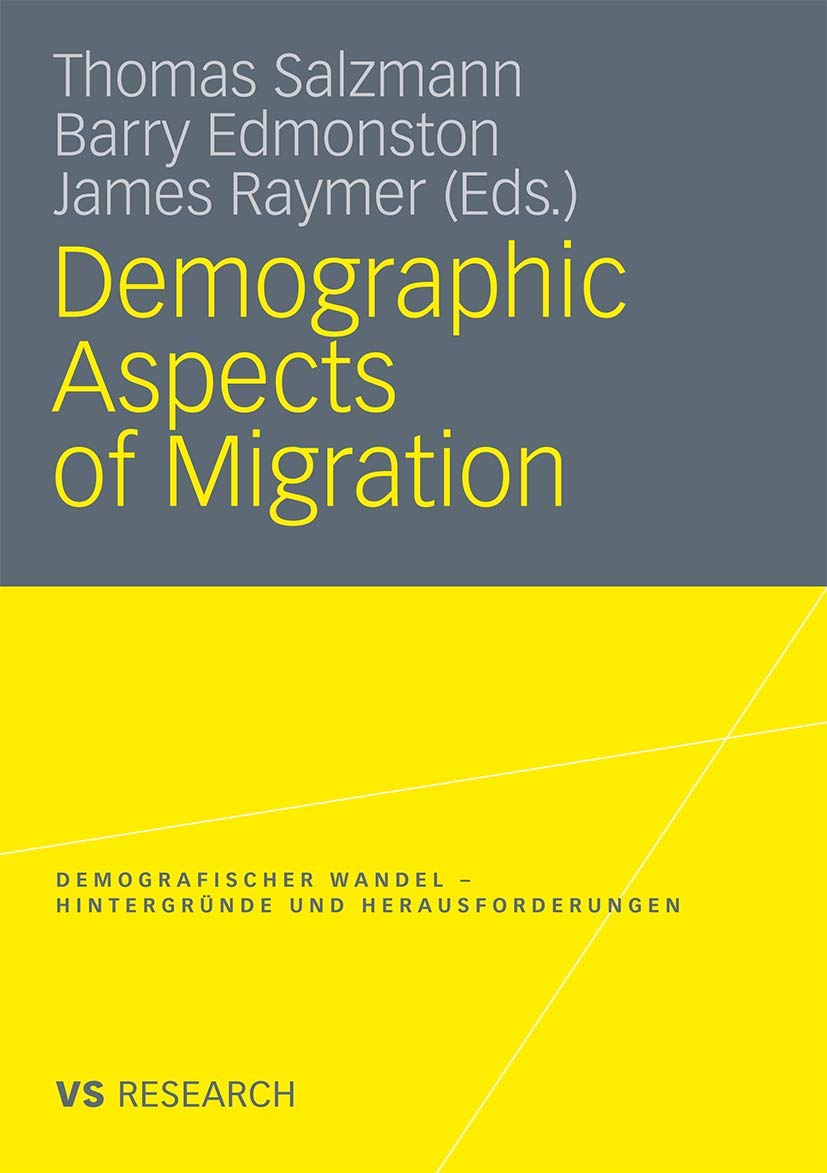
Demographic Aspects of Migration (Demografischer Wandel Hintergrnde und Herausforderungen),Used
Sold by Ergodebooks, an authorized reseller.
Returns accepted within 30 days | support@ergodebooks.com
Shipping Information
- Free Standard Shipping — United States only
- Processing Time: 3–5 business days
- Estimated Delivery: 6–10 business days after dispatch
- Double-boxed, fully insured & discreetly packaged
- Tracking number sent via email once dispatched
Returns & Refund
Returns accepted within 30 days of delivery.
Damaged or Defective Item
Free return shipping + replacement or full refund
Wrong Item Received
Free return shipping + replacement or full refund
Change of Mind
Return shipping at customer's expense · 25% restocking fee applies
Payment Option

Product Description Dr. Albert Schmid President of the Federal Office for Migration and Refugees According to the United Nations, about 200 million people of the estimated world population of 6.8 billion are international migrants that corresponds to about three per cent of the total world population. The proportion of international migrants in the global population has increased only marginally in the last 40 years. But, as a result of global population growth, the absolute number of migrants has increased, and their structure and spatial distribution has changed considerably. A structural shift has taken place primarily in the industrialised countries, where less than 20 per cent of the global workers are now living, but where more than 60 per cent of all migrants worldwide reside. Since 1990, more than 16 million people have moved to Germany, while about 11 million have left the country in the same period. Altogether, 15 million people of international migration origin are living in Germany, comprising almost 19 per cent of Germanys current population of 82 million. At the end of 2006, about 64 million people out of Europes population of 732 million, or nine per cent, lived in a European country they were not born in. But why does anybody migrate at all? People decide to leave because, in general, they expect to find better conditions and opportunities in other countries or regions. Book Description Motives, Explanations and Consequences From the Back Cover In all settings of society, migration is an important factor for the development and growth of population. To understand its consequences, it is fundamental to know the quality of the available data, the measurement instruments for analyzing migration, and to have an appropriate demographic framework for studying the demographic effects of migration. Whereas the first section focuses on analysis, the second part deals with the different demographic behaviours of migrants compared to residents. Further it demonstrates the motives and explanations for migration. The final section analyzes geographic and economic aspects. The authors combine demographic analysis, interdisciplinary research, and international illustrations to explore current trends in migration patterns and processes. This book is valuable reading for an interdisciplinary academic audience as well as for regional planners and policy makers. About the Author Thomas Salzmann is Research Scientist, Department of Demography, at Rostock University, Germany. Barry Edmonston is Research Professor, Department of Sociology, and Associate Director, Population Research Group, at the University of Victoria, Canada. James Raymer is a Lecturer in Demography in the Division of Social Statistics located in the School of Social Sciences at the University of Southampton, United Kingdom.
⚠️ WARNING (California Proposition 65):
This product may contain chemicals known to the State of California to cause cancer, birth defects, or other reproductive harm.
For more information, please visit www.P65Warnings.ca.gov.