
Title
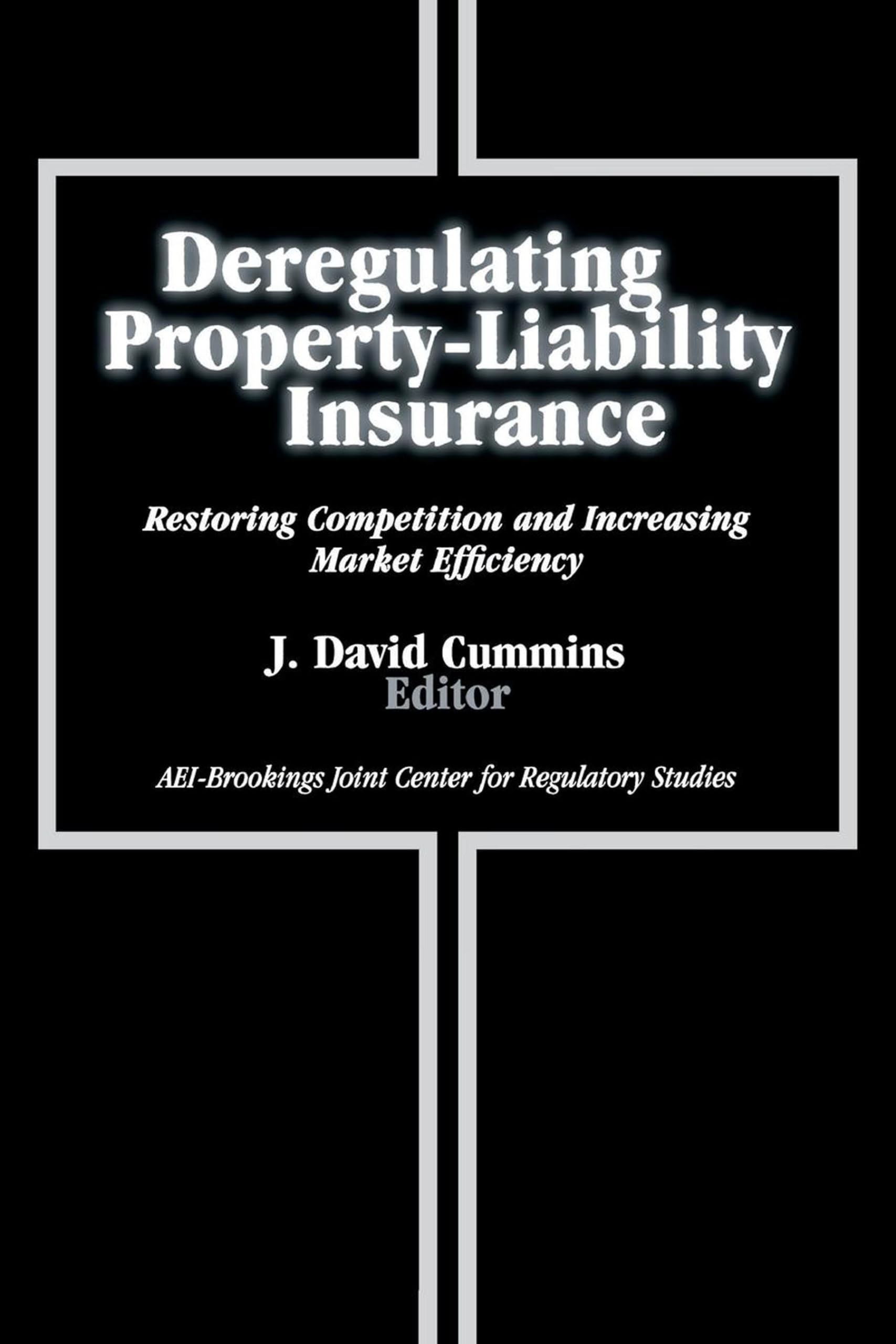
Deregulating Propertyliability Insurance: Restoring Competition And Increasing Market Efficiency,Used
Sold by Ergodebooks, an authorized reseller.
Returns accepted within 30 days | support@ergodebooks.com
Shipping Information
- Free Standard Shipping — United States only
- Processing Time: 3–5 business days
- Estimated Delivery: 6–10 business days after dispatch
- Double-boxed, fully insured & discreetly packaged
- Tracking number sent via email once dispatched
Returns & Refund
Returns accepted within 30 days of delivery.
Damaged or Defective Item
Free return shipping + replacement or full refund
Wrong Item Received
Free return shipping + replacement or full refund
Change of Mind
Return shipping at customer's expense · 25% restocking fee applies
Payment Option

Over the past two decades, the United States has successfully deregulated prices and restrictions on most previouslyregulated industries, including airlines, trucking, railroads, telecommunications, and banking. Only a few industries remain regulated, the largest being the propertyliability insurance business. In light of recent sweeping financial modernization legislation in other sectors of the insurance industry, this timely volume examines the basis for continued regulation of rates and forms of the U.S. propertyliability insurance market. The book focuses on private passenger automobile insurancethe most important personal line of propertyliability coverage, with annual premiums of about $120 billion. The authors analyze five state case studies: California, Massachusetts, and New Jerseythree of the most heavily regulated statesas well as Illinois, which has been deregulated for about 30 years, and South Carolina, which began to deregulate in 1997. The study also includes an econometric analysis based on all fifty states over a 25year period that gauges the impact of regulation on insurance price levels, price volatility, and the proportion of automobiles insured in residual markets. The authors conclude that regulation does not significantly reduce longrun prices for consumers, and generally limits availability of coverage, reduces the quality and variety of services available in the market, inhibits productivity growth, and increases price volatility. Contributors include Dwight Jaffee (University of California, Berkeley), Thomas Russell (Santa Clara University ), Laureen Regan (Temple University), Sharon Tennyson (Cornell University), Mary Weiss (Temple University), John Worrall (Rutgers University), Stephen D'Arcy (University of Illinois, UrbanaChampaign), Martin Grace (Georgia State University), Robert Klein (Georgia State University), Richard Phillips (Georgia State University), Georges Dionne (University of Montreal), and Richard Butler (Brigham Young University).'
⚠️ WARNING (California Proposition 65):
This product may contain chemicals known to the State of California to cause cancer, birth defects, or other reproductive harm.
For more information, please visit www.P65Warnings.ca.gov.