
Title

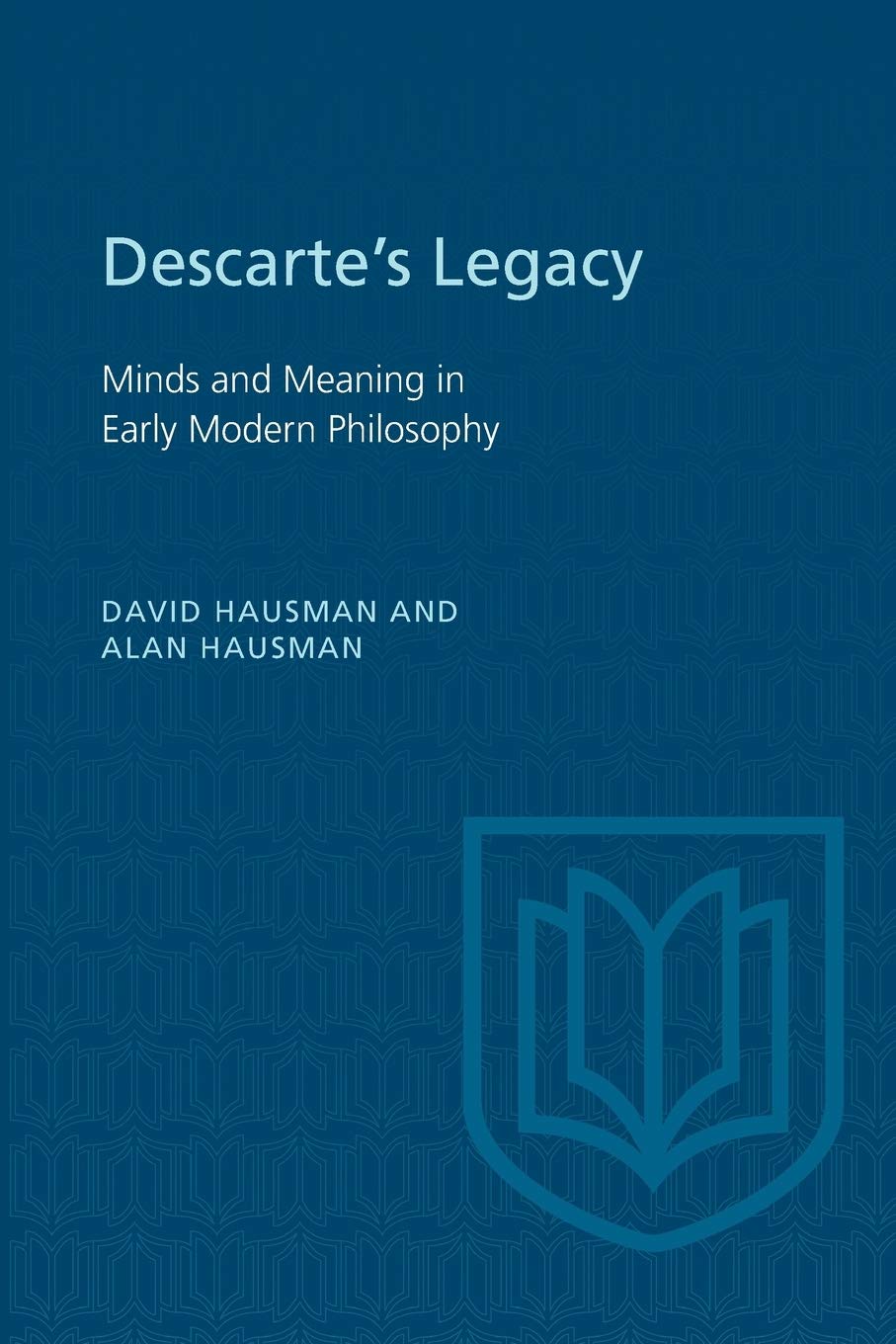
Descartes's Legacy: Mind and Meaning in Early Modern Philosophy (Toronto Studies in Philosophy),Used
Sold by Ergodebooks, an authorized reseller.
Returns accepted within 30 days | support@ergodebooks.com
Shipping Information
- Free Standard Shipping — United States only
- Processing Time: 3–5 business days
- Estimated Delivery: 6–10 business days after dispatch
- Double-boxed, fully insured & discreetly packaged
- Tracking number sent via email once dispatched
Returns & Refund
Returns accepted within 30 days of delivery.
Damaged or Defective Item
Free return shipping + replacement or full refund
Wrong Item Received
Free return shipping + replacement or full refund
Change of Mind
Return shipping at customer's expense · 25% restocking fee applies
Payment Option

Debates current in the philosophy of mind regarding the gathering and processing of information, and the nature of perception and representation, also animated some of the most important figures in early modern philosophy, among them Descartes, Hume, and Berkeley. The authors of Descartes's Legacy: Minds and Meaning in Early Modern Philosophy use certain problems in contemporary information theory to elucidate the concerns of the early modern philosophers. This critical study attempts to uncover what was once called the logic of the theory of ideas, and to explore the questions it was meant to solve, given the limits of the ontological categories available.The authors begin their discussion of Descartes by examining his response to established models of perception in light of his understanding of the contemporary new science. Since Descartes proposed that any likeness between representation and the thing represented was unreliable, what was his solution to how an internal representation, an idea, gives us information? The authors' central claim is that Descartes's answer to the problem of how the mind knows matter involves a theory of 'intentional ideas.' This provocative divergence from recent discussions of Descartes's philosophy of mind, which have revolved around whether he is a 'realist' or a 'representationalist,' leads the authors to consider the idealism of Hume and Berkeley in light of Descartes's notion of the intentional. Hume and Berkeley, they maintain, explored alternatives to Descartes's conception, which led them to abandon traditional notions of meaning and truth. Descartes's Legacy concludes by suggesting that Descartes's picture can be reconciled with twentiethcentury materialism, and asking whether the philosophy of mind can live without a primitive notion of the intentional.By shedding light on Descartes's crucial ontological innovation and on Hume's and Berkeley's reactions to it, the authors of Descartes's Legacy have repositioned early modern philosophy within a truly contemporary framework.
⚠️ WARNING (California Proposition 65):
This product may contain chemicals known to the State of California to cause cancer, birth defects, or other reproductive harm.
For more information, please visit www.P65Warnings.ca.gov.