If you have any questions, you are always welcome to contact us. We'll get back to you as soon as possible, withing 24 hours on weekdays.
Customer service
All questions about your order, return and delivery must be sent to our customer service team by e-mail at yourstore@yourdomain.com
Sale & Press
If you are interested in selling our products, need more information about our brand or wish to make a collaboration, please contact us at press@yourdomain.com
Help
If you have any questions, you are always welcome to contact us. We'll get back to you as soon as possible, withing 24 hours on weekdays.
Customer service
All questions about your order, return and delivery must be sent to our customer service team by e-mail at yourstore@yourdomain.com
Sale & Press
If you are interested in selling our products, need more information about our brand or wish to make a collaboration, please contact us at press@yourdomain.com
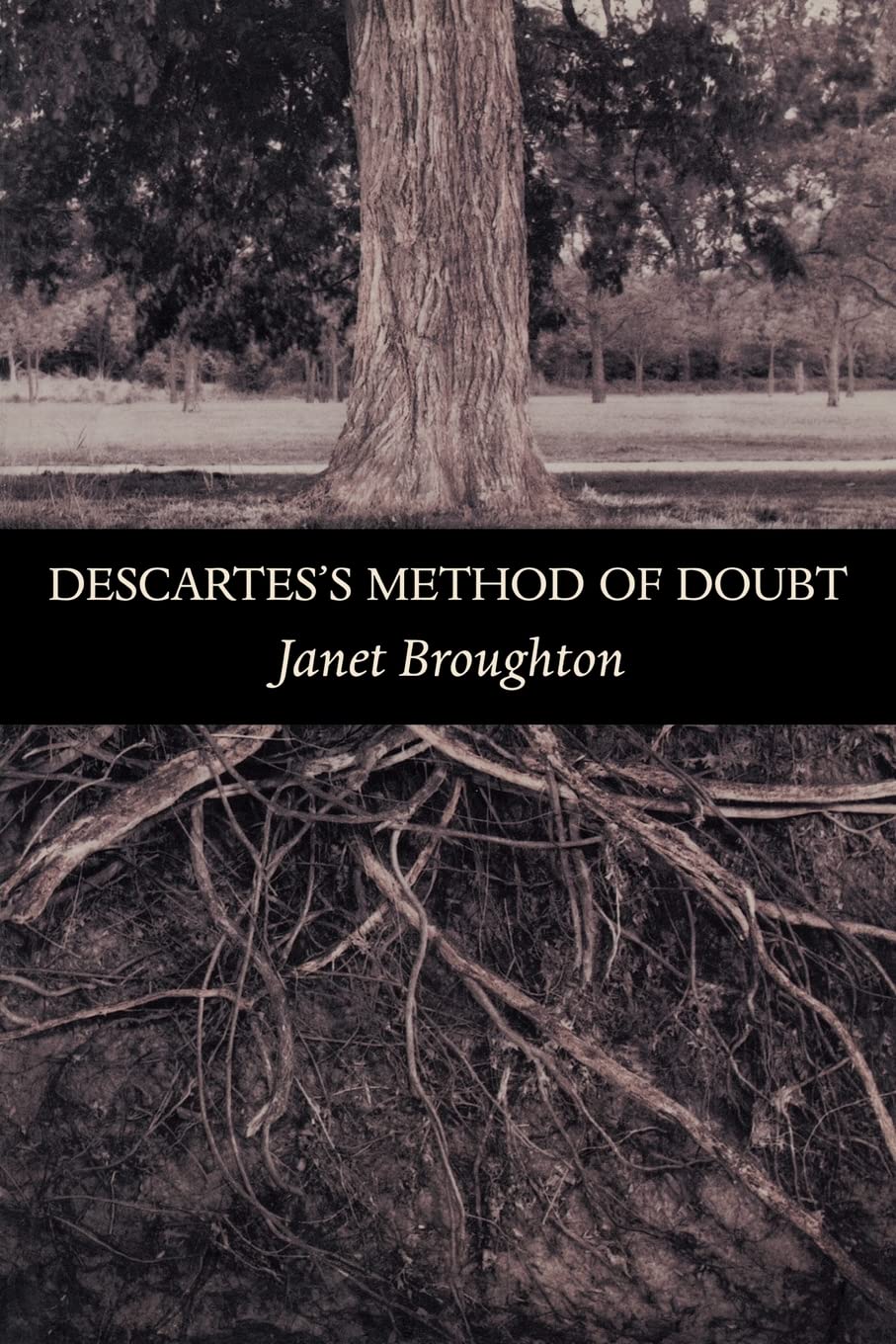
Descartes thought that we could achieve absolute certainty by starting with radical doubt. He adopts this strategy in the Meditations on First Philosophy, where he raises sweeping doubts with the famous dream argument and the hypothesis of an evil demon. But why did Descartes think we should take these exaggerated doubts seriously? And if we do take them seriously, how did he think any of our beliefs could ever escape them? Janet Broughton undertakes a close study of Descartes's first three meditations to answer these questions and to present a fresh way of understanding precisely what Descartes was up to.Broughton first contrasts Descartes's doubts with those of the ancient skeptics, arguing that Cartesian doubt has a novel structure and a distinctive relation to the commonsense outlook of everyday life. She then argues that Descartes pursues absolute certainty by uncovering the conditions that make his radical doubt possible. She gives a unified account of how Descartes uses this strategy, first to find certainty about his own existence and then to argue that God exists. Drawing on this analysis, Broughton provides a new way to understand Descartes's insistence that he hasn't argued in a circle, and she measures his ambitions against those of contemporary philosophers who use transcendental arguments in their efforts to defeat skepticism. The book is a powerful contribution both to the history of philosophy and to current debates in epistemology.
⚠️ WARNING (California Proposition 65):
This product may contain chemicals known to the State of California to cause cancer,
birth defects, or other reproductive harm.
For MAP (Minimum Advertised Price) violations and Intellectual Property (IP) or Trademark concerns, please contact:
support@ergodebooks.com
⚠️ California Proposition 65 Warning: Some products sold on this website may expose you to chemicals known to the State of California to cause cancer, birth defects, or other reproductive harm. For more information, visit www.P65Warnings.ca.gov.