
Title
Design As a Catalyst for Learning,Used
Sold by Ergodebooks, an authorized reseller.
Returns accepted within 30 days | support@ergodebooks.com
Shipping Information
- Free Standard Shipping — United States only
- Processing Time: 3–5 business days
- Estimated Delivery: 6–10 business days after dispatch
- Double-boxed, fully insured & discreetly packaged
- Tracking number sent via email once dispatched
Returns & Refund
Returns accepted within 30 days of delivery.
Damaged or Defective Item
Free return shipping + replacement or full refund
Wrong Item Received
Free return shipping + replacement or full refund
Change of Mind
Return shipping at customer's expense · 25% restocking fee applies
Payment Option

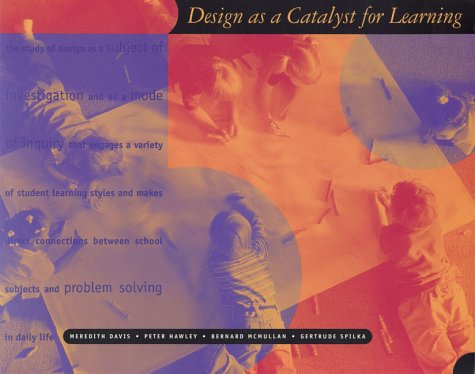
The design process can lead to a deep understanding of the abstract conceptstaught in schools. It puts ideas to work in situations that allow students to test themselves and thevalue of learning in everyday life. When children are engaged in the process of designingaproduct, a building, a city plan, or any objectthey are learning to identify needs, frameproblems, work collaboratively, explore and appreciate solutions, weigh alternatives, andcommunicate their ideas verbally, graphically, and in three dimensions. With periodicselfassessment and critiques of work in progress, students come to understand that performancetesting and continual improvement are as fundamental to the design process as they are tolifelong learning.Teachers nationwide are using the design process as a problemsolving tool to integratecurriculum, teach thinking and communication skills, and encourage students to apply academicconcepts in authentic tasks. This groundbreaking book developed in cooperation with theNational Endowment for the Arts provides an introduction to effective design activities andstrategies for every grade level and subject area.
⚠️ WARNING (California Proposition 65):
This product may contain chemicals known to the State of California to cause cancer, birth defects, or other reproductive harm.
For more information, please visit www.P65Warnings.ca.gov.
- Q: What are the dimensions of the book? A: The book measures eight point two seven inches in length, zero point five one inches in width, and ten inches in height.
- Q: How many pages does 'Design As a Catalyst for Learning' have? A: The book contains one hundred forty-seven pages, providing a comprehensive exploration of the design process in education.
- Q: What type of binding does this book have? A: The book is available in paperback binding, making it lightweight and easy to handle.
- Q: What age group is this book suitable for? A: The book is suitable for educators and students of all grade levels, as it offers strategies applicable across various subjects.
- Q: How can teachers use this book? A: Teachers can use this book as a resource for integrating design activities into their curriculum, enhancing problem-solving and critical thinking skills.
- Q: Is this book beneficial for collaborative learning? A: Yes, the book emphasizes collaborative learning through design projects, encouraging students to work together effectively.
- Q: How should I store this book? A: Store the book in a dry, cool place, ideally on a bookshelf, to maintain its condition.
- Q: Can this book be used for self-assessment? A: Yes, the book includes strategies for periodic self-assessment, allowing students to evaluate their progress.
- Q: Is there a specific cleaning method for this book? A: To clean the book, gently wipe the cover with a dry cloth to remove dust or smudges.
- Q: What makes this book different from other educational resources? A: This book uniquely combines design processes with educational strategies, promoting hands-on learning and real-world application.
- Q: Does this book include activities for all subjects? A: Yes, it provides design activities that can be adapted for any subject area, making it versatile for educators.
- Q: What is the main theme of the book? A: The main theme is using design as a catalyst for deeper learning and understanding in educational settings.
- Q: Is there a warranty or return policy for this book? A: Typically, books have a standard return policy; please check with the retailer for specific details.
- Q: What if the book arrives damaged? A: If the book arrives damaged, contact the retailer immediately for a return or replacement process.
- Q: Are there any other books by the same author? A: Yes, Meredith Davis has authored several other works focused on design and education.
- Q: How is this book relevant to modern education? A: The book addresses current educational needs by incorporating design thinking into teaching methodologies.