If you have any questions, you are always welcome to contact us. We'll get back to you as soon as possible, withing 24 hours on weekdays.
Customer service
All questions about your order, return and delivery must be sent to our customer service team by e-mail at yourstore@yourdomain.com
Sale & Press
If you are interested in selling our products, need more information about our brand or wish to make a collaboration, please contact us at press@yourdomain.com
Help
If you have any questions, you are always welcome to contact us. We'll get back to you as soon as possible, withing 24 hours on weekdays.
Customer service
All questions about your order, return and delivery must be sent to our customer service team by e-mail at yourstore@yourdomain.com
Sale & Press
If you are interested in selling our products, need more information about our brand or wish to make a collaboration, please contact us at press@yourdomain.com
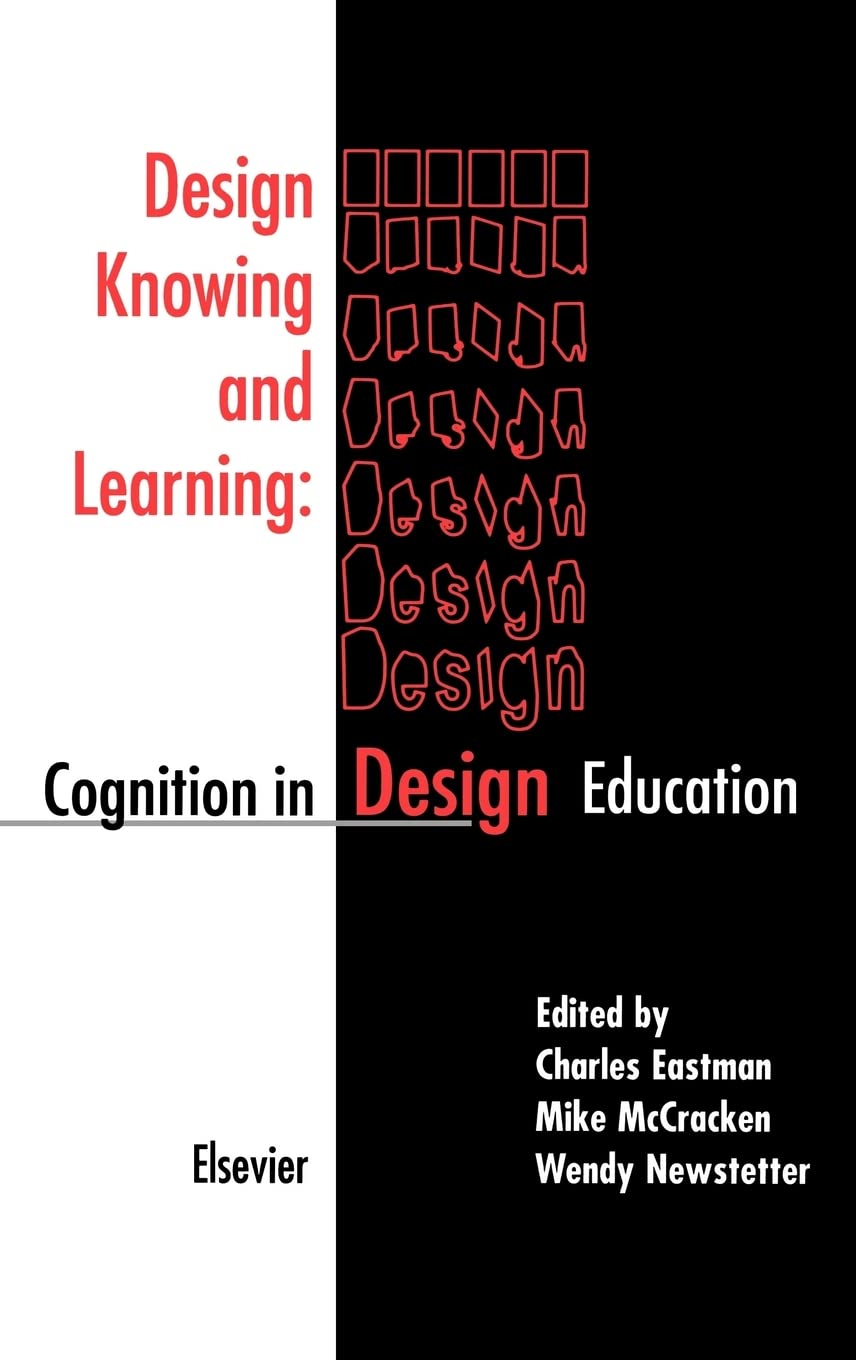
Wide aspects of a university education address design: the conceptualization, planning and implementation of manmade artifacts. All areas of engineering, parts of computer science and of course architecture and industrial design all claim to teach design. Yet the education of design tends ot follow tacit practices, without explicit assumptions, goals and processes.This book is premised on the belief that design education based on a cognitive science approach can lead to significant improvements in the effectiveness of university design courses and to the future capabilities of practicing designers. This applies to all professional areas of design. The book grew out of publications and a workshop focusing on design education. This volume attempts to outline a framework upon which new efforts in design education might be based.The book includes chapters dealing with six broad aspects of the study of design education: Methodologies for undertaking studies of design learning Longitudinal assessment of design learning Methods and cases for assessing beginners, experts and special populations Studies of important component processes Structure of design knowledge Design cognition in the classroom
⚠️ WARNING (California Proposition 65):
This product may contain chemicals known to the State of California to cause cancer,
birth defects, or other reproductive harm.
For MAP (Minimum Advertised Price) violations and Intellectual Property (IP) or Trademark concerns, please contact:
support@ergodebooks.com
⚠️ California Proposition 65 Warning: Some products sold on this website may expose you to chemicals known to the State of California to cause cancer, birth defects, or other reproductive harm. For more information, visit www.P65Warnings.ca.gov.