
Title
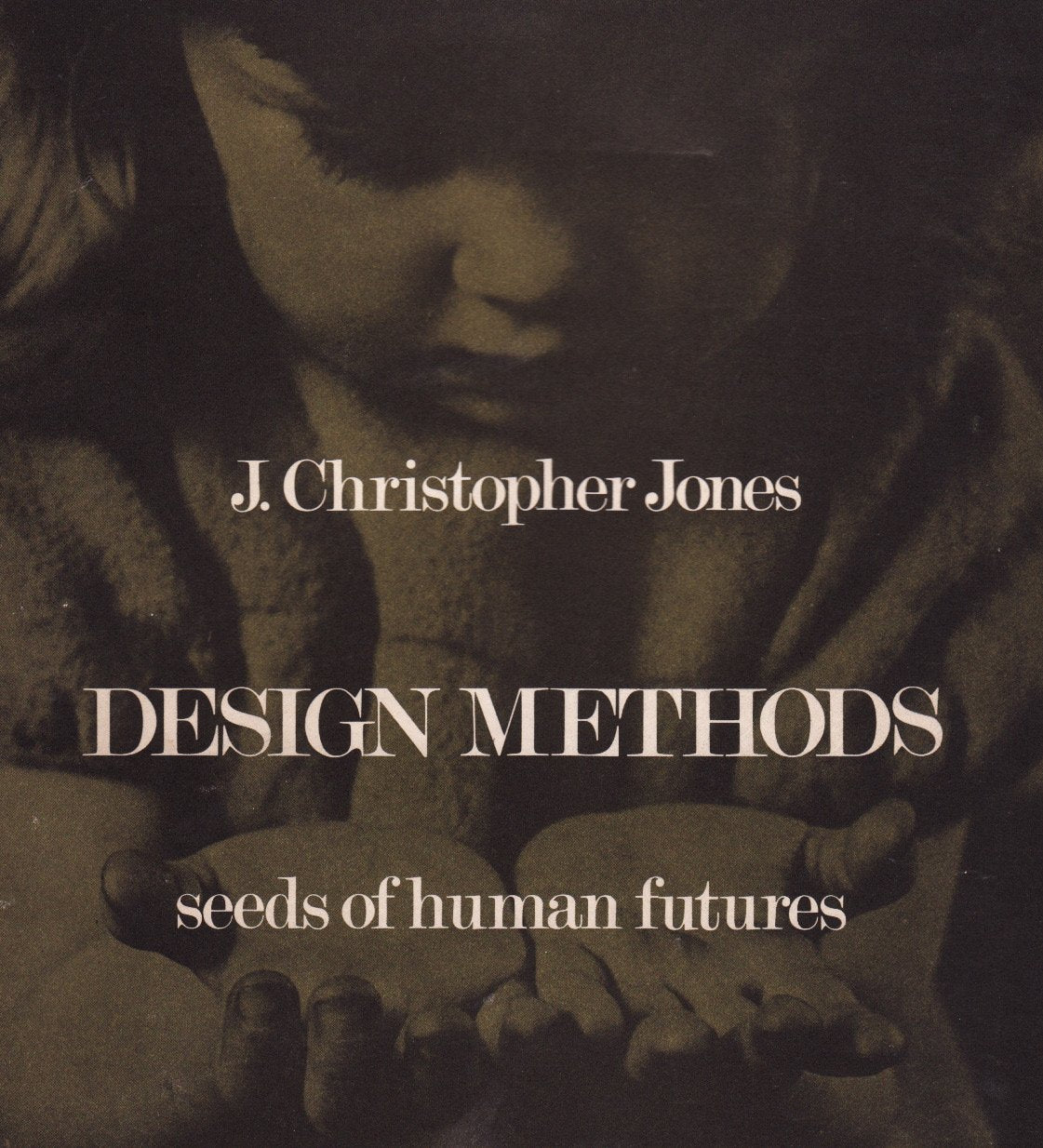
Design Methods: Seeds Of Human Futures
Sold by Ergodebooks, an authorized reseller.
Returns accepted within 30 days | support@ergodebooks.com
Shipping Information
- Free Standard Shipping — United States only
- Processing Time: 3–5 business days
- Estimated Delivery: 6–10 business days after dispatch
- Double-boxed, fully insured & discreetly packaged
- Tracking number sent via email once dispatched
Returns & Refund
Returns accepted within 30 days of delivery.
Damaged or Defective Item
Free return shipping + replacement or full refund
Wrong Item Received
Free return shipping + replacement or full refund
Change of Mind
Return shipping at customer's expense · 25% restocking fee applies
Payment Option

Since Its Initial Publication In 1970, Design Methods Has Been Considered The Seminal Work On Design Methodology. Written By One Of The Founders Of The Design Methods Movement, It Has Been Highly Praised In International Journals And Has Been Translated Into Japanese, Romanian, Polish, Russian, And Spanish. As Jones States In The Preface: Alongside The Old Idea Of Design As The Drawing Of Objects That Are Then To Be Built Or Manufactured There Are Many New Ideas Of What It Is, All Very Different: Designing As The Process Of Devising Not Individual Products But Whole Systems Or Environments Such As Airports, Transportation, Hypermarkets, Educational Curricula, Broadcasting Schedules, Welfare Schemes, Banking Systems, Computer Networks; Design As Participation, The Involvement Of The Public In The Decisionmaking Process; Design As Creativity, Which Is Supposed To Be Potentially Present In Everyone; Design As An Educational Discipline That Unites Arts And Science And Perhaps Can Go Further Than Either; And Now The Idea Of Designing Without A Product, As A Process Or Way Of Living In Itself. Design Methods First Evaluates Traditional Methods Such As Designbydrawing And Shows How They Do Not Adequately Address The Complexity Of Demands Upon Today'S Designer. The Book Then Provides 35 New Methods That Have Been Developed To Assist Designers And Planners To Become More Sensitive To User Needs. These Methods Move Beyond A Focus On The Product To The Thought That Precedes It. Throughout, The Book'S Emphasis On Integrating Creative And Rational Skills Directs Readers Away From Narrow Specialization To A Broader View Of Design. The New Methods Are Described And Classified In A Way That Makes It Easier For Designers And Planners To Find A Method That Suits A Particular Design Situation. They Include Logical Procedures Such As Systematic Search And Systems Engineering, Data Gathering Procedures Such As Literature Searching And The Writing Of Questionnaires, Innovative Procedures Such As Brainstorming And Synectic And System Transformation, And Evaluative Procedures Such As Specification Writing And The Selection Of Criteria. Offering A Wider View Accompanied By Appropriate Skills Than Can Be Obtained From The Teaching Of Any Specialized Design Profession, Design Methods Is Important Reading For Designers And Teachers In Numerous Fields. It Will Be Welcomed By Engineers, Architects, Planners, And Landscape Architects, As Well As By Interior, Graphic, Product, And Industrial Designers. This Extraordinary Book Will Provide Key Insights To Software Designers And Numerous Others Outside Traditional Design Professions Who Are Nevertheless Creatively Involved In Design Processes. It Is Also Relevant To The Teaching Of Cultural Studies, Technology, And Any Kind Of Creative Project.
⚠️ WARNING (California Proposition 65):
This product may contain chemicals known to the State of California to cause cancer, birth defects, or other reproductive harm.
For more information, please visit www.P65Warnings.ca.gov.
- Q: How many pages does the book 'Design Methods: Seeds of Human Futures' have? A: This book has four hundred seven pages. It provides extensive insights into design methodology and features various design methods.
- Q: What is the binding type of 'Design Methods: Seeds of Human Futures'? A: The binding type is paperback. This format is widely used for books that are meant to be accessible and lightweight.
- Q: Who is the author of 'Design Methods: Seeds of Human Futures'? A: The author is J. Christopher Jones. He is recognized as one of the founders of the design methods movement.
- Q: What is the primary focus of 'Design Methods: Seeds of Human Futures'? A: The primary focus is on design methodology. The book explores traditional and innovative design methods to enhance user sensitivity.
- Q: Is 'Design Methods: Seeds of Human Futures' suitable for beginners? A: Yes, it is suitable for beginners. The book offers a comprehensive overview of design principles and methods that can benefit all levels.
- Q: Can 'Design Methods: Seeds of Human Futures' help in understanding user needs? A: Yes, it provides methods to assist designers in becoming more sensitive to user needs. It emphasizes a broader view of design.
- Q: How should I care for 'Design Methods: Seeds of Human Futures'? A: Keep it in a dry, cool place to preserve its condition. Avoid exposure to moisture and direct sunlight to maintain the integrity of the paperback.
- Q: Is 'Design Methods: Seeds of Human Futures' a good resource for educators? A: Yes, it is a valuable resource for educators. The book is relevant for teaching various disciplines, including design and cultural studies.
- Q: What if 'Design Methods: Seeds of Human Futures' arrives damaged? A: Contact the retailer immediately for a replacement or refund. Most sellers have policies to address damaged items upon delivery.
- Q: Are there any specific design methods emphasized in the book? A: Yes, it discusses thirty-five new methods. These include systematic search, brainstorming, and literature searching to enhance design processes.
- Q: Is 'Design Methods: Seeds of Human Futures' available in multiple languages? A: Yes, it has been translated into several languages. These include Japanese, Romanian, Polish, Russian, and Spanish.
- Q: What audiences can benefit from 'Design Methods: Seeds of Human Futures'? A: Designers, planners, and educators across various fields can benefit. It is also useful for software designers and those involved in creative projects.
- Q: Does the book cover both creative and rational aspects of design? A: Yes, it emphasizes integrating both creative and rational skills. This approach helps designers avoid narrow specialization.
- Q: Is 'Design Methods: Seeds of Human Futures' relevant for planners? A: Yes, it is relevant for planners. The methodologies discussed are applicable in urban planning and system design.
- Q: What is the main benefit of reading 'Design Methods: Seeds of Human Futures'? A: The main benefit is gaining insights into effective design methodologies. It helps in understanding the complexity of modern design challenges.