
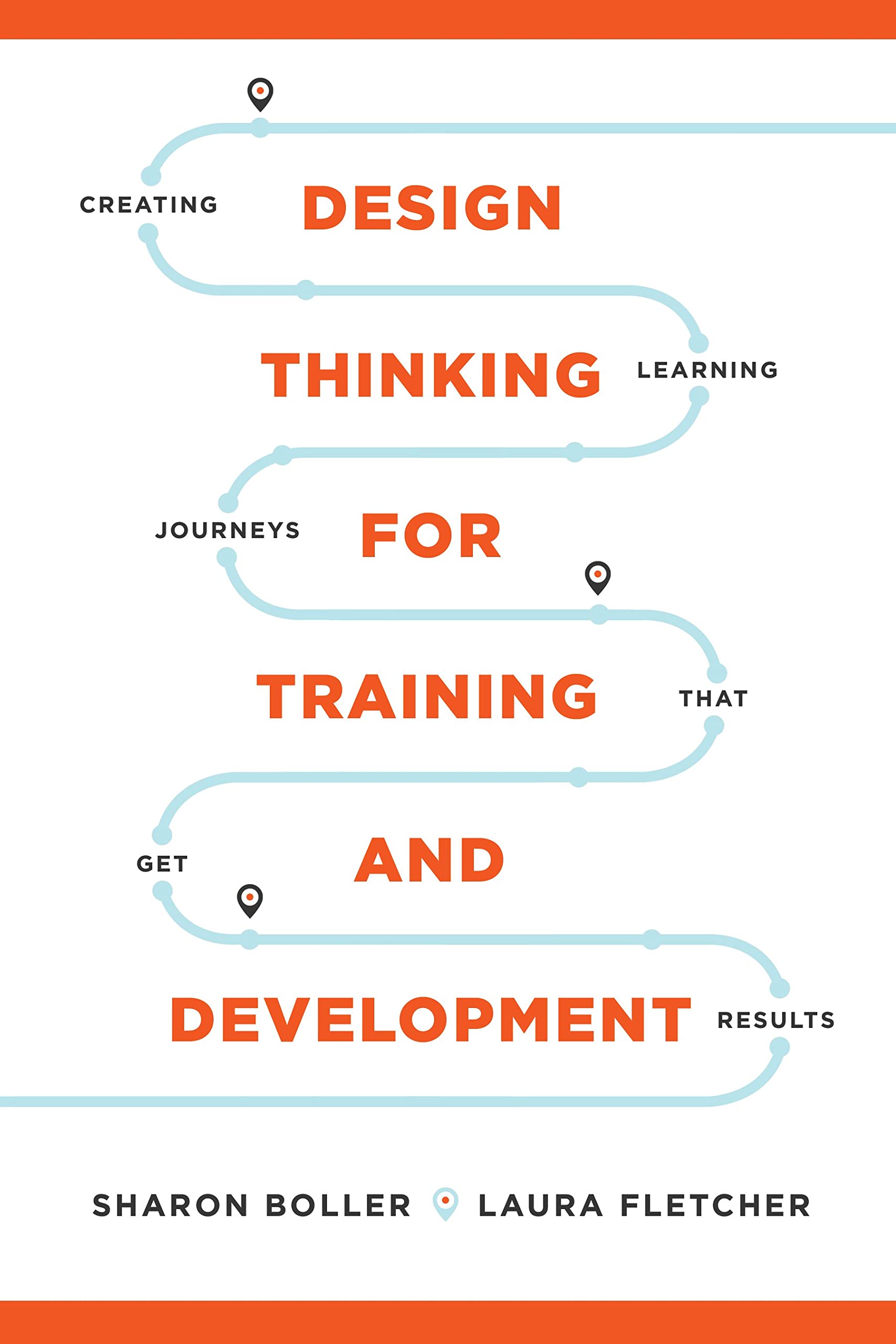
Title
Design Thinking for Training and Development: Creating Learning Journeys That Get Results,Used
Sold by Ergodebooks, an authorized reseller.
Returns accepted within 30 days | support@ergodebooks.com
Shipping Information
- Free Standard Shipping — United States only
- Processing Time: 3–5 business days
- Estimated Delivery: 6–10 business days after dispatch
- Double-boxed, fully insured & discreetly packaged
- Tracking number sent via email once dispatched
Returns & Refund
Returns accepted within 30 days of delivery.
Damaged or Defective Item
Free return shipping + replacement or full refund
Wrong Item Received
Free return shipping + replacement or full refund
Change of Mind
Return shipping at customer's expense · 25% restocking fee applies
Payment Option

Better Learning Solutions Through Better Learning ExperiencesWhen training and development initiatives treat learning as something that occurs as a onetime event, the learner and the business suffer. Using design thinking can help talent development professionals ensure learning sticks to drive improved performance.Design Thinking for Training and Development offers a primer on design thinking, a humancentered process and problemsolving methodology that focuses on involving users of a solution in its design. For effective design thinking, talent development professionals need to go beyond the UX, the user experience, and incorporate the LX, the learner experience.In this howto guide for applying design thinking tools and techniques, Sharon Boller and Laura Fletcher share how they adapted the traditional design thinking process for training and development projects. Their process involves steps to:Get perspective. Refine the problem. Ideate and prototype. Iterate (develop, test, pilot, and refine). Implement.Design thinking is about balancing the three forces on training and development programs: learner wants and needs, business needs, and constraints. Learn how to get buyin from skeptical stakeholders. Discover why taking requests for training, gathering the perspective of stakeholders and learners, and crafting problem statements will uncover the true issue at hand.Two indepth case studies show how the authors made design thinking work. Job aids and tools featured in this book include:a strategy blueprint to uncover what a stakeholder is trying to solve an empathy map to capture the learner? thoughts, actions, motivators, and challenges an experience map to better understand how the learner performs.With its handson, useittoday approach, this book will get you started on your own journey to applying design thinking.
⚠️ WARNING (California Proposition 65):
This product may contain chemicals known to the State of California to cause cancer, birth defects, or other reproductive harm.
For more information, please visit www.P65Warnings.ca.gov.
- Q: How many pages does the book have? A: This book has two hundred seventy-four pages. It provides extensive insights into design thinking for training and development.
- Q: What is the binding type of this book? A: The book is available in paperback binding. This makes it flexible and easy to handle for readers.
- Q: What are the dimensions of the book? A: The book measures five point nine one inches in length, zero point five one inches in width, and eight point nine inches in height. These dimensions make it portable and reader-friendly.
- Q: Who is the author of this book? A: The book is authored by Sharon Boller and Laura Fletcher. They are experienced professionals in talent development.
- Q: What is the primary focus of the book? A: The book focuses on applying design thinking to enhance learning experiences. It aims to improve training outcomes through a user-centered approach.
- Q: How can I apply the concepts from this book? A: You can apply the concepts by following the design thinking process outlined in the book. This includes steps like getting perspective, ideating, prototyping, and iterating.
- Q: Is this book suitable for beginners in training development? A: Yes, this book is suitable for beginners. It provides a clear primer on design thinking tailored for training and development.
- Q: Can I use this book for corporate training sessions? A: Yes, this book is applicable for corporate training sessions. It offers practical tools and case studies that can be utilized in various professional settings.
- Q: What is the main methodology discussed in the book? A: The main methodology discussed is design thinking. It emphasizes a human-centered approach to problem-solving in training and development.
- Q: How do I care for this book to keep it in good condition? A: To keep the book in good condition, store it in a dry place and avoid exposing it to direct sunlight. Regularly handle it with clean hands.
- Q: What should I do if my book arrives damaged? A: If your book arrives damaged, contact the seller for their return policy. Most sellers will provide a replacement or refund for damaged items.
- Q: Is there a warranty for this book? A: No, typically books do not come with a warranty. However, check with the seller for their specific return and exchange policy.
- Q: Can I return the book if I don't find it helpful? A: Yes, most sellers offer a return policy if the book does not meet your expectations. Review the seller's return guidelines for specific instructions.
- Q: Are there case studies included in the book? A: Yes, the book includes two in-depth case studies. These case studies illustrate how design thinking can be applied in real training scenarios.
- Q: What tools are provided in the book for application? A: The book provides various tools including a strategy blueprint, empathy map, and experience map. These tools assist in implementing design thinking effectively.