
Title
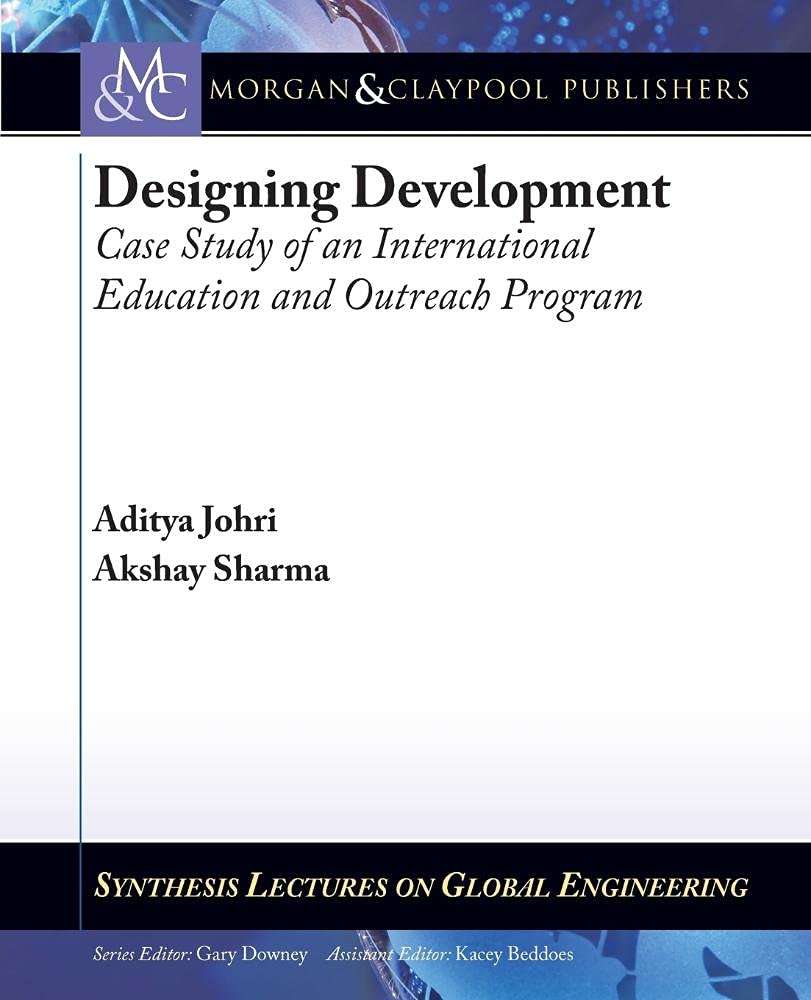
Designing Development: Case Study of an International Education and Outreach Program (Synthesis Lectures on Global Engineering),Used
Sold by Ergodebooks, an authorized reseller.
Returns accepted within 30 days | support@ergodebooks.com
Shipping Information
- Free Standard Shipping — United States only
- Processing Time: 3–5 business days
- Estimated Delivery: 6–10 business days after dispatch
- Double-boxed, fully insured & discreetly packaged
- Tracking number sent via email once dispatched
Returns & Refund
Returns accepted within 30 days of delivery.
Damaged or Defective Item
Free return shipping + replacement or full refund
Wrong Item Received
Free return shipping + replacement or full refund
Change of Mind
Return shipping at customer's expense · 25% restocking fee applies
Payment Option

The creation of physical and material infrastructure is the cornerstone of human development; not surprisingly, engineers and designers are often motivated and inspired in their practice to improve the world around them, to make things better for others, and to apply their knowledge for the good of mankind. These aspirations often get translated into engineering and design curricula where students and faculty work on development related projects usually under the category of community or service learning. This book presents an overview of such an education and outreach program designed to empower stakeholders to improve their lives. The project described here was an international multiinstitutional undertaking that included academic institutions, nongovernmental organizations, and private firms. Within the academic setting, an interdisciplinary set of actors that included engineering and industrial design students and faculty worked on the project. We concretize our work by presenting a design case study that illustrates how different approaches can help guide the works of engineers and designers as they create global infrastructures and localized artifacts. We emphasize the importance of developing long term relationships with organizations on the ground in order to ensure appropriate design as well as successful transfer and long term use of designed artifacts. We discuss the life trajectories of the authors to provide a grounded perspective on what motivated us to undertake this work and shaped our approach with the intention to demonstrate that there are multiple paths toward this goal. Table of Contents: Introduction / Development of the Program: Personal Trajectories Meet Professional Opportunities / Intellectual Positioning of the Program: Sociomaterial Infrastructures and Capable and Convivial Design / Case Study: Quick Response (QR) Code Based Immunization Solution / Design for Development Course and Outreach Initiative / Conclusion: Lessons Learned
⚠️ WARNING (California Proposition 65):
This product may contain chemicals known to the State of California to cause cancer, birth defects, or other reproductive harm.
For more information, please visit www.P65Warnings.ca.gov.