
Title

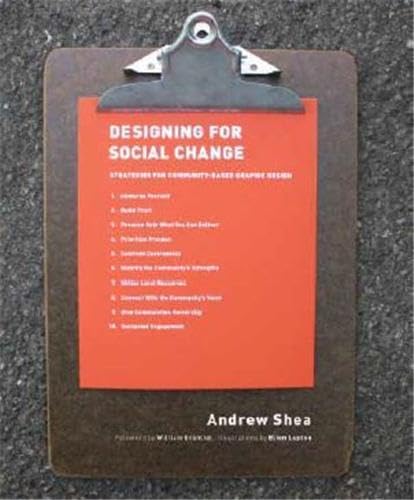
Designing For Social Change: Strategies For Communitybased Graphic Design (Design Briefs)
Sold by Ergodebooks, an authorized reseller.
Returns accepted within 30 days | support@ergodebooks.com
Shipping Information
- Free Standard Shipping — United States only
- Processing Time: 3–5 business days
- Estimated Delivery: 6–10 business days after dispatch
- Double-boxed, fully insured & discreetly packaged
- Tracking number sent via email once dispatched
Returns & Refund
Returns accepted within 30 days of delivery.
Damaged or Defective Item
Free return shipping + replacement or full refund
Wrong Item Received
Free return shipping + replacement or full refund
Change of Mind
Return shipping at customer's expense · 25% restocking fee applies
Payment Option

Some Call It Design For The Greater Good. Others Call It Social Design. Whatever You Call It, It'S Clear That An Altruistic Impulse Is On The Rise In The Design Community. The Latest Addition To Our Design Briefs Series, Designing For Social Change, Is A Compact, Handson Primer For Graphic Designers Who Want To Use Their Unique Problemsolving Skills To Help Others. Author Andrew Shea Presents Ten Proven Strategies For Working Effectively With Community Organizations. These Strategies Can Frame The Design Challenge And Create A Checklist To Keep A Project On Track. Twenty Case Studies Illustrate How Design Professionals And Students Approach Unique Challenges When Working On A Social Agenda.This Essential Guide Provides Design Educators With A Valuable Teaching Resource And Professionals With A Set Of Tools To Use In Their Practice. A Chapter On Grassroots Funding Solutions Can Aid Designers As They Take On Their Own Projects.
⚠️ WARNING (California Proposition 65):
This product may contain chemicals known to the State of California to cause cancer, birth defects, or other reproductive harm.
For more information, please visit www.P65Warnings.ca.gov.
- Q: What is the size of this book? A: The book measures seven point twenty-five inches in length, zero point seventy-five inches in width, and eight point five inches in height.
- Q: How many pages does this book have? A: This book contains one hundred sixty pages, providing a comprehensive overview of community-based graphic design.
- Q: What is the binding type of 'Designing For Social Change'? A: The book is published in a paperback binding, making it lightweight and portable.
- Q: What strategies does this book cover? A: The book presents ten proven strategies for effectively working with community organizations in graphic design projects.
- Q: Who is the author of this book? A: The author of 'Designing For Social Change' is Andrew Shea, a recognized expert in graphic design.
- Q: What is the primary focus of this book? A: The primary focus is on utilizing graphic design for social change and community improvement.
- Q: Is this book suitable for beginners in graphic design? A: Yes, this book is suitable for beginners as it serves as a hands-on primer in community-based graphic design.
- Q: Can experienced designers benefit from this book? A: Yes, experienced designers can gain valuable insights and strategies to enhance their community-focused projects.
- Q: Are there practical examples in the book? A: Yes, there are twenty case studies included that illustrate real-world applications of the design strategies discussed.
- Q: How can I use this book in a classroom setting? A: This book serves as a valuable teaching resource for design educators, facilitating discussions and projects on social design.
- Q: What type of projects does this book address? A: The book addresses graphic design projects aimed at social agendas, focusing on community engagement.
- Q: Does this book offer funding solutions for design projects? A: Yes, there is a chapter dedicated to grassroots funding solutions for designers pursuing their own projects.
- Q: How should I care for this book? A: To keep the book in good condition, store it in a dry place and avoid exposing it to direct sunlight.
- Q: Is this book safe for all ages? A: Yes, there are no explicit content warnings, making it appropriate for readers of all ages.
- Q: What if the book arrives damaged? A: If the book arrives damaged, you should contact the seller for their return policy and potential replacements.