
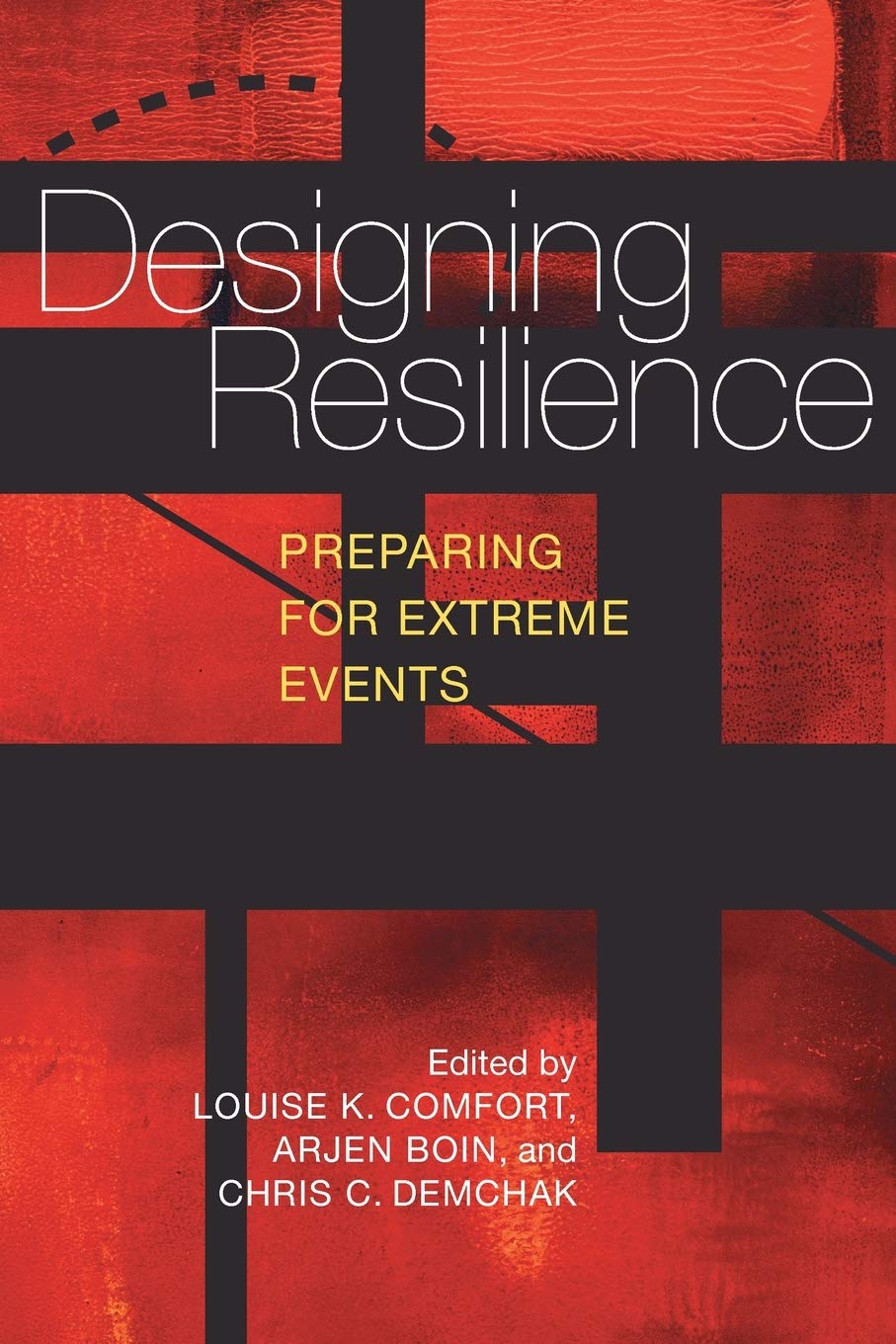
Title
Designing Resilience: Preparing For Extreme Events
Sold by Ergodebooks, an authorized reseller.
Returns accepted within 30 days | support@ergodebooks.com
Shipping Information
- Free Standard Shipping — United States only
- Processing Time: 3–5 business days
- Estimated Delivery: 6–10 business days after dispatch
- Double-boxed, fully insured & discreetly packaged
- Tracking number sent via email once dispatched
Returns & Refund
Returns accepted within 30 days of delivery.
Damaged or Defective Item
Free return shipping + replacement or full refund
Wrong Item Received
Free return shipping + replacement or full refund
Change of Mind
Return shipping at customer's expense · 25% restocking fee applies
Payment Option

In The Wake Of Severe Climatic Events And Terrorist Acts, And The Emergence Of Dangerous Technologies, Communities, Nations, And Global Organizations Have Diligently Sought To Create Strategies To Prepare For Such Events. Designing Resilience Presents Case Studies Of Extreme Events And Analyzes The Ability Of Affected Individuals, Institutions, Governments, And Technological Systems To Cope With Disaster.This Volume Defines Resilience As It Relates To Disaster Management At Specific Stages: Mitigation, Prevention, Preparation, And Response And Recovery. The Book Illustrates Models By Which To Evaluate Resilience At Levels Ranging From Individuals To Ngos To Governmental Jurisdictions And Examines How Resilience Can Be Developed And Sustained. A Group Or Nations Ability To Withstand Events And Emerge From Them With Their Central Institutions Intact Is At The Core Of Resilience. Quality Of Response, Capacity To Improvise, Coordination, Flexibility, And Endurance Are Also Determinants. Individual Case Studies, Including Hurricane Katrina In The United States, The London Bombings, And French Preparedness For The Avian Flu, Demonstrate Effective And Ineffective Strategies.The Contributors Reveal How The Complexity And Global Interconnectivity Of Modern Systemswhether They Are Governments, Mobile Populations, Power Grids, Financial Systems, Or The Internethave Transcended Borders And Created A New Level Of Exposure That Has Made Them Especially Vulnerable To Extreme Events. Yet These Farreaching Global Systems Also Possess The Ability To Alert And Respond At Greater Speeds Than Ever Before.The Authors Analyze Specific Characteristics Of Resilient Systemsthe Qualities They Possess And How They Become Resilientto Determine If There Are Ways To Build A System Of Resilience From The Ground Up. As Such, Designing Resilience Will Inform A Broad Range Of Students And Scholars In Areas Of Public Administration, Public Policy, And The Social Sciences.
⚠️ WARNING (California Proposition 65):
This product may contain chemicals known to the State of California to cause cancer, birth defects, or other reproductive harm.
For more information, please visit www.P65Warnings.ca.gov.
- Q: What is the page count of Designing Resilience? A: The book contains three hundred eighty-four pages. It provides in-depth analyses of resilience in disaster management.
- Q: What is the binding type of this book? A: The book is paperback bound. This makes it lightweight and easy to handle for reading.
- Q: Who is the author of Designing Resilience? A: The author is Louise Comfort. She is known for her expertise in public administration and disaster management.
- Q: How can I apply the knowledge from this book? A: You can use the strategies outlined in the book for disaster preparedness and resilience planning. It provides case studies for practical application in communities.
- Q: Is this book suitable for students? A: Yes, it is suitable for students in public policy and social sciences. It offers valuable insights and analytical frameworks relevant to their studies.
- Q: Is this book appropriate for beginners in disaster management? A: Yes, it can benefit beginners. The case studies and frameworks are presented in an accessible manner.
- Q: How should I care for this paperback book? A: To keep it in good condition, store it in a dry place and avoid exposure to direct sunlight. Handle it with clean hands to prevent dirt accumulation.
- Q: Are there safety concerns with this book? A: No, there are no safety concerns with the book. It is a scholarly work focused on disaster resilience.
- Q: Can I return the book if I'm not satisfied? A: Yes, you can return the book if it is in its original condition. Check the seller's return policy for specific details.
- Q: What if the book arrives damaged? A: If the book arrives damaged, you should contact the seller immediately for a replacement or refund. Keep any packaging for reference.
- Q: How does this book compare to other disaster management books? A: This book offers unique case studies that analyze resilience, which may not be covered in other texts. Its focus on practical application sets it apart.
- Q: Is this book suitable for professionals in emergency management? A: Yes, it is suitable for professionals. It provides insights into effective and ineffective strategies during extreme events.
- Q: What themes are explored in Designing Resilience? A: The book explores themes such as mitigation, prevention, and recovery in disaster management. It also discusses the resilience of various systems.
- Q: Does this book include real-world case studies? A: Yes, it includes several real-world case studies such as Hurricane Katrina and the London bombings. These examples illustrate practical applications of resilience.
- Q: What is the genre of Designing Resilience? A: The genre is non-fiction, specifically within the fields of public administration and disaster management. It is academically rigorous and informative.