
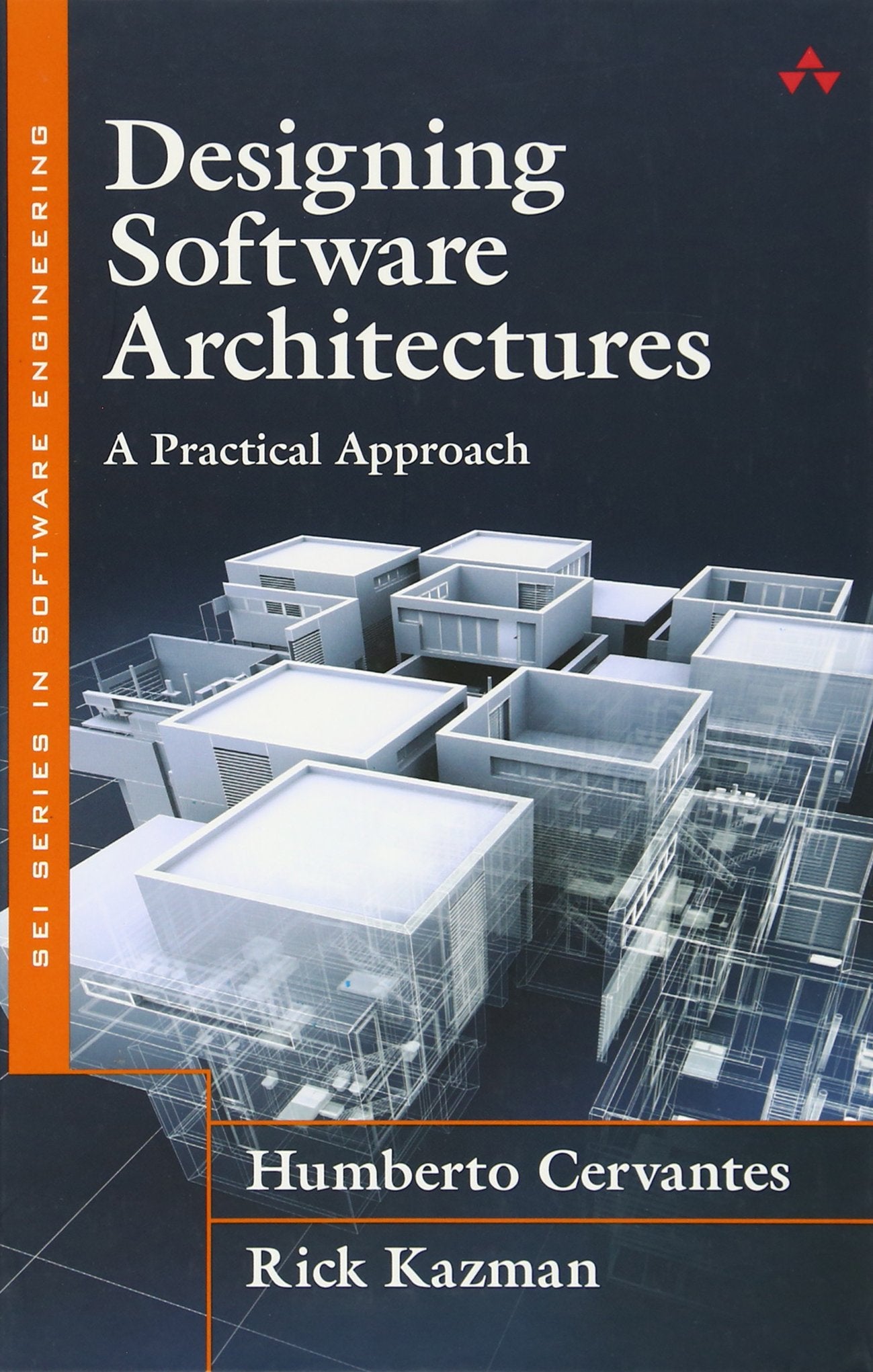
Title
Designing Software Architectures: A Practical Approach (SEI Series in Software Engineering),Used
Sold by Ergodebooks, an authorized reseller.
Returns accepted within 30 days | support@ergodebooks.com
Shipping Information
- Free Standard Shipping — United States only
- Processing Time: 3–5 business days
- Estimated Delivery: 6–10 business days after dispatch
- Double-boxed, fully insured & discreetly packaged
- Tracking number sent via email once dispatched
Returns & Refund
Returns accepted within 30 days of delivery.
Damaged or Defective Item
Free return shipping + replacement or full refund
Wrong Item Received
Free return shipping + replacement or full refund
Change of Mind
Return shipping at customer's expense · 25% restocking fee applies
Payment Option

Designing Software Architectures will teach you how to design any software architecture in a systematic, predictable, repeatable, and costeffective way.This book introduces a practical methodology for architecture design that any professional software engineer can use, provides structured methods supported by reusable chunks of design knowledge, and includes rich case studies that demonstrate how to use the methods.Using realistic examples, youll master the powerful new version of the proven AttributeDriven Design (ADD) 3.0 method and will learn how to use it to address key drivers, including quality attributes, such as modifiability, usability, and availability, along with functional requirements and architectural concerns.Drawing on their extensive experience, Humberto Cervantes and Rick Kazman guide you through crafting practical designs that support the full software life cycle, from requirements to maintenance and evolution. Youll learn how to successfully integrate design in your organizational context, and how to design systems that will be built with agile methods.Comprehensive coverage includesUnderstanding what architecture design involves, and where it fits in the full software development life cycle Mastering core design concepts, principles, and processes Understanding how to perform the steps of the ADD method Scaling design and analysis up or down, including design for presale processes or lightweight architecture reviews Recognizing and optimizing critical relationships between analysis and design Utilizing proven, reusable design primitives and adapting them to specific problems and contexts Solving design problems in new domains, such as cloud, mobile, or big data
⚠️ WARNING (California Proposition 65):
This product may contain chemicals known to the State of California to cause cancer, birth defects, or other reproductive harm.
For more information, please visit www.P65Warnings.ca.gov.
- Q: How many pages does this book have? A: This book has three hundred twenty pages. It provides comprehensive coverage of software architecture design methodologies.
- Q: What are the dimensions of this book? A: The dimensions of this book are six point five five inches in length, one point zero six inches in width, and nine point five seven inches in height.
- Q: What binding type does this book have? A: This book is bound in hardcover. This ensures durability and longevity for readers.
- Q: Who are the authors of this book? A: The authors of this book are Humberto Cervantes and Rick Kazman. Both are experienced professionals in software engineering.
- Q: What is the primary focus of this book? A: The primary focus of this book is to teach systematic design of software architectures. It emphasizes cost-effectiveness and repeatability.
- Q: How can I apply the concepts in this book? A: You can apply the concepts by using the practical methodologies outlined within. This includes mastering the Attribute-Driven Design method.
- Q: Is this book suitable for beginners? A: Yes, this book is suitable for beginners. It provides structured methods that any professional software engineer can use.
- Q: Can this book help in agile development? A: Yes, this book helps in designing systems that support agile methods. It integrates design within an organizational context.
- Q: What topics are covered in the case studies? A: The case studies cover real-world applications of architecture design. They demonstrate the effective use of methods taught in the book.
- Q: How do I optimize design relationships according to this book? A: You can optimize design relationships by recognizing critical connections between analysis and design. This is emphasized throughout the book.
- Q: What should I do if my book arrives damaged? A: If your book arrives damaged, contact customer support for information on return policies. Ensure you have your order details ready.
- Q: Is there a warranty on this book? A: No, there is typically no warranty on books. However, you can check the seller’s return policy for any issues.
- Q: How do I keep this book in good condition? A: To keep this book in good condition, store it in a cool, dry place and avoid exposing it to direct sunlight.
- Q: What if I have questions while reading this book? A: If you have questions, consider joining online forums or communities focused on software architecture. Engaging with others can enhance understanding.
- Q: Can I use this book for academic purposes? A: Yes, this book can be used for academic purposes. It provides foundational knowledge suitable for coursework in software engineering.
- Q: What kind of design problems does this book address? A: This book addresses design problems in various domains, including cloud, mobile, and big data. It provides applicable solutions for modern challenges.