
Title
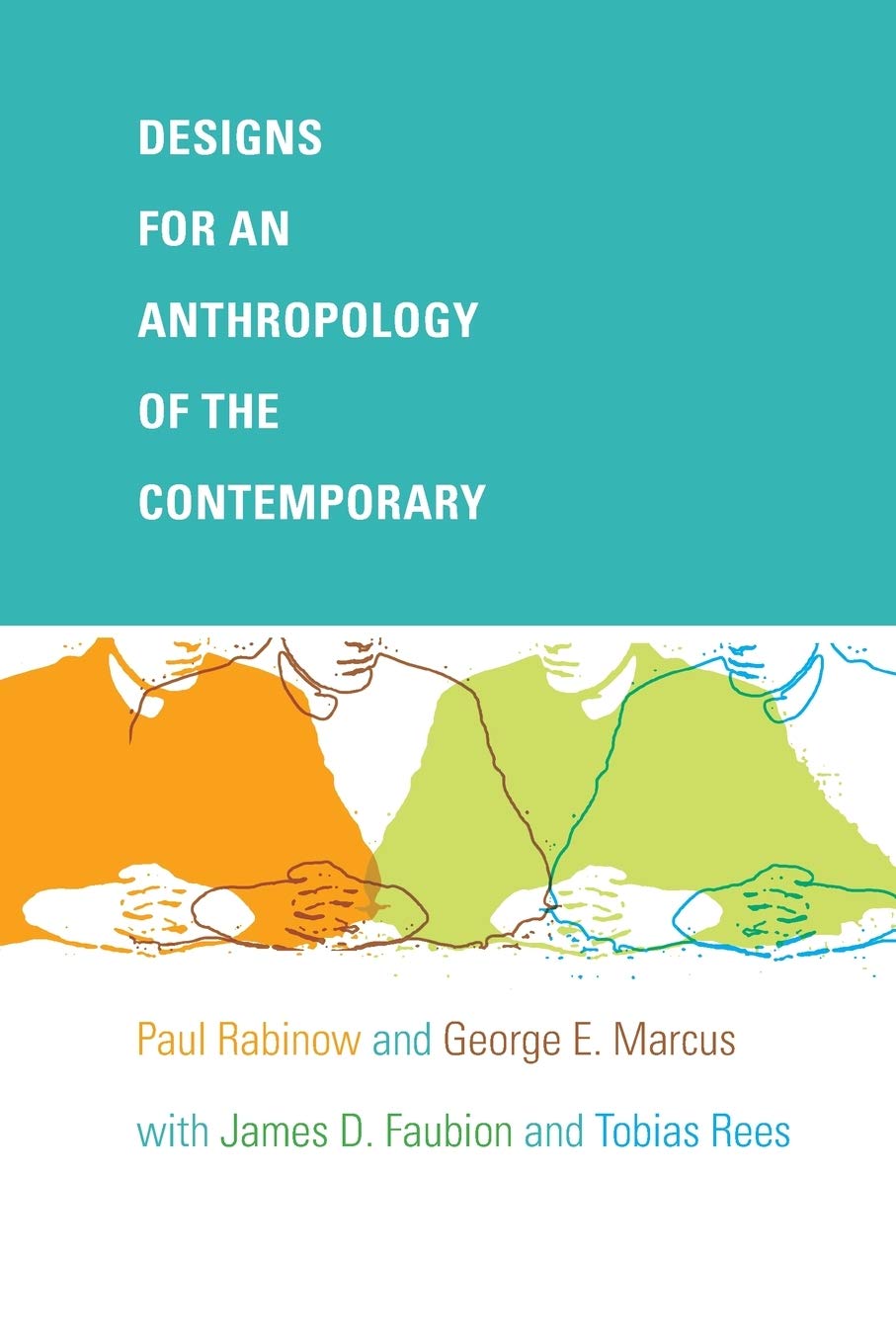
Designs For An Anthropology Of The Contemporary (A John Hope Franklin Center Book),Used
Sold by Ergodebooks, an authorized reseller.
Returns accepted within 30 days | support@ergodebooks.com
Shipping Information
- Free Standard Shipping — United States only
- Processing Time: 3–5 business days
- Estimated Delivery: 6–10 business days after dispatch
- Double-boxed, fully insured & discreetly packaged
- Tracking number sent via email once dispatched
Returns & Refund
Returns accepted within 30 days of delivery.
Damaged or Defective Item
Free return shipping + replacement or full refund
Wrong Item Received
Free return shipping + replacement or full refund
Change of Mind
Return shipping at customer's expense · 25% restocking fee applies
Payment Option

In this compact volume two of anthropologys most influential theorists, Paul Rabinow and George E. Marcus, engage in a series of conversations about the past, present, and future of anthropological knowledge, pedagogy, and practice. James D. Faubion joins in several exchanges to facilitate and elaborate the dialogue, and Tobias Rees moderates the discussions and contributes an introduction and an afterword to the volume. Most of the conversations are focused on contemporary challenges to how anthropology understands its subject and how ethnographic research projects are designed and carried out. Rabinow and Marcus reflect on what remains distinctly anthropological about the study of contemporary events and processes, and they contemplate productive new directions for the field. The two converge in Marcuss emphasis on the need to redesign pedagogical practices for training anthropological researchers and in Rabinows proposal of collaborative initiatives in which ethnographic research designs could be analyzed, experimented with, and transformed.Both Rabinow and Marcus participated in the milestone collection Writing Culture: The Poetics and Politics of Ethnography. Published in 1986, Writing Culture catalyzed a reassessment of how ethnographers encountered, studied, and wrote about their subjects. In the opening conversations of Designs for an Anthropology of the Contemporary, Rabinow and Marcus take stock of anthropologys recent past by discussing the intellectual scene in which Writing Culture intervened, the books contributions, and its conceptual limitations. Considering how the field has developed since the publication of that volume, they address topics including ethnographys selfreflexive turn, scholars increased focus on questions of identity, the Public Culture project, science and technology studies, and the changing interests and goals of students. Designs for an Anthropology of the Contemporary allows readers to eavesdrop on lively conversations between anthropologists who have helped to shape their fields recent past and are deeply invested in its future.
⚠️ WARNING (California Proposition 65):
This product may contain chemicals known to the State of California to cause cancer, birth defects, or other reproductive harm.
For more information, please visit www.P65Warnings.ca.gov.