If you have any questions, you are always welcome to contact us. We'll get back to you as soon as possible, withing 24 hours on weekdays.
Customer service
All questions about your order, return and delivery must be sent to our customer service team by e-mail at yourstore@yourdomain.com
Sale & Press
If you are interested in selling our products, need more information about our brand or wish to make a collaboration, please contact us at press@yourdomain.com
Help
If you have any questions, you are always welcome to contact us. We'll get back to you as soon as possible, withing 24 hours on weekdays.
Customer service
All questions about your order, return and delivery must be sent to our customer service team by e-mail at yourstore@yourdomain.com
Sale & Press
If you are interested in selling our products, need more information about our brand or wish to make a collaboration, please contact us at press@yourdomain.com
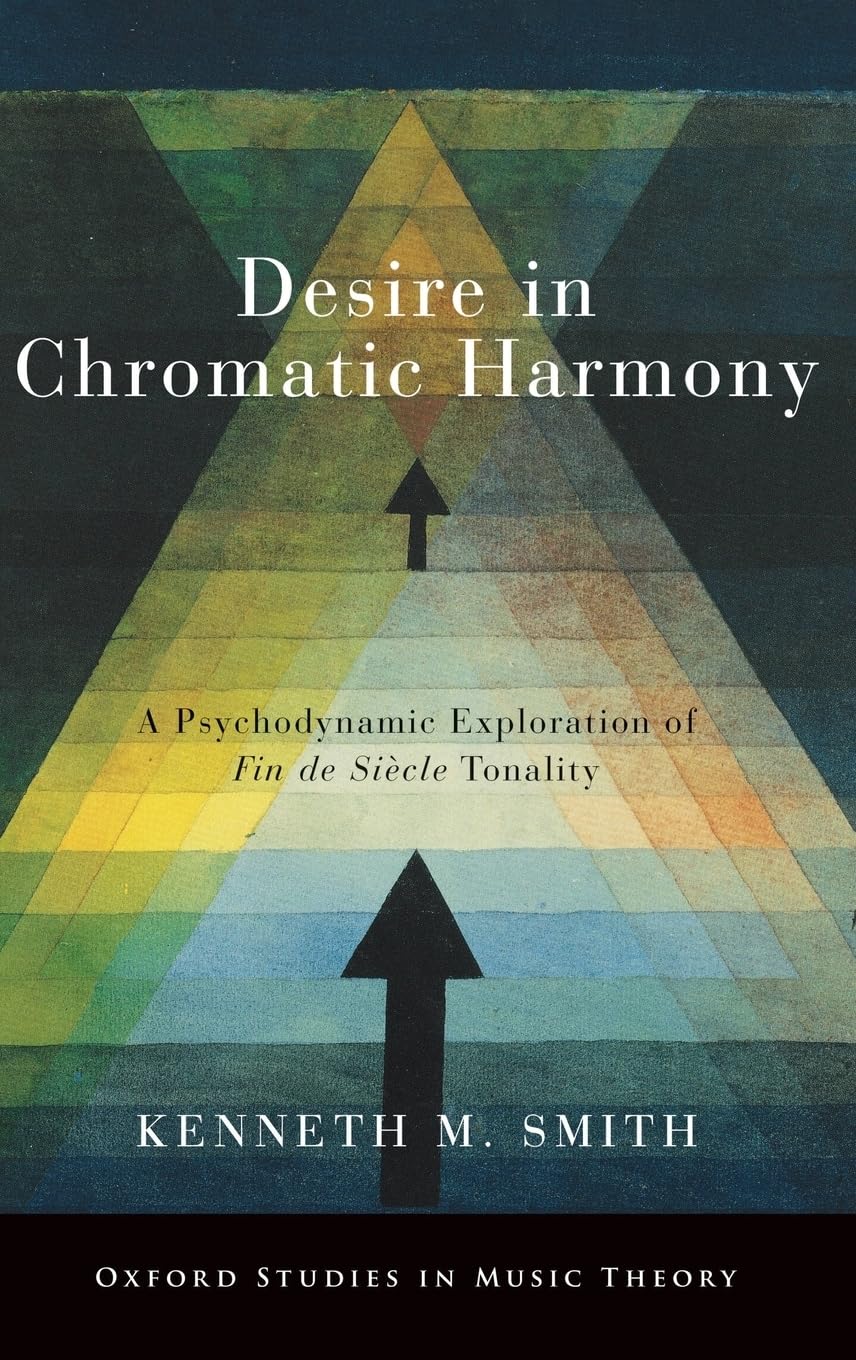
How does musical harmony engage listeners in relations of desire? Where does this desire come from? Author Kenneth Smith seeks to answer these questions by analyzing works from the turn of the twentieth century that are both harmonically enriched and psychologically complex. Desire in Chromatic Harmony yields a new theory of how chromatic chord progressions direct the listener on intricate journeys through harmonic space, mirroring the tensions of the psyche found in Schopenhauer, Freud, Lacan, Lyotard, and Deleuze. Smith extends this mode of enquiry into sophisticated music theory, while exploring philosophically engaged European and American composers such as Richard Strauss, Alexander Skryabin, Josef Suk, Charles Ives, and Aaron Copland. Focusing on harmony and chord progression, the book drills down into the diatonic undercurrent beneath densely chromatic and dissonant surfaces. From the obsession with death and mourning in Suk's asrael Symphony to an exploration of "perversion" in Strauss's elektra; from the Sufi mysticism of Szymanowski's Song of the Night to the failed fantasy of the American dream in Copland's The Tender Land, Desire in Chromatic Harmony cuts a path through the dense forests of chromatic complexity, revealing the psychological makeup of postWagnerian psychodynamic music.
⚠️ WARNING (California Proposition 65):
This product may contain chemicals known to the State of California to cause cancer,
birth defects, or other reproductive harm.
For MAP (Minimum Advertised Price) violations and Intellectual Property (IP) or Trademark concerns, please contact:
support@ergodebooks.com
⚠️ California Proposition 65 Warning: Some products sold on this website may expose you to chemicals known to the State of California to cause cancer, birth defects, or other reproductive harm. For more information, visit www.P65Warnings.ca.gov.