
Title
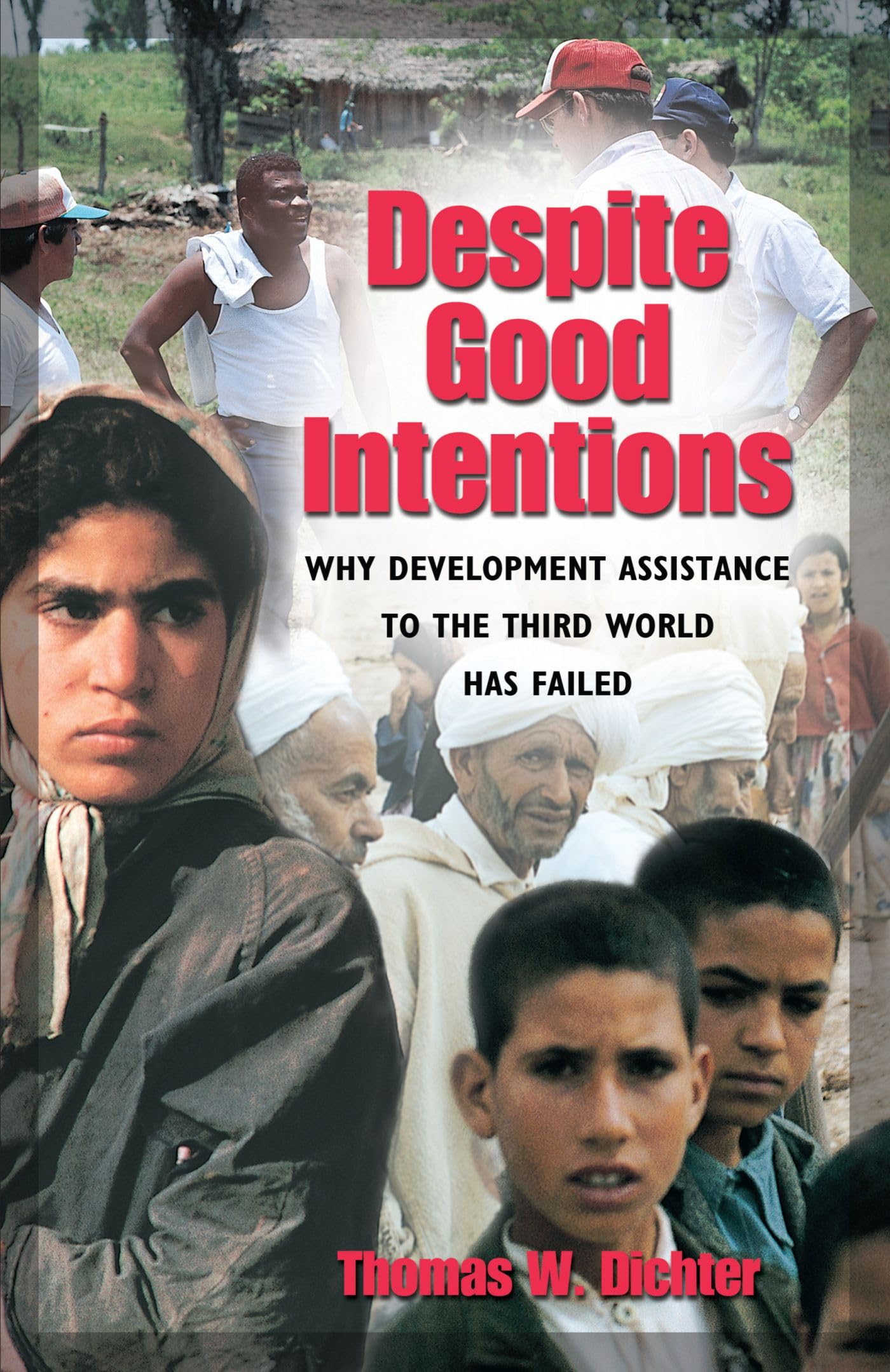
Despite Good Intentions: Why Development Assistance to the Third World Has Failed,New
Sold by Ergodebooks, an authorized reseller.
Returns accepted within 30 days | support@ergodebooks.com
Shipping Information
- Free Standard Shipping — United States only
- Processing Time: 3–5 business days
- Estimated Delivery: 6–10 business days after dispatch
- Double-boxed, fully insured & discreetly packaged
- Tracking number sent via email once dispatched
Returns & Refund
Returns accepted within 30 days of delivery.
Damaged or Defective Item
Free return shipping + replacement or full refund
Wrong Item Received
Free return shipping + replacement or full refund
Change of Mind
Return shipping at customer's expense · 25% restocking fee applies
Payment Option

For more than thirtyfive years, Thomas W. Dichter has worked in the field of international development, managing and evaluating projects for nongovernmental organizations, directing a Peace Corps country program, and serving as a consultant for such agencies as USAID, UNDP, and the World Bank. On the basis of this extensive and varied experience, he has become an outspoken critic of what he terms the 'international poverty alleviation industry.' He believes that efforts to reduce world poverty have been wellintentioned but largely ineffective. On the whole, the development industry has failed to serve the needs of the people it has sought to help.To make his case, Dichter reviews the major trends in development assistance from the 1960s through the 1990s, illustrating his analysis with eighteen short stories based on his own experiences in the field. The analytic chapters are thus grounded in the daily life of development workers as described in the stories.Dichter shows how development organizations have often become caught up in their own selfperpetuation and in public relations efforts designed to create an illusion of effectiveness. Tracing the evolution of the role of money (as opposed to ideas) in development assistance, he suggests how financial imperatives have reinforced the tendency to sponsor timebound projects, creating a dependency among aid recipients. He also examines the rise of careerism and increased bureaucratization in the industry, arguing that assistance efforts have become disconnected from important lessons learned on the ground, and often lessons of world history.In the end, Dichter calls for a more lighthanded and artful approach to development assistance, with fewer agencies and experts involved. His stance is pragmatic, rather than ideological or political. What matters, he says, is what works, and the current practices of the development industry are simply not effective.
⚠️ WARNING (California Proposition 65):
This product may contain chemicals known to the State of California to cause cancer, birth defects, or other reproductive harm.
For more information, please visit www.P65Warnings.ca.gov.