
Title
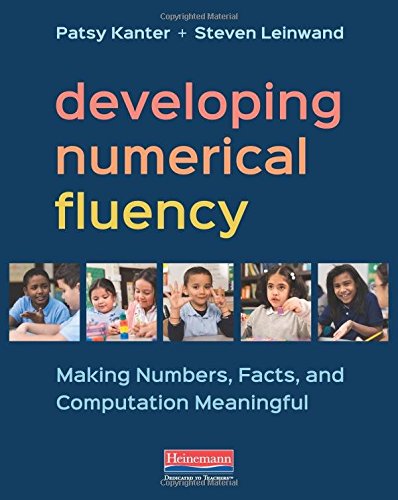
Developing Numerical Fluency: Making Numbers, Facts, and Computation Meaningful,Used
Sold by Ergodebooks, an authorized reseller.
Returns accepted within 30 days | support@ergodebooks.com
Shipping Information
- Free Standard Shipping — United States only
- Processing Time: 3–5 business days
- Estimated Delivery: 6–10 business days after dispatch
- Double-boxed, fully insured & discreetly packaged
- Tracking number sent via email once dispatched
Returns & Refund
Returns accepted within 30 days of delivery.
Damaged or Defective Item
Free return shipping + replacement or full refund
Wrong Item Received
Free return shipping + replacement or full refund
Change of Mind
Return shipping at customer's expense · 25% restocking fee applies
Payment Option

"This is a mustread book for any teachers of math."Jo Boaler, Professor of Mathematics Education at Stanford University and author of Mathematical MindsetsNumerical fluency is about understandingNumerical fluency is about understanding, not memorization. It comes over time as students engage in active thinking and doing, not endless worksheets and timed tests.Classroom instruction and materials, however, often dont feel aligned with these realities.In Developing Numerical Fluency, Patsy Kanter and Steven Leinwand take a fresh look at a commonlyasked question: How do I teach number facts so my students know them fluently? They apply their decades of experience teaching mathematics to rethinking effective fluency instruction.Classroomtested ideas you can use right awayEach chapter introduces ideas, techniques, and strategies that contribute to meaningful fluency for all students. Youll find: pivotal understandings that illuminate what contributes to real numerical fluency six instructional processes that support lasting fluency development classroom structures and activities for building fluency in addition, subtraction, multiplication, and division suggestions for creating a schoolwide culture of numerical fluency. Patsy and Steve remind us that, Students do not develop numerical fluency by memorizing and regurgitating rules. But many of us learned mathematics in exactly this way, making shifting our instruction challenging. Developing Numerical Fluency provides just the right support, offering big ideas for rethinking instruction paired with classroomtested activities you can use right away.
⚠️ WARNING (California Proposition 65):
This product may contain chemicals known to the State of California to cause cancer, birth defects, or other reproductive harm.
For more information, please visit www.P65Warnings.ca.gov.